Exhibitions
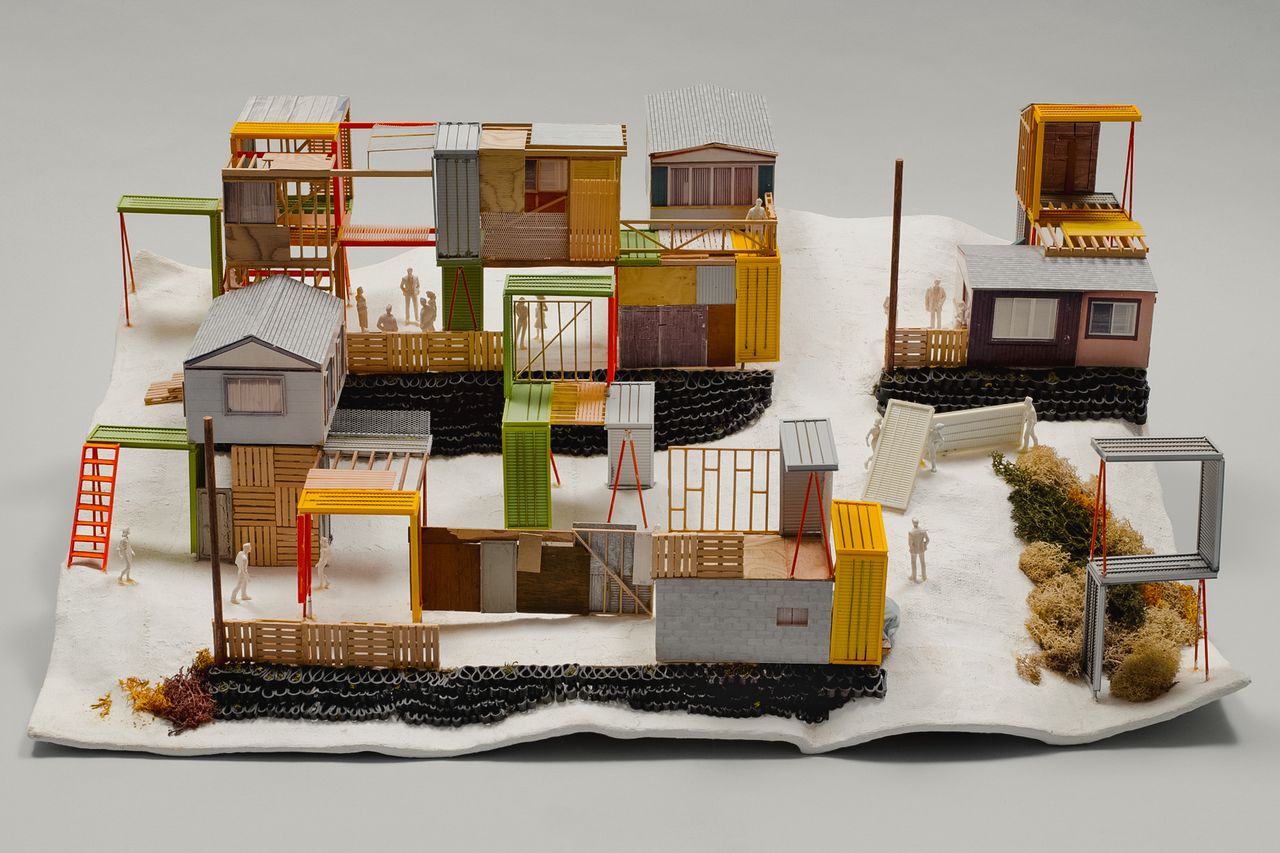
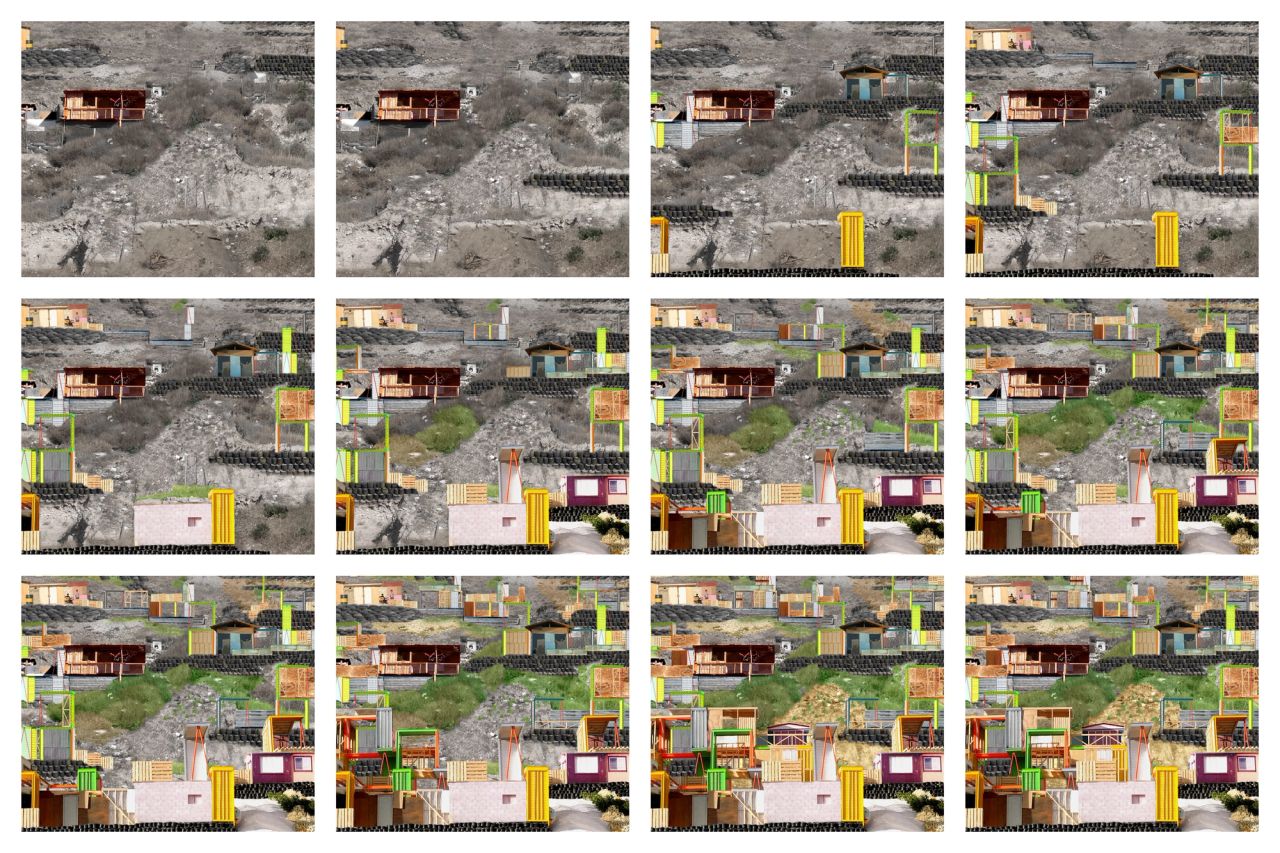
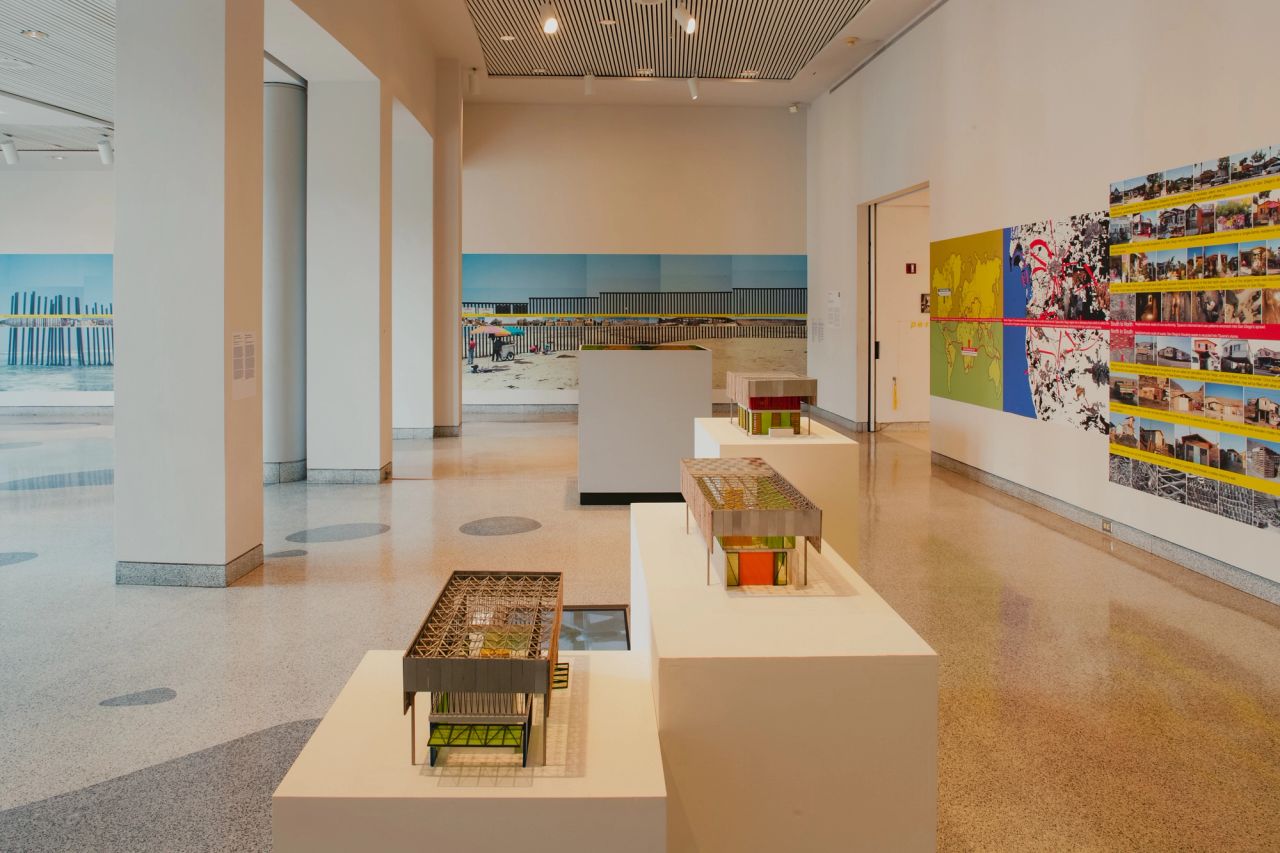
Manufactured Sites: A Housing Urbanism Made of Waste presented the result of a decade of research into the border between the wealthy sprawl of suburban San Diego, California, and the ad hoc, scrappy shantytowns of Tijuana, Mexico. The exhibition displayed a 3D model of a scaffolding system that would allow Tijuana to achieve a greater level of density, an essential quality to maintaining order in an urban setting already approaching entropy. The scaffolding functions as a frame upon which milk crates, tires, sheets of corrugated metal, rammed earth, and cinder blocks can be arranged, with a particular emphasis on vertical development. The simple, modular, and rapidly deployable scaffolding system allows users to complete the remaining design according to their preferences and needs.
Home Delivery: Fabricating the Modern Dwelling
MoMA, Floor 6, Exhibition Galleries
New York, United States
Credits: PARC Foundation
Home Delivery: Fabricating the Modern Dwelling
MoMA, Floor 6, Exhibition Galleries
New York, United States
Credits: Estudio Teddy Cruz + Fonna Forman
Home Delivery: Fabricating the Modern Dwelling
MoMA, Floor 6, Exhibition Galleries
New York, United States
Credits: Thomas Griesel
Home Delivery: Fabricating the Modern Dwelling
MoMA, Floor 6, Exhibition Galleries
New York, United States
Credits: Thomas Griesel
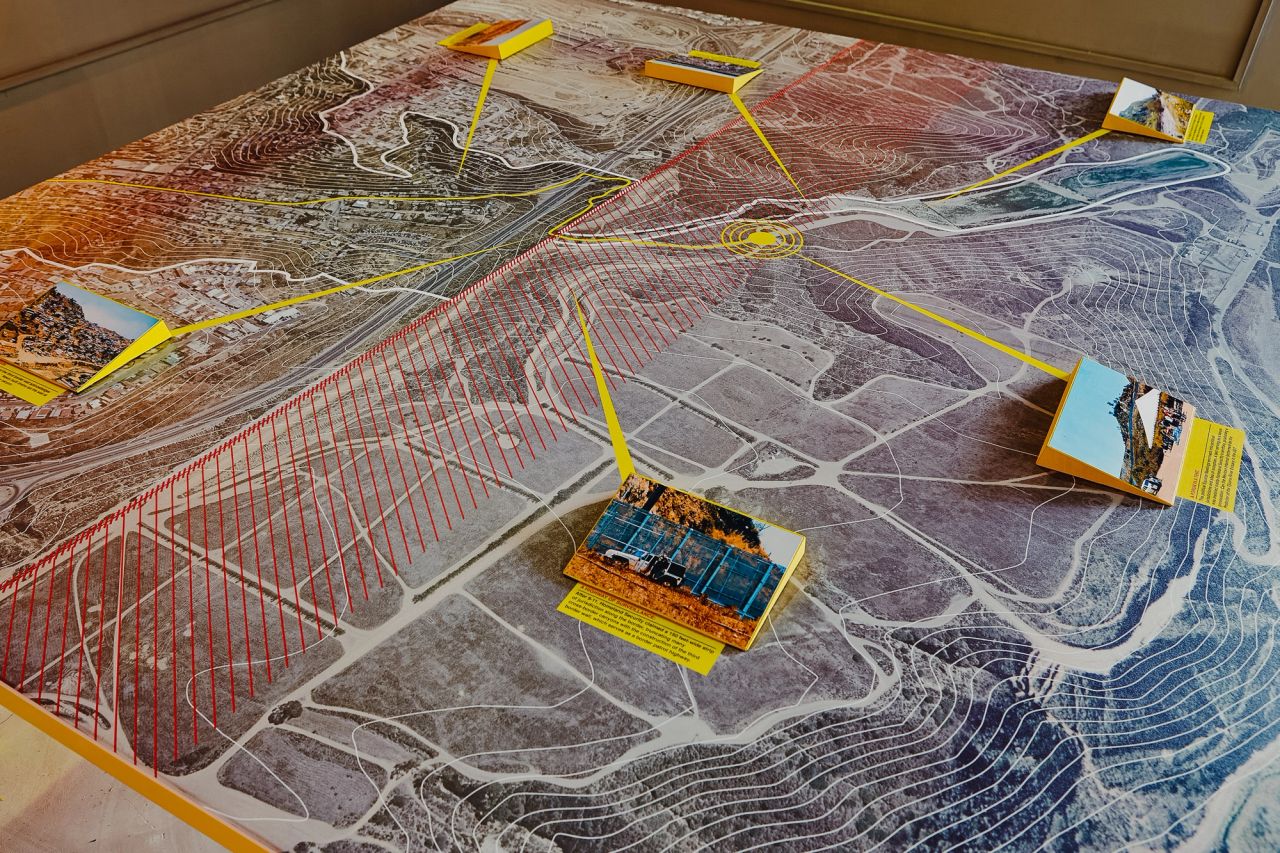
Radicalizing the Local: 60 Miles of Trans-Border Urban Conflict directly confronted the transborder conflict between the United States and Mexico with a large-scale, border-like graphic. We surveyed a sixty-mile section of the border area, charting the changing landscape and its shifting circumstances, including conditions of development, in a panoramic photo collage—dramatically asserting the power of design at a site of economic and structural inequality.
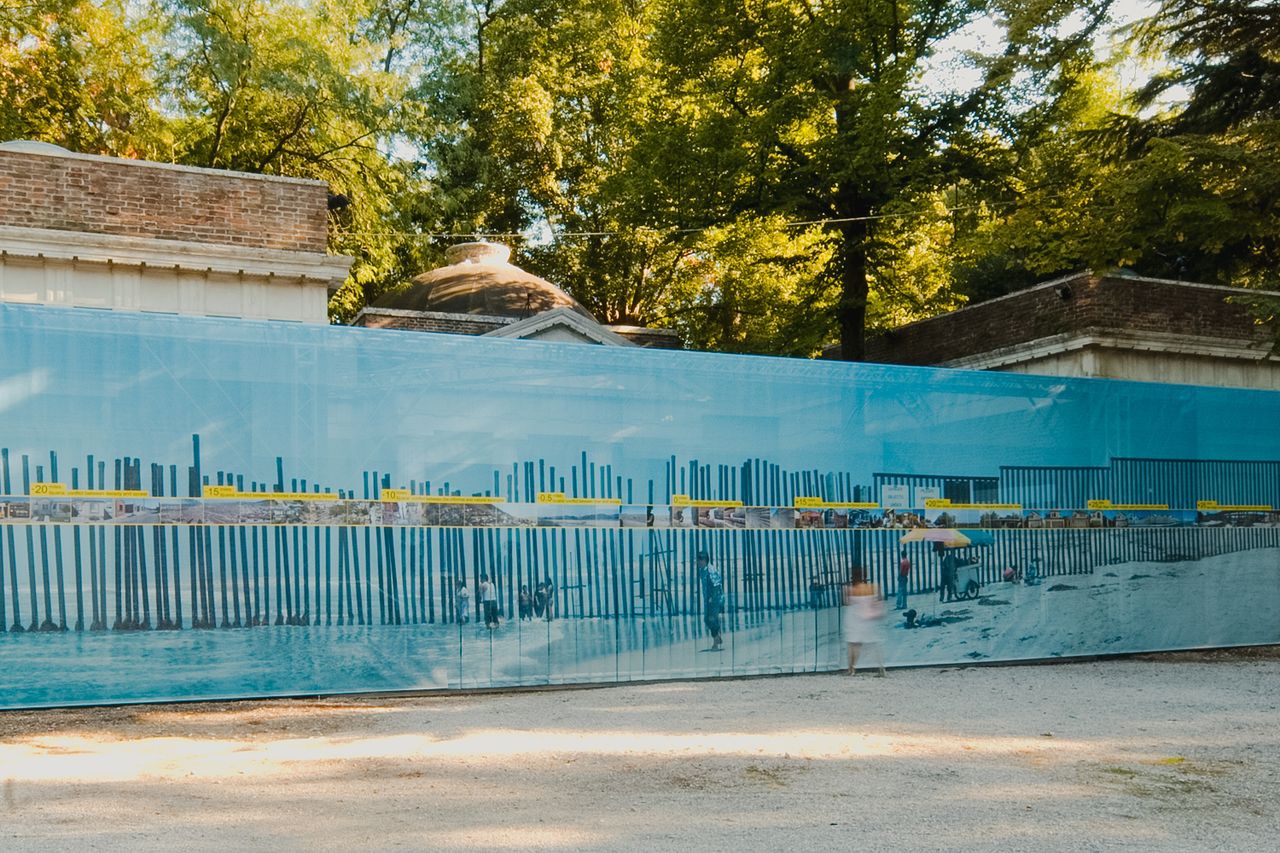
Into the Open: Positioning Practice
La Biennale di Venezia, 11th International Architecture Exhibition, U.S. Pavilion
Venice, Italy
Credits: Cleveland Museum of Art
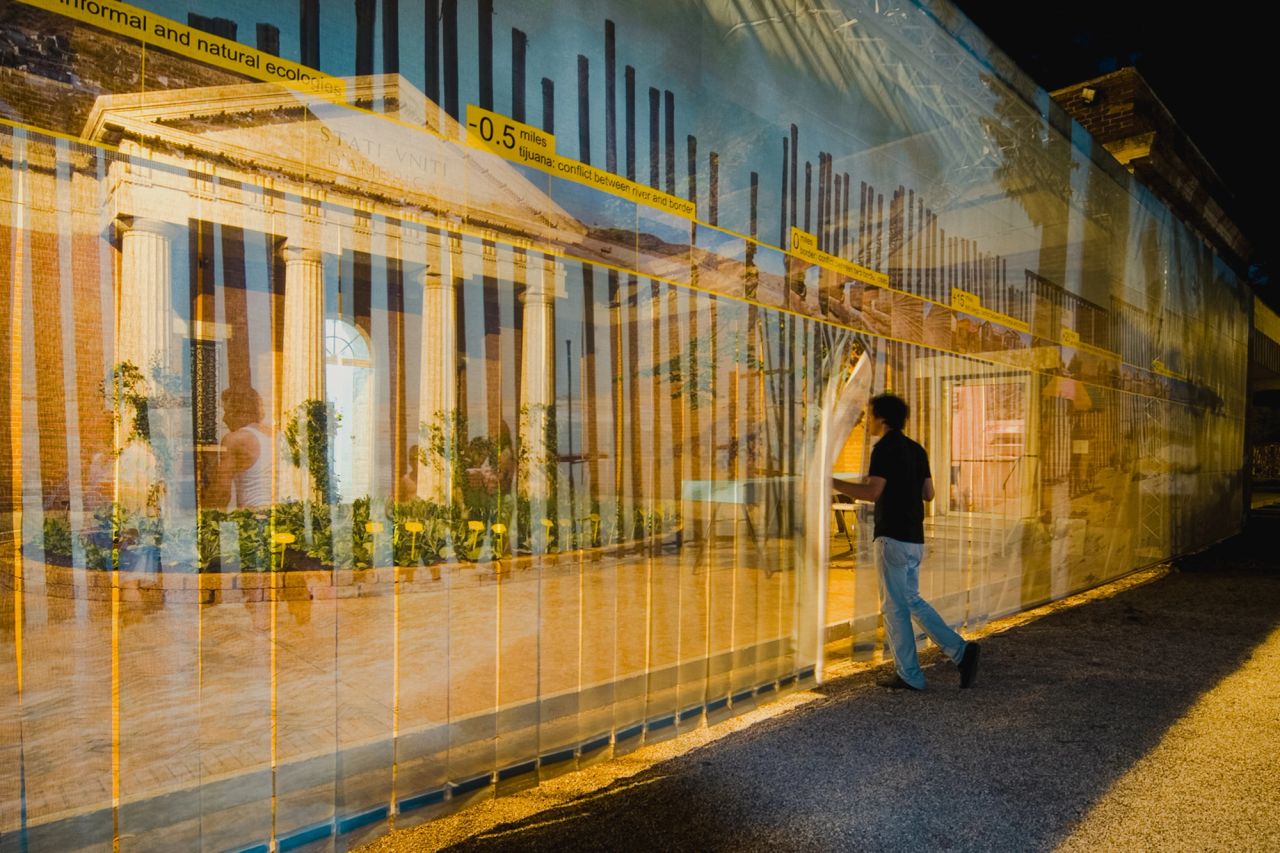
Into the Open: Positioning Practice
La Biennale di Venezia, 11th International Architecture Exhibition, U.S. Pavilion
Venice, Italy
Credits: Ryan Reitbauer/Duggall
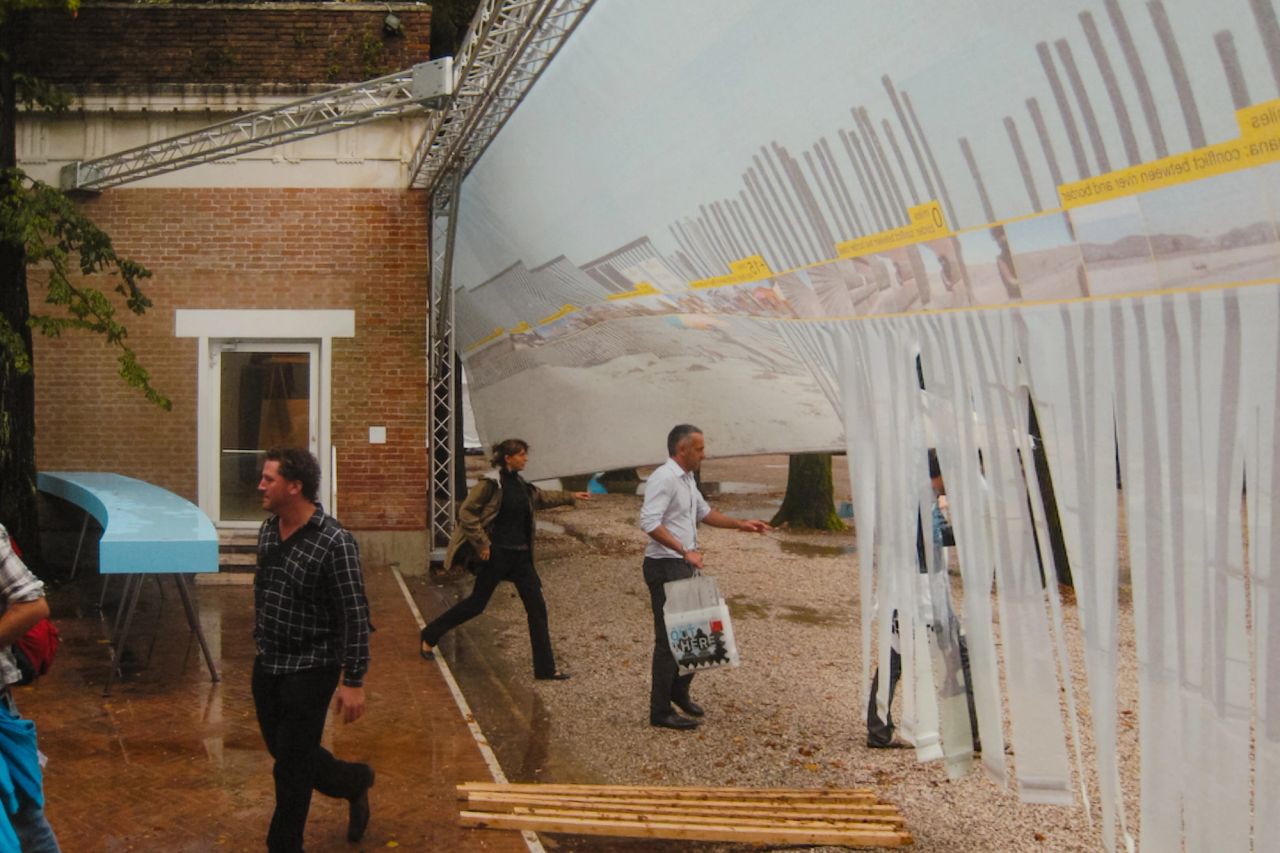
Into the Open: Positioning Practice
La Biennale di Venezia, 11th International Architecture Exhibition, U.S. Pavilion
Venice, Italy
Credits: Cleveland Museum of Art
MIX: Teddy Cruz addressed the US–Mexican transborder urban dynamics, the social and political implications of migration, architecture and development, and conflicts such as those between privatization and public space, between military bases and environmental zones, and between the natural and political boundaries. In Radicalizing the Local: 60 Miles of Trans-Border Urban Conflict, a large, horizontal photo mural presented a 60-linear-mile cross-section of images beginning 30 miles north of the international border between the United States and Mexico at the San Diego–Tijuana checkpoint—the most trafficked international border in the world—and stretching 30 miles south of the border into Tijuana.
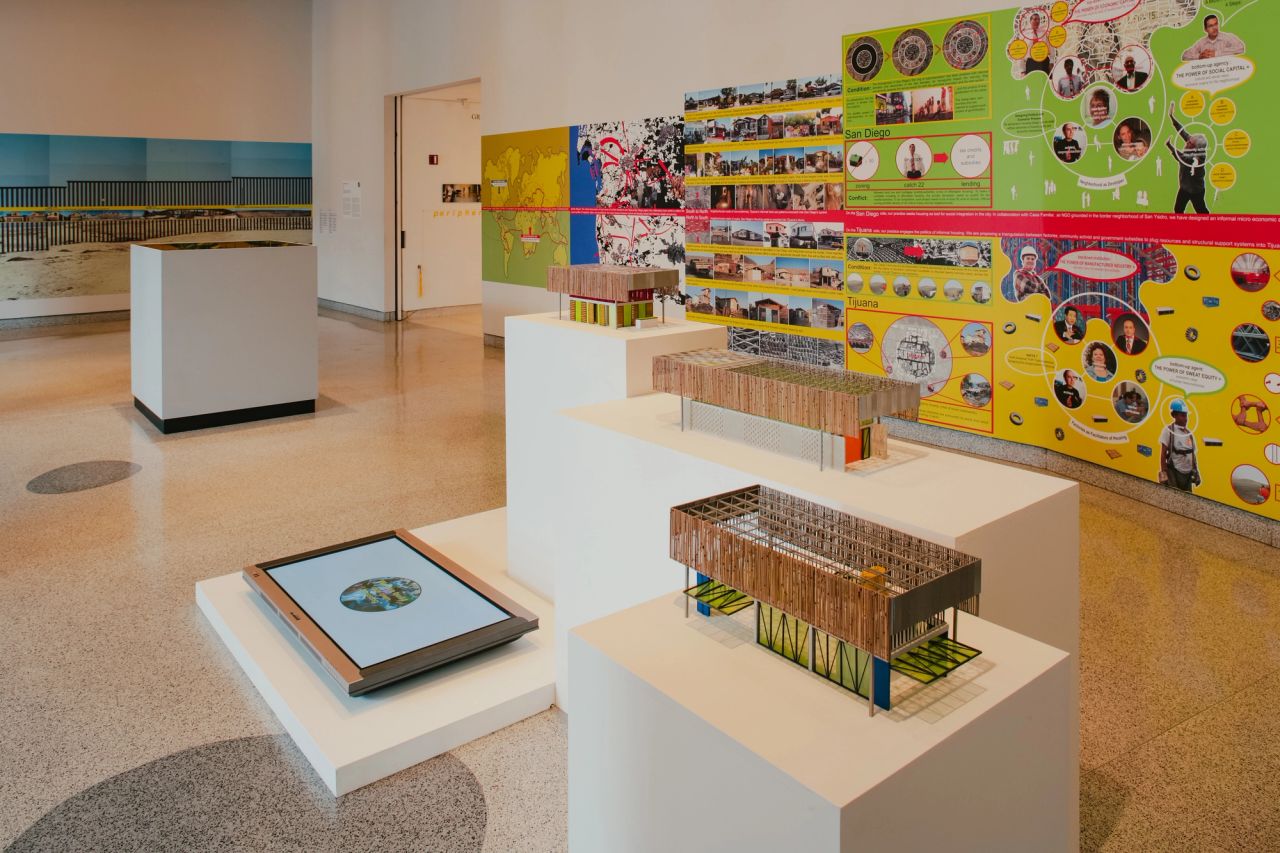
MIX: Nine San Diego Architects and Designers
MCASD, Gordon Gray Gallery
San Diego, United States
MIX: Nine San Diego Architects and Designers
MCASD, Gordon Gray Gallery
San Diego, United States
MIX: Nine San Diego Architects and Designers
MCASD, Gordon Gray Gallery
San Diego, United States
MIX: Nine San Diego Architects and Designers
MCASD, Gordon Gray Gallery
San Diego, United States
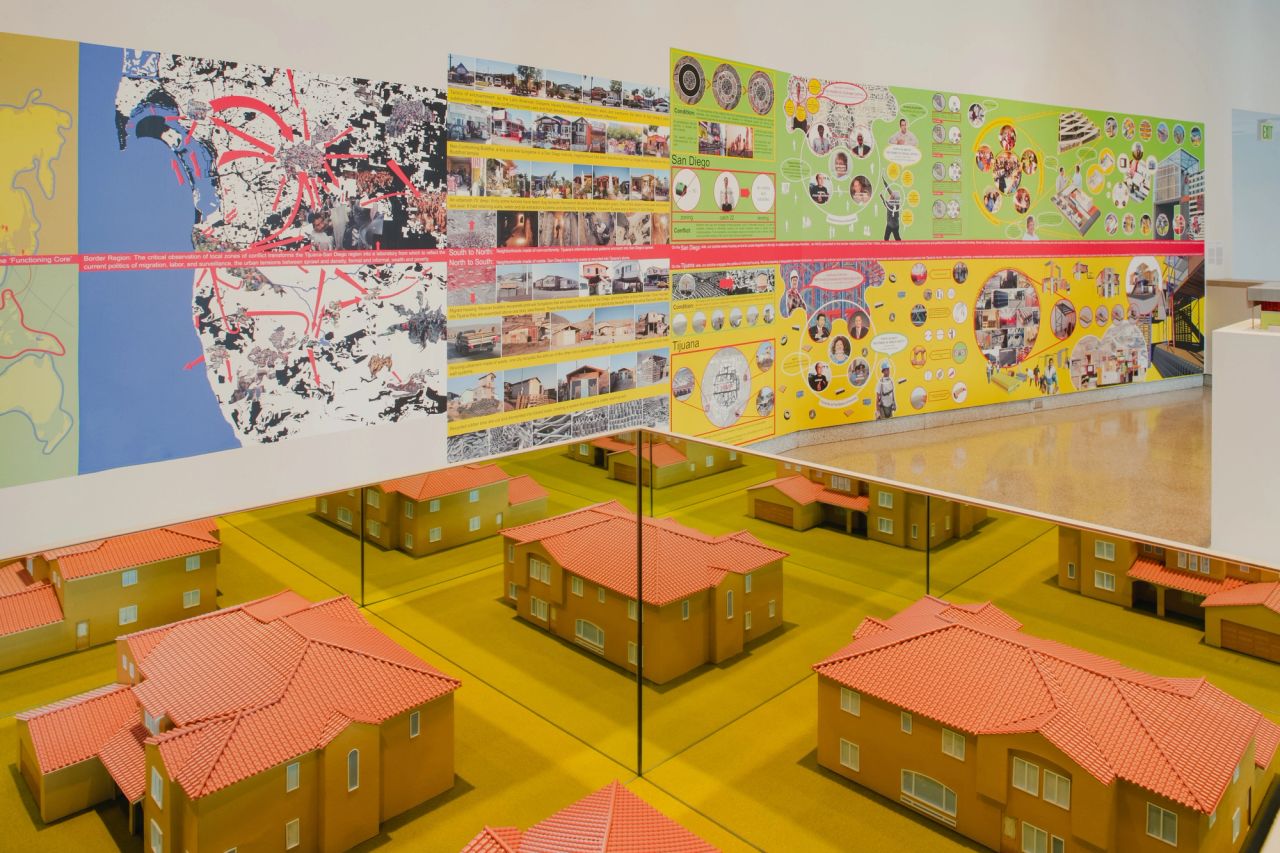
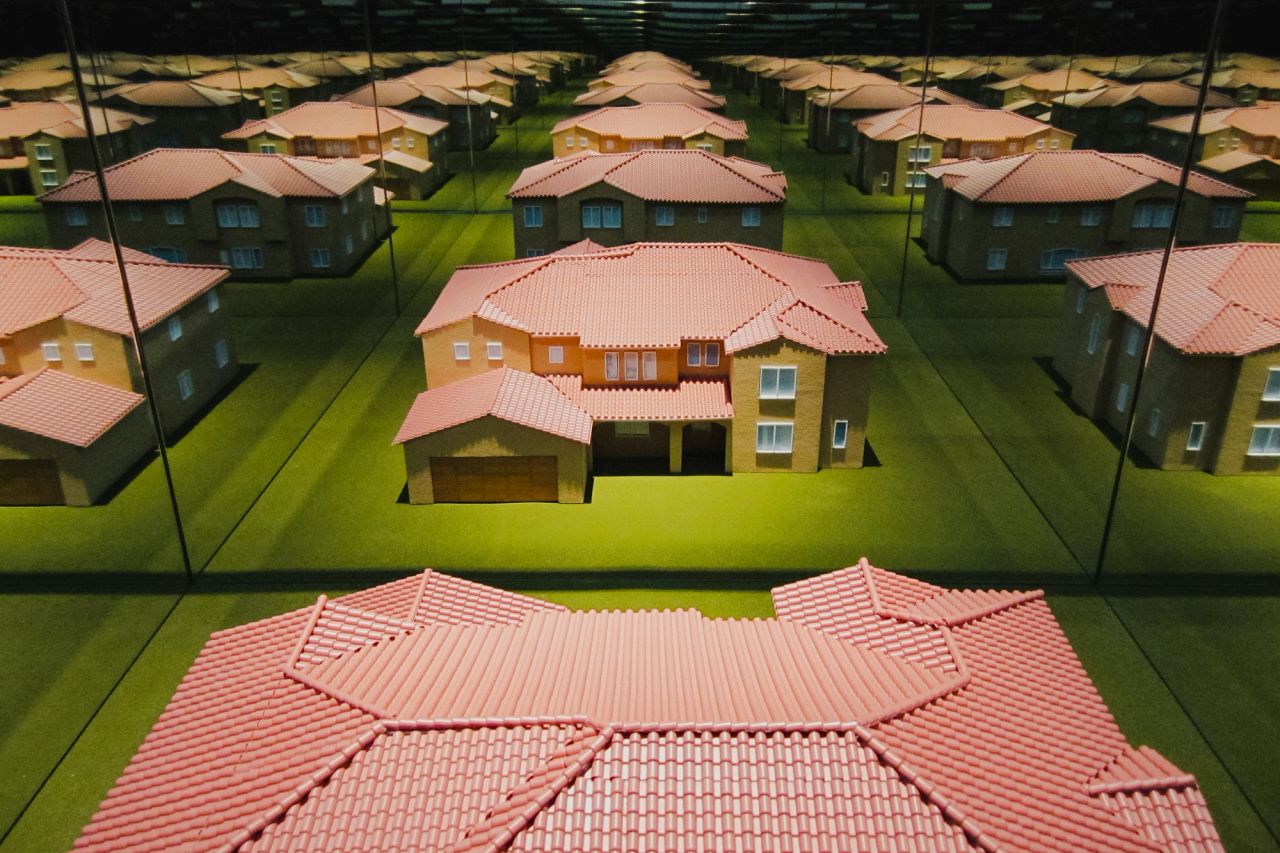
Cultural Traffic: From the Global Border to the Border Neighbourhood consisted of a cylindrical pavilion comprised of traffic cones, hosting three video animations and the McMansion Retrofitted model: a scale reproduction of a typical villa in Southern California whose image is multiplied in the mirrors surrounding it. Here, we reflected on the dynamics of urban conflicts generated in border territories such as San Diego and Tijuana. What inspired this project was the relationship between these two cities, where immigrants who move northward begin to alter the urban homogeneity of Southern California, to the same degree that San Diego recycles its urban waste in the poorest neighborhoods of Tijuana.
Spazio
MAXXI
Rome, Italy
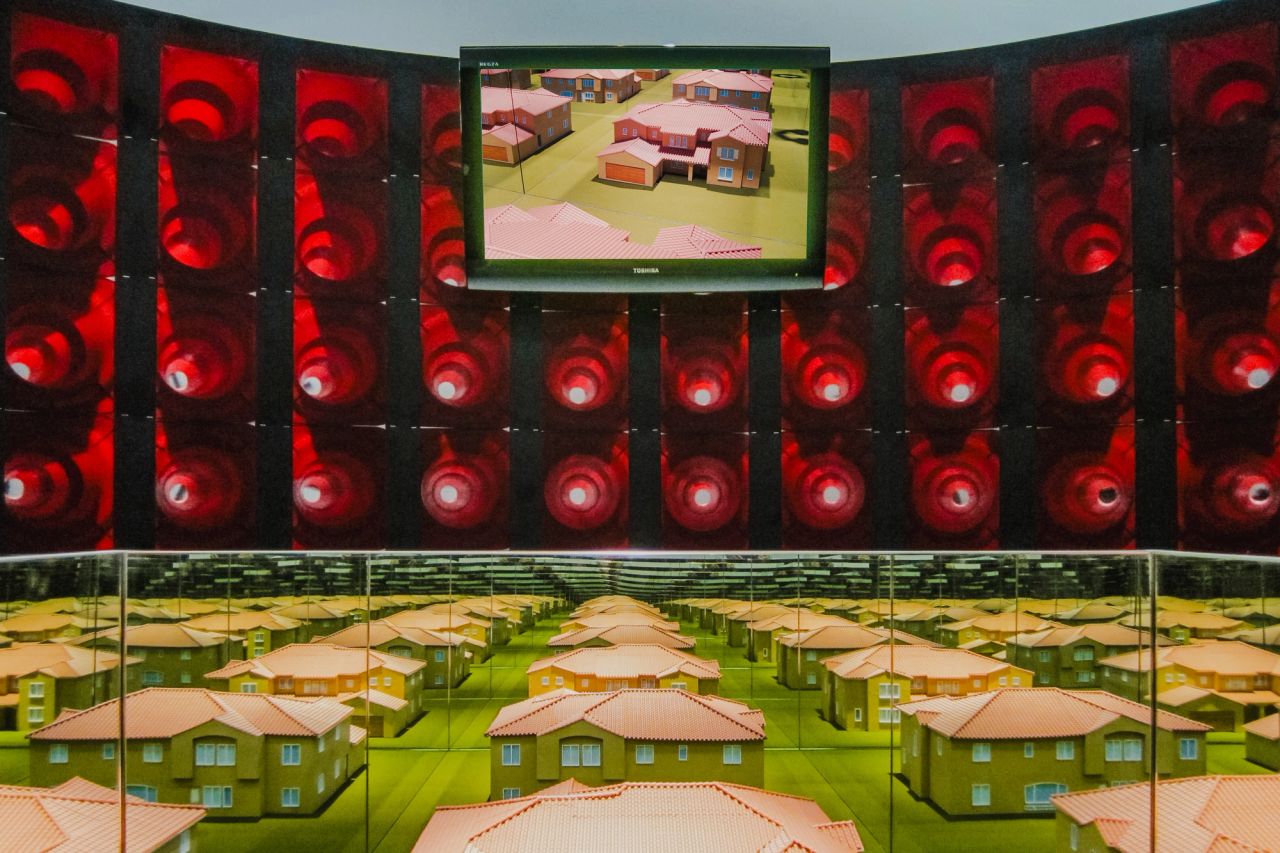
Spazio
MAXXI
Rome, Italy

Spazio
MAXXI
Rome, Italy
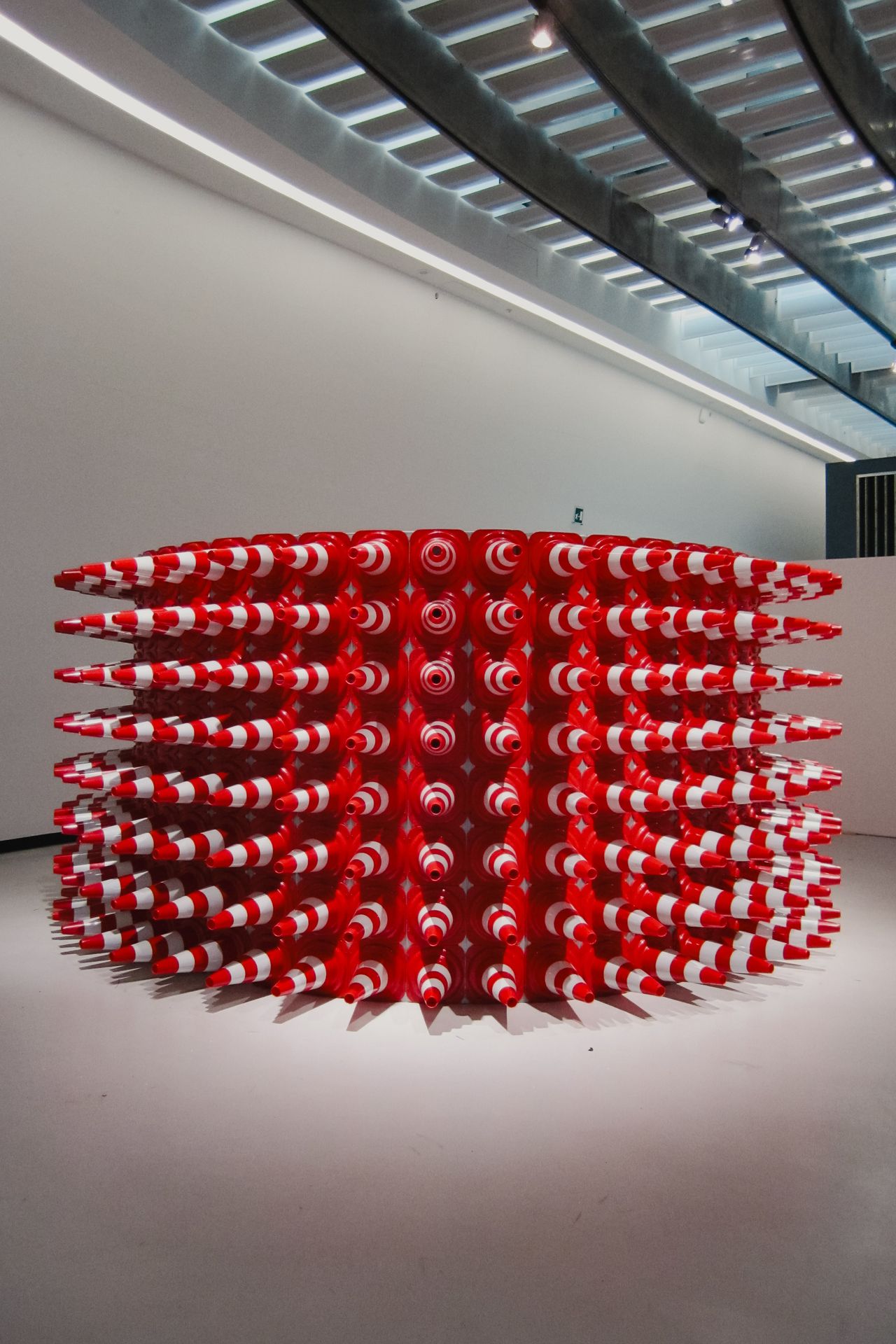
Spazio
MAXXI
Rome, Italy
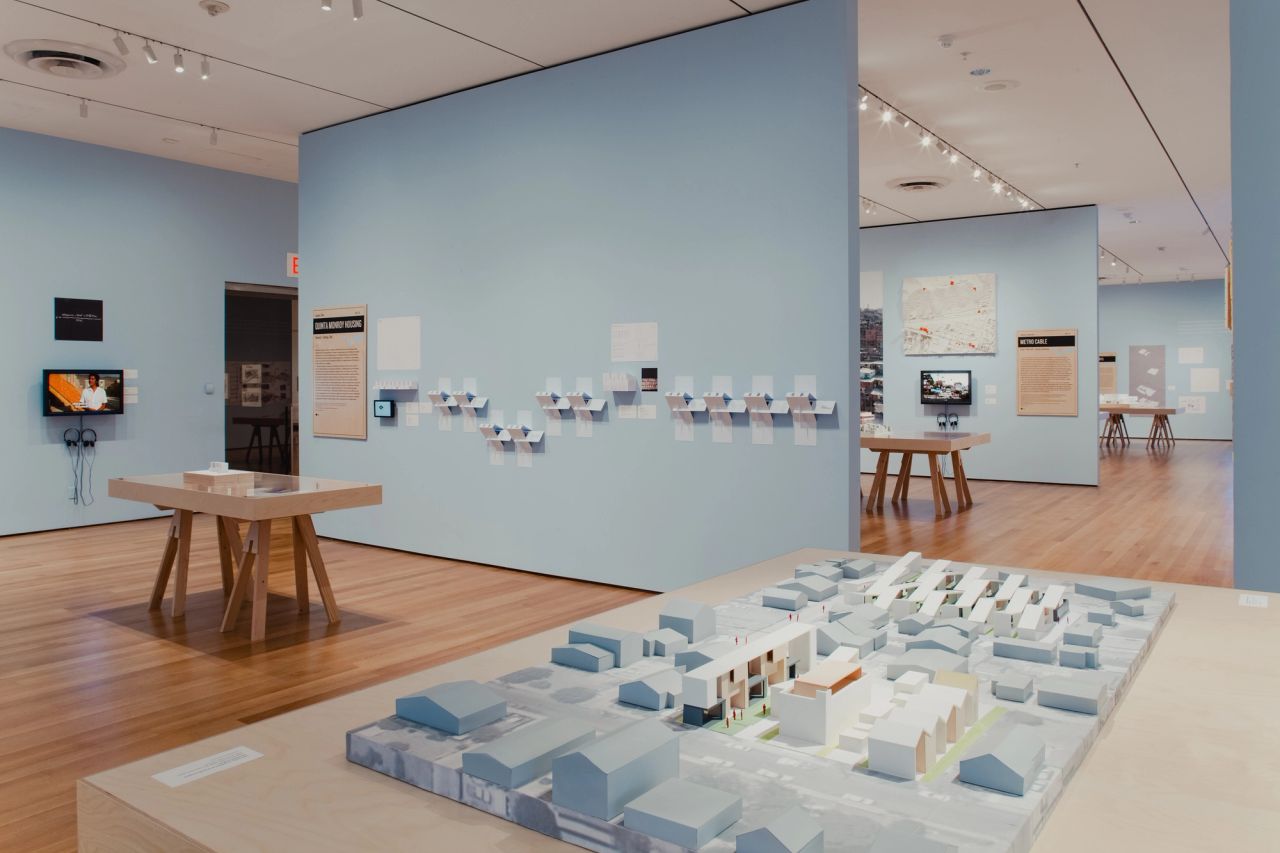
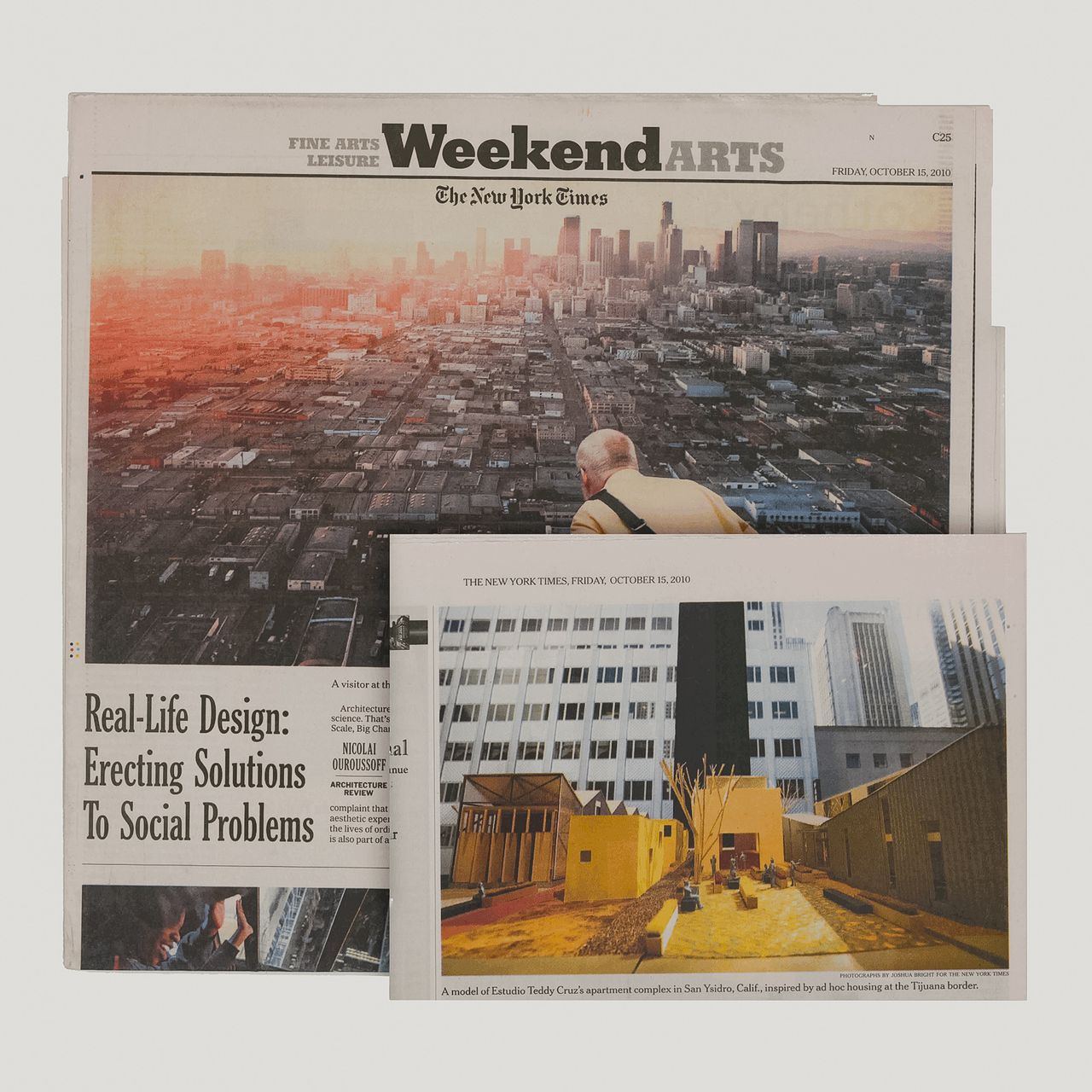
Casa Familiar: Living Rooms at the Border and Senior Housing With Childcare presented a pilot mixed-use affordable housing project in San Ysidro—a district of San Diego just north of the US–Mexico border—developed in collaboration with the community-based non-profit Casa Familiar. To counteract the marginalization of San Ysidro’s Latinx community, characterized by low median household income, the project sought to stimulate political, economic, and social transformation by creating a complex system of housing and shared spaces that would acknowledge, exploit and institutionalize the standardized, dense, multiuse, and often illegal development of the existing fabric.
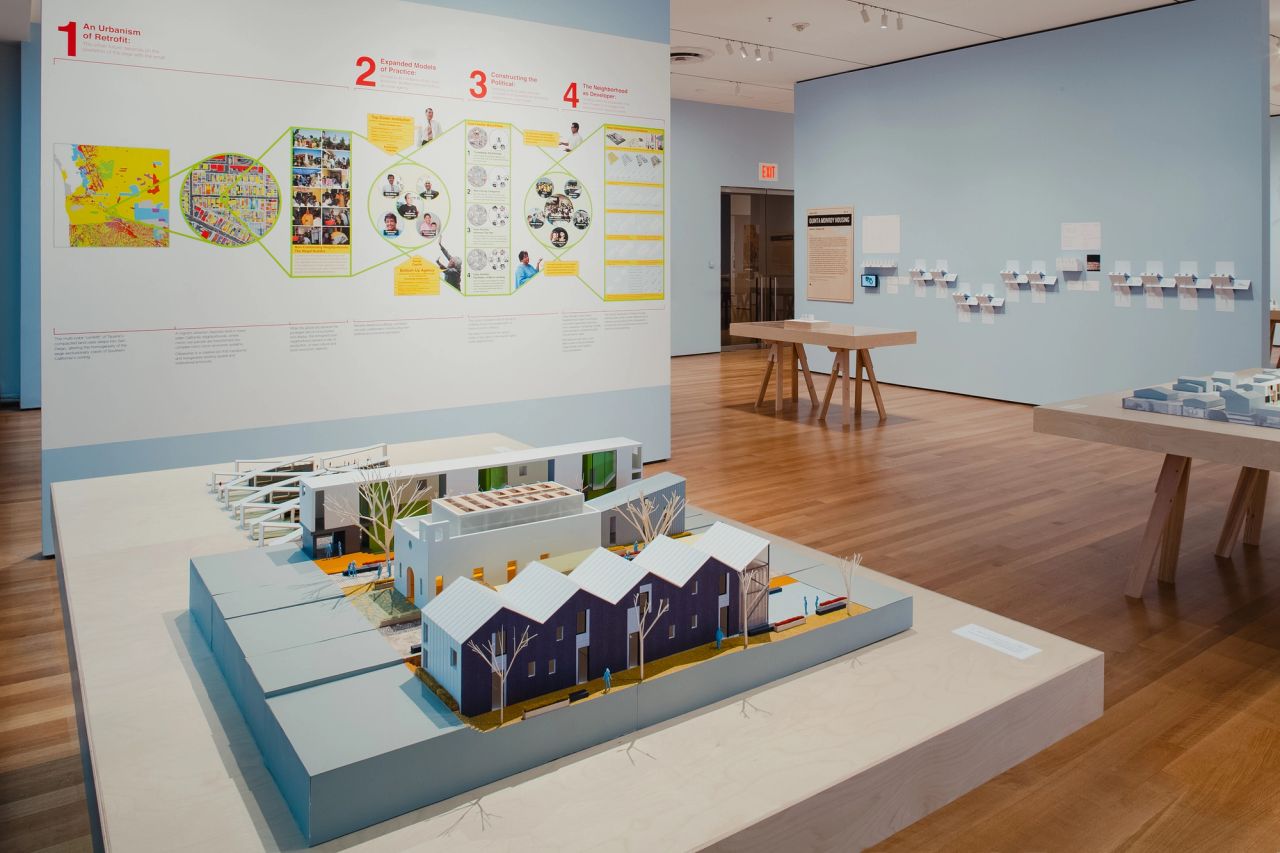
Small Scale, Big Change: New Architectures of Social Engagement
MoMA, Floor 3, Exhibition Galleries
New York, United States
Credits: Thomas Griesel
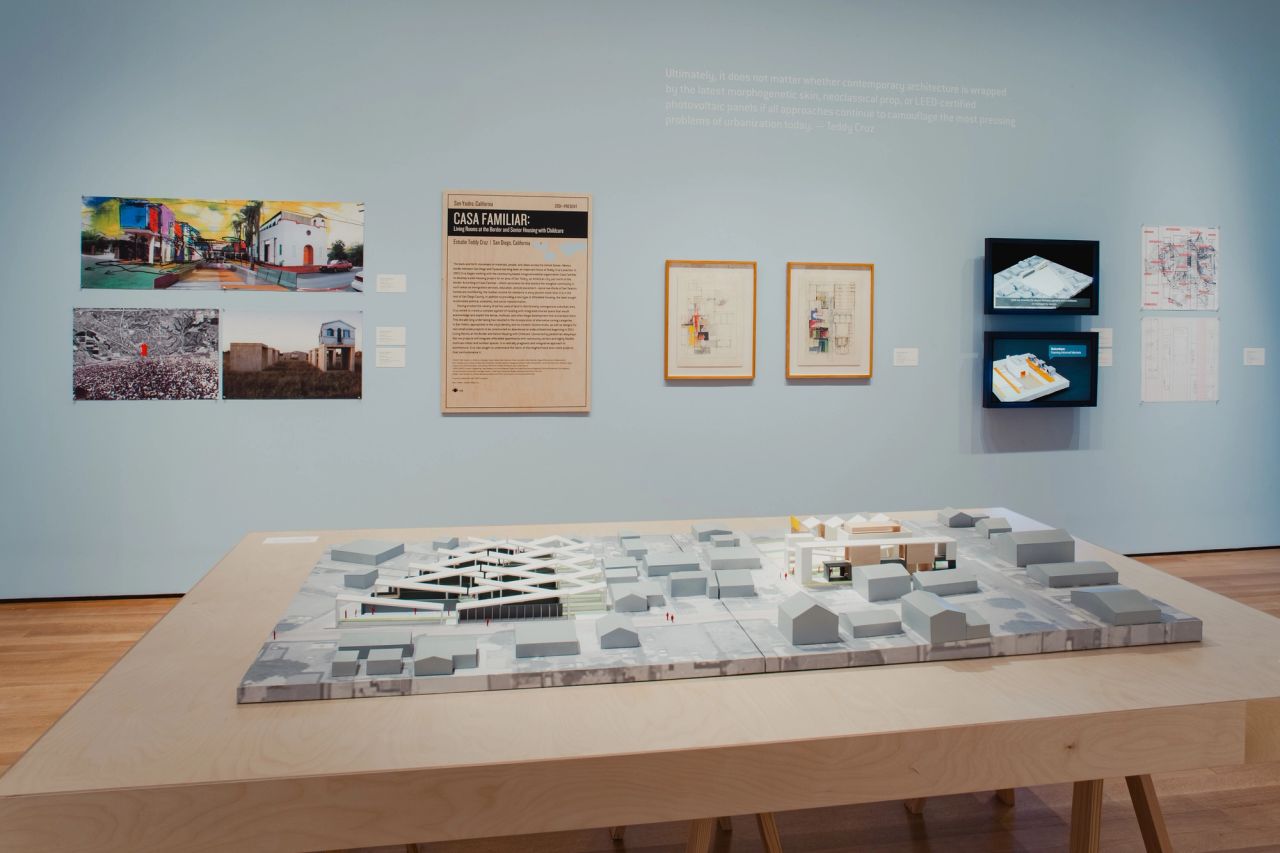
Small Scale, Big Change: New Architectures of Social Engagement
MoMA, Floor 3, Exhibition Galleries
New York, United States
Credits: Thomas Griesel
Small Scale, Big Change: New Architectures of Social Engagement
MoMA, Floor 3, Exhibition Galleries
New York, United States
Credits: Thomas Griesel
Small Scale, Big Change: New Architectures of Social Engagement
MoMA, Floor 3, Exhibition Galleries
New York, United States
Credits: Thomas Griesel
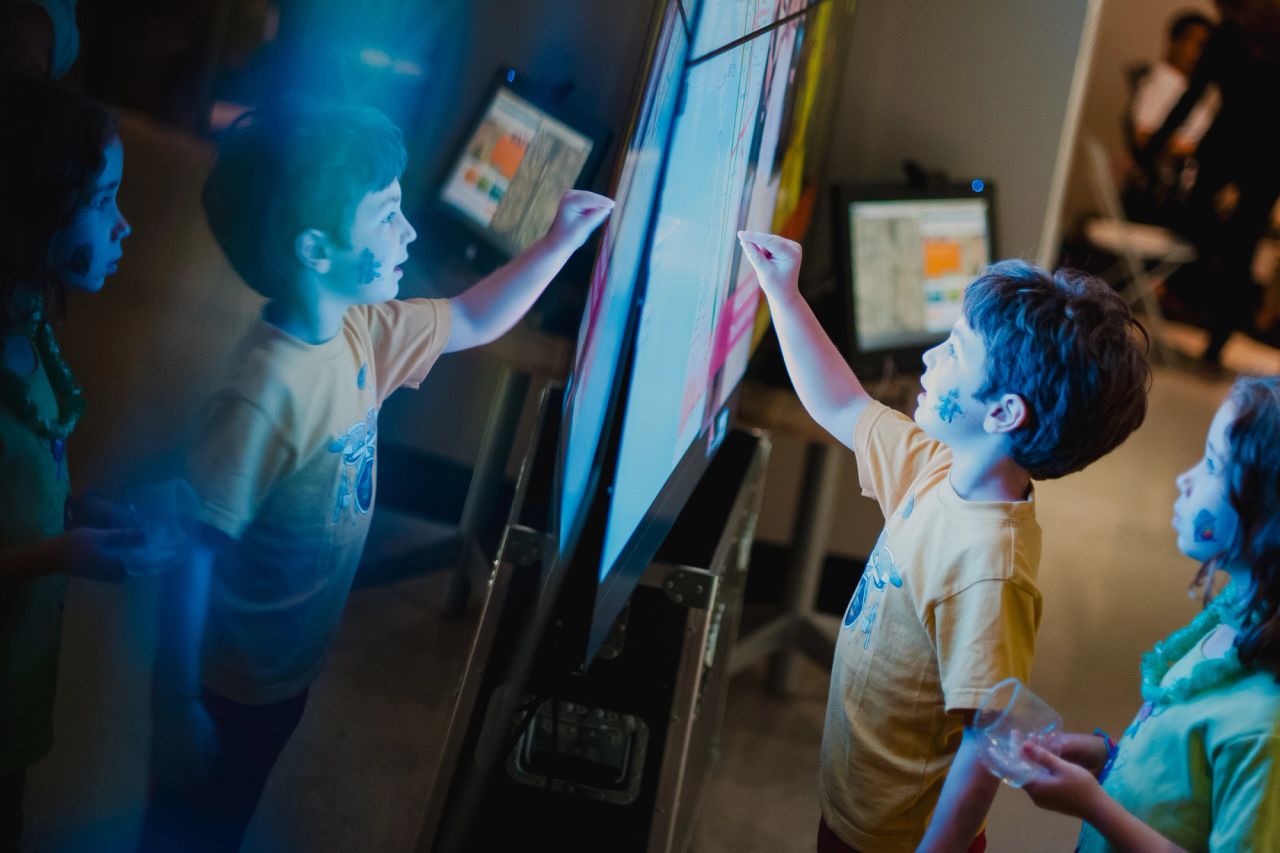
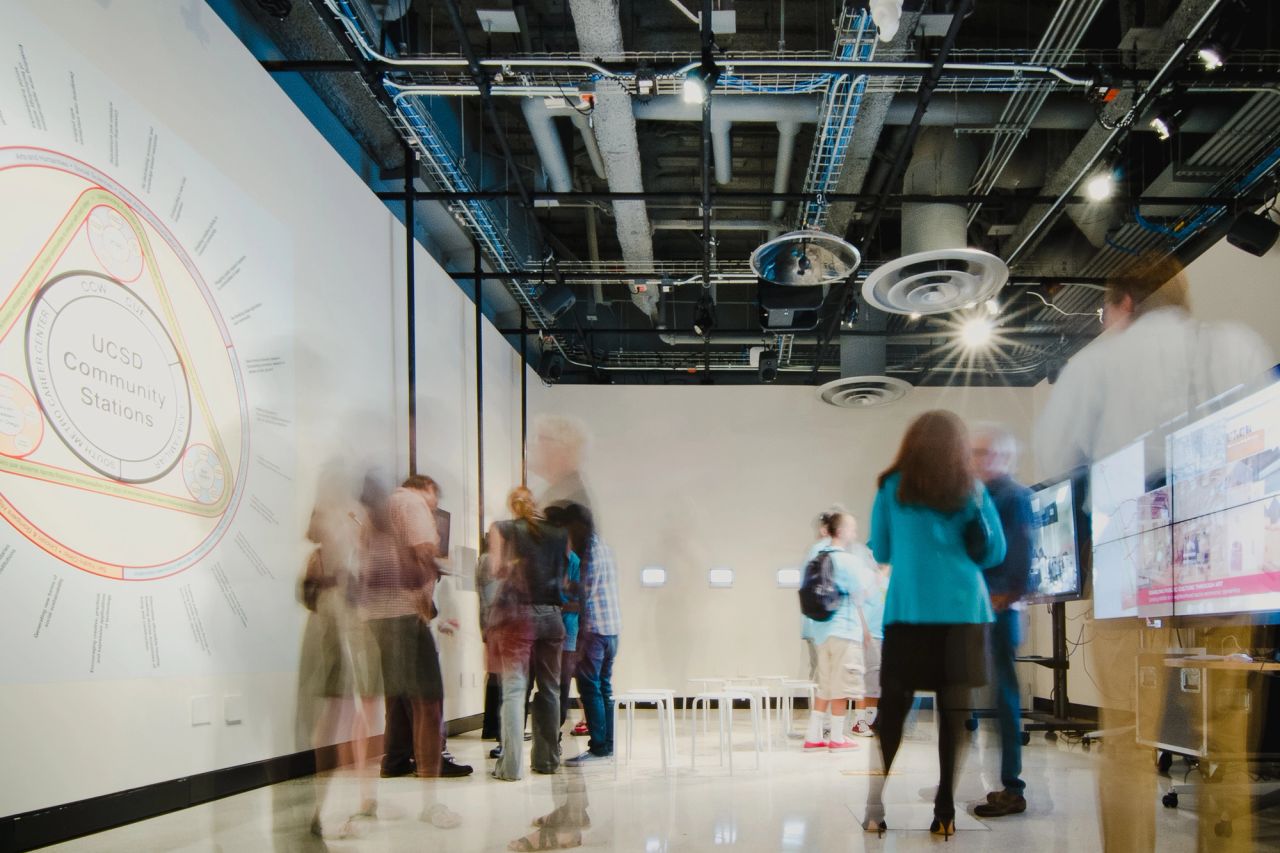
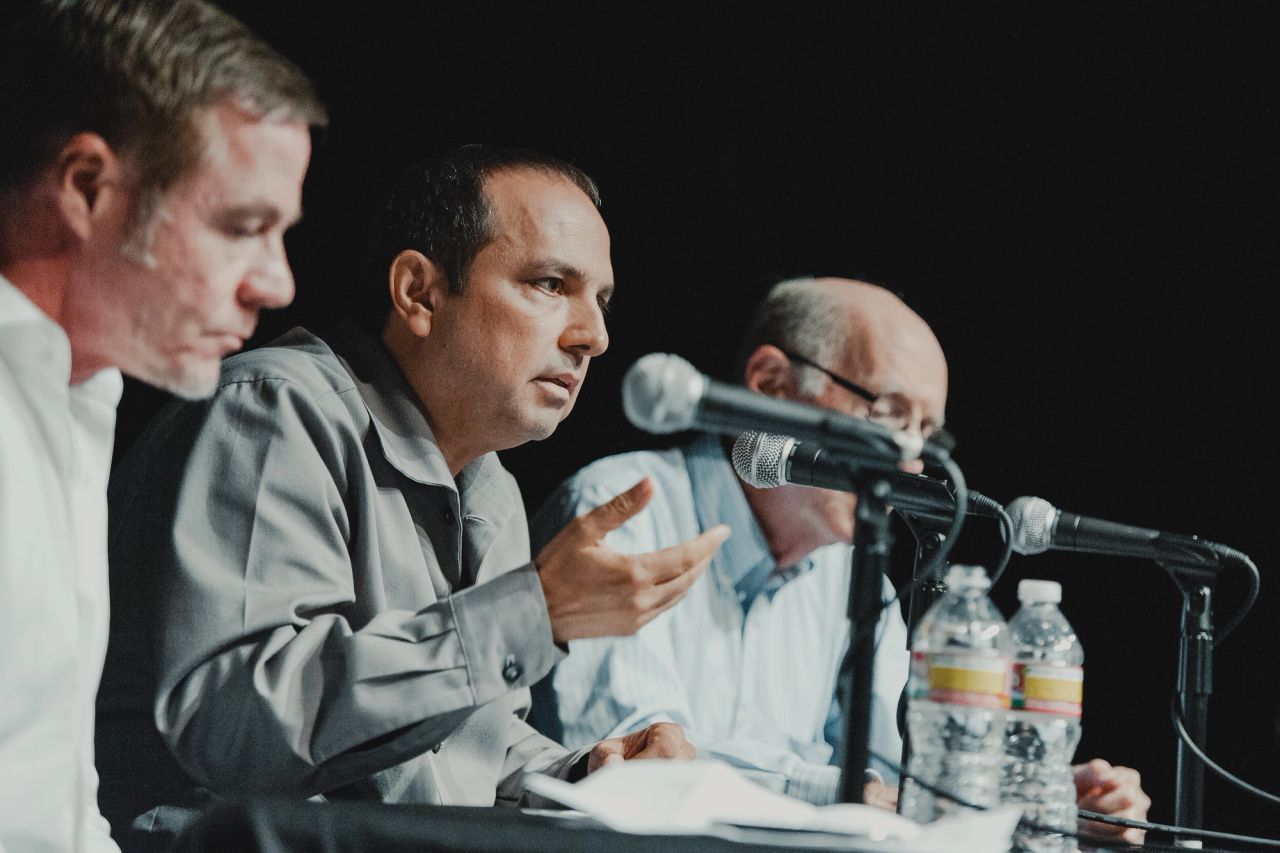
Knowledge-Exchange Corridors: The UCSD Community Stations Initiative presented the UCSD Community Stations as a pilot community outreach initiative that pushed forward collaborative projects across underserved communities in San Diego, through a collective body of university leaders from UC San Diego and grassroots organizations.

Knowledge-Exchange Corridors: The UCSD Community Stations Initiative
UC San Diego, Calit2 Auditorium
La Jolla, United States
Credits: Erik Jepsen
Knowledge-Exchange Corridors: The UCSD Community Stations Initiative
UC San Diego, Calit2 Auditorium
La Jolla, United States
Credits: Erik Jepsen
Knowledge-Exchange Corridors: The UCSD Community Stations Initiative
UC San Diego, Calit2 Auditorium
La Jolla, United States
Credits: Erik Jepsen
Knowledge-Exchange Corridors: The UCSD Community Stations Initiative
UC San Diego, Calit2 Auditorium
La Jolla, United States
Credits: Erik Jepsen
Knowledge-Exchange Corridors: The UCSD Community Stations Initiative
UC San Diego, Calit2 Auditorium
La Jolla, United States
Credits: Erik Jepsen
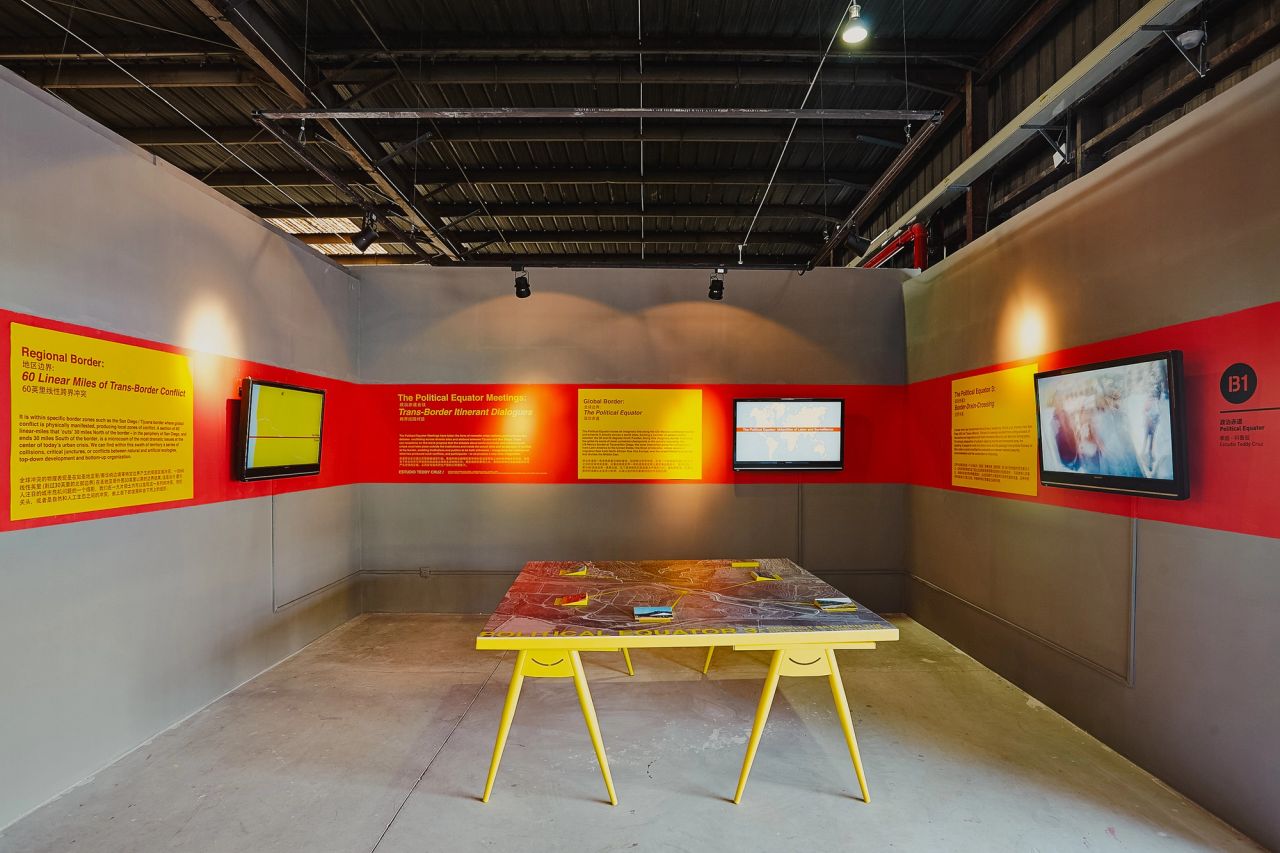
The Political Equator Meetings: Trans-Border Itinerant Dialogues presented a series of nomadic urban actions, performances and debates oscillating across diverse sites in San Diego and Tijuana. Those conversations on-the-move proposed that the debates about socio-economic and environmental crises must take place outside the institutions and inside the actual sites of conflict along the border, enabling institutions and publics to be both witnesses—recognizing the evidence of what has produced such conflicts—and participants, to co-produce a new civic imagination.
Urban Border
The 5th Urbanism/Architecture Bi-City Biennale
Hong Kong–Shenzhen, China
Urban Border
The 5th Urbanism/Architecture Bi-City Biennale
Hong Kong–Shenzhen, China
Urban Border
The 5th Urbanism/Architecture Bi-City Biennale
Hong Kong–Shenzhen, China
Urban Border
The 5th Urbanism/Architecture Bi-City Biennale
Hong Kong–Shenzhen, China
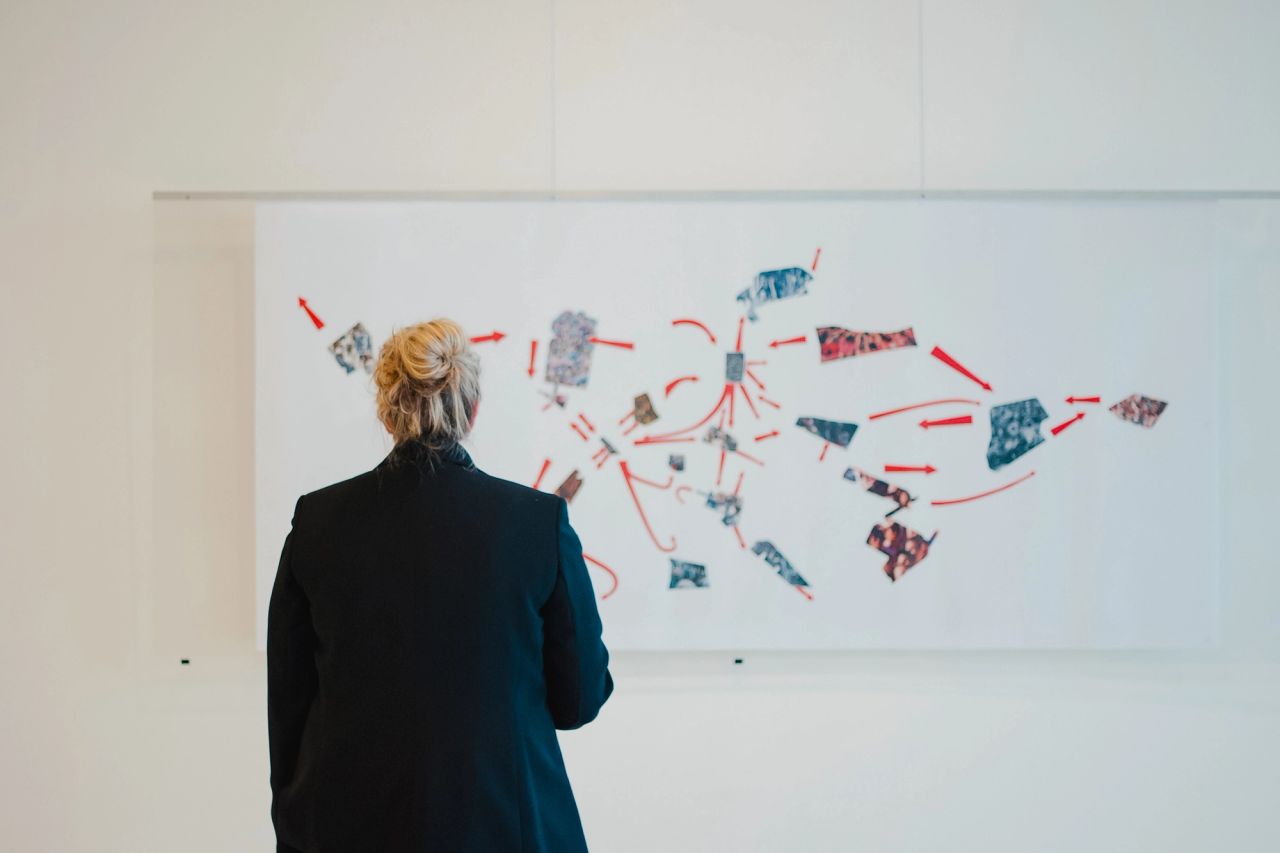
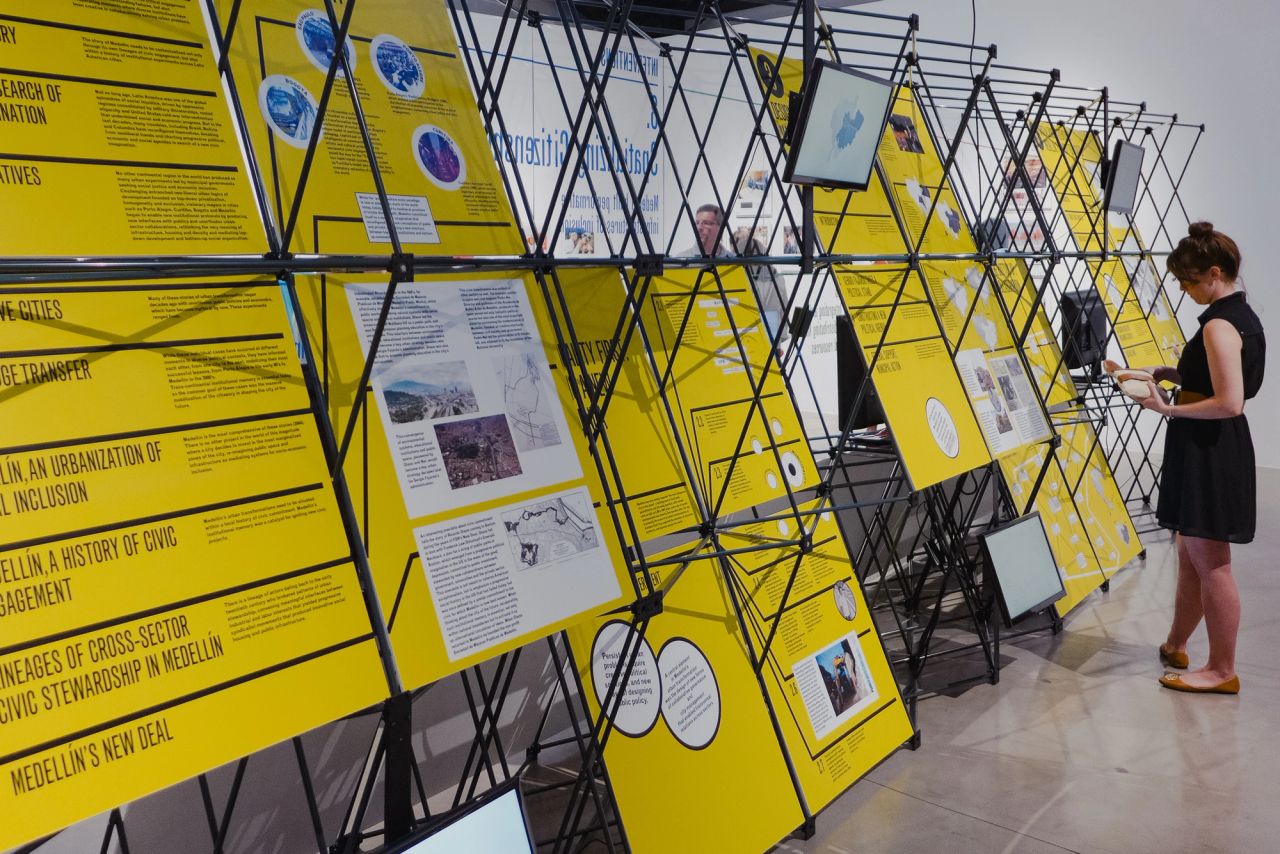
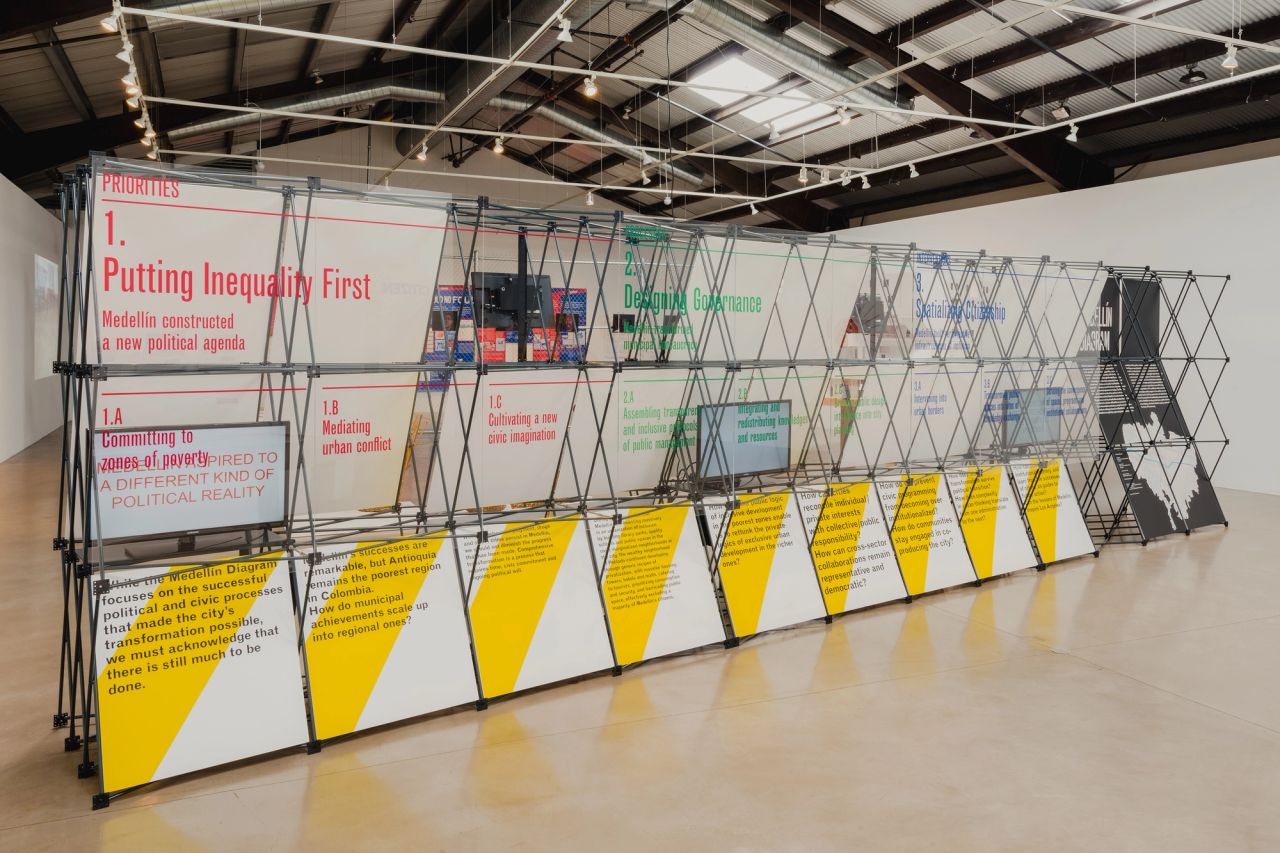
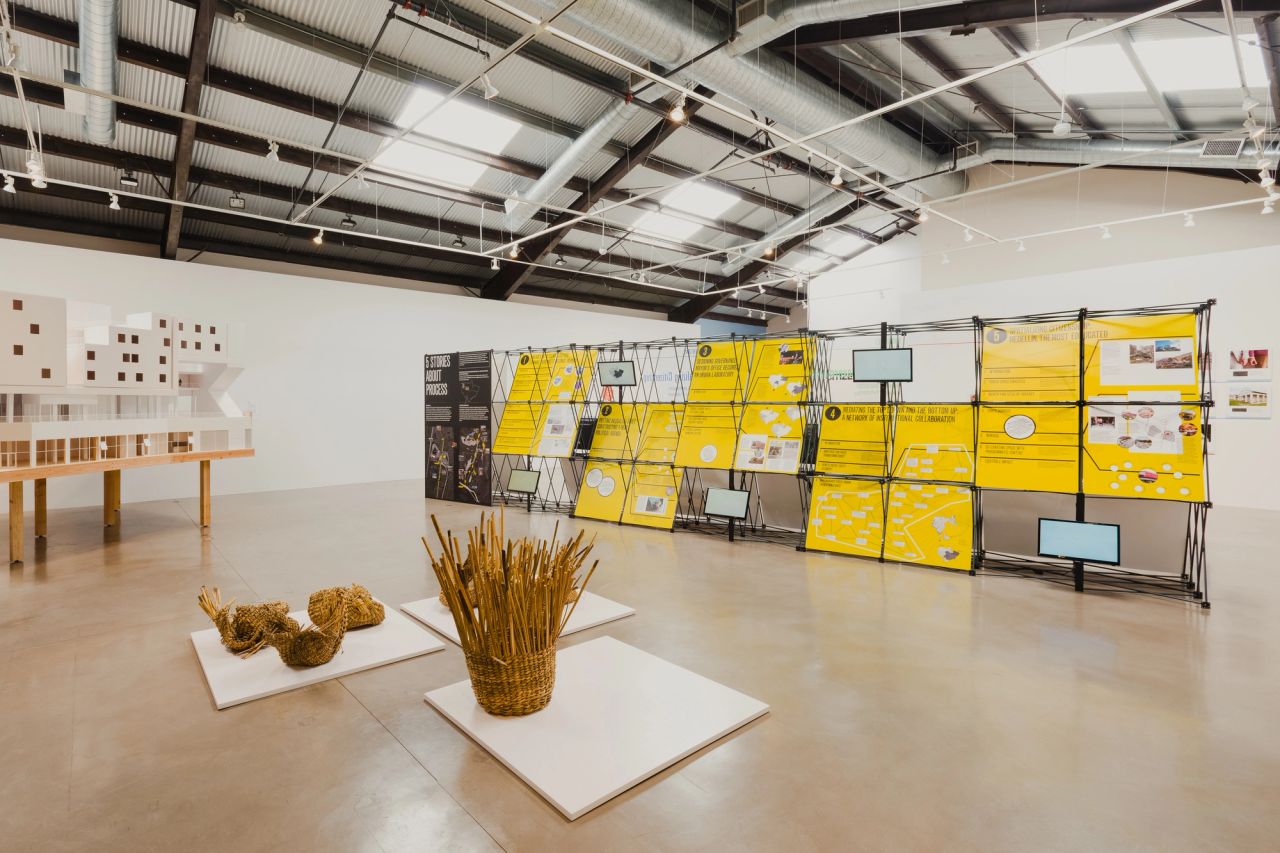
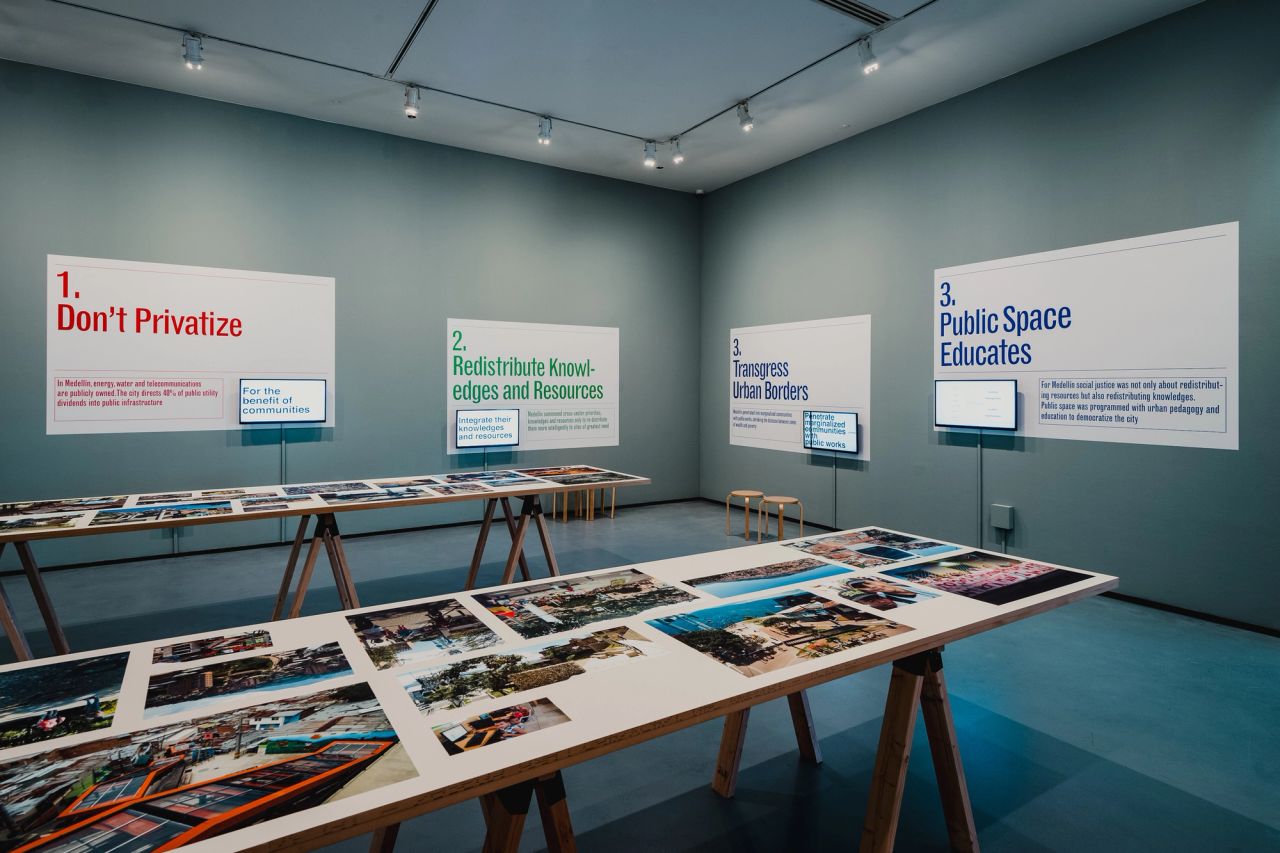
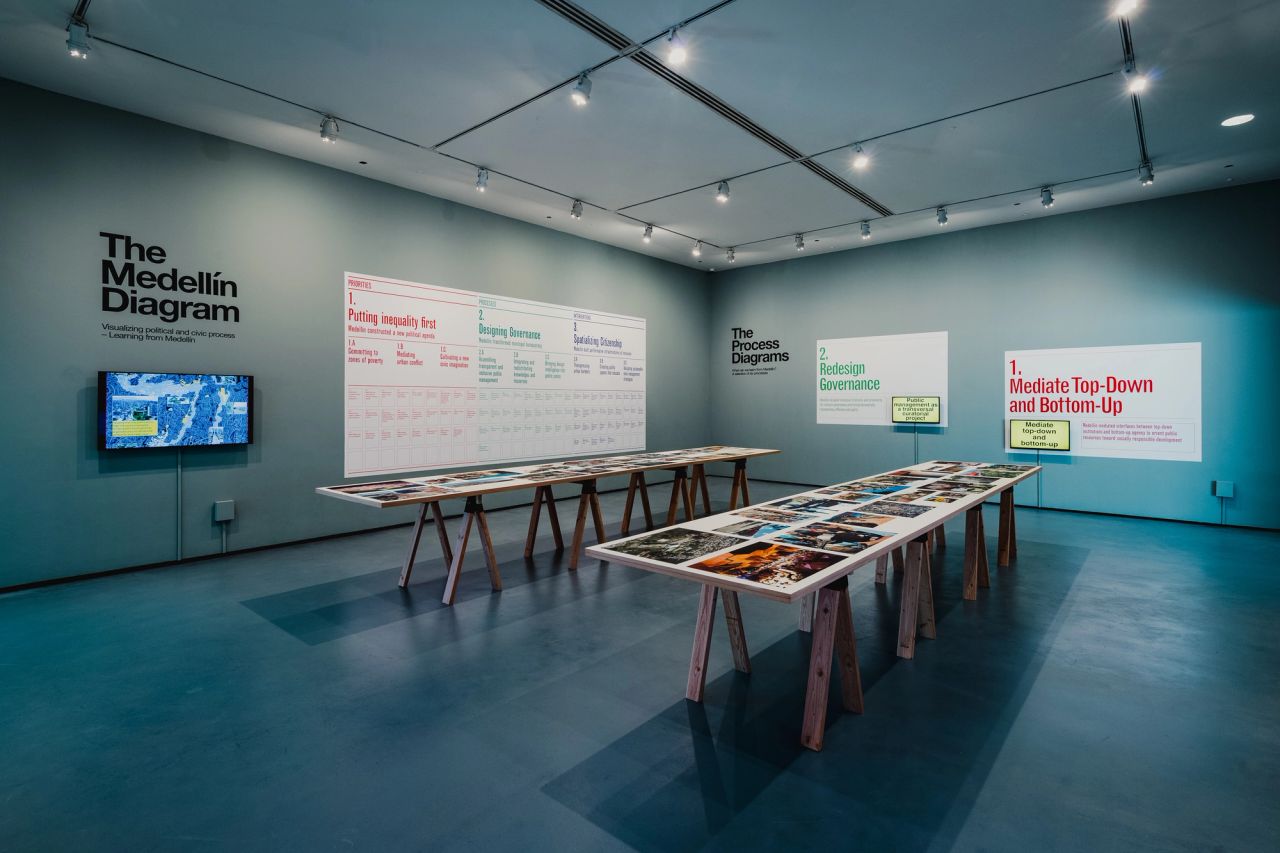
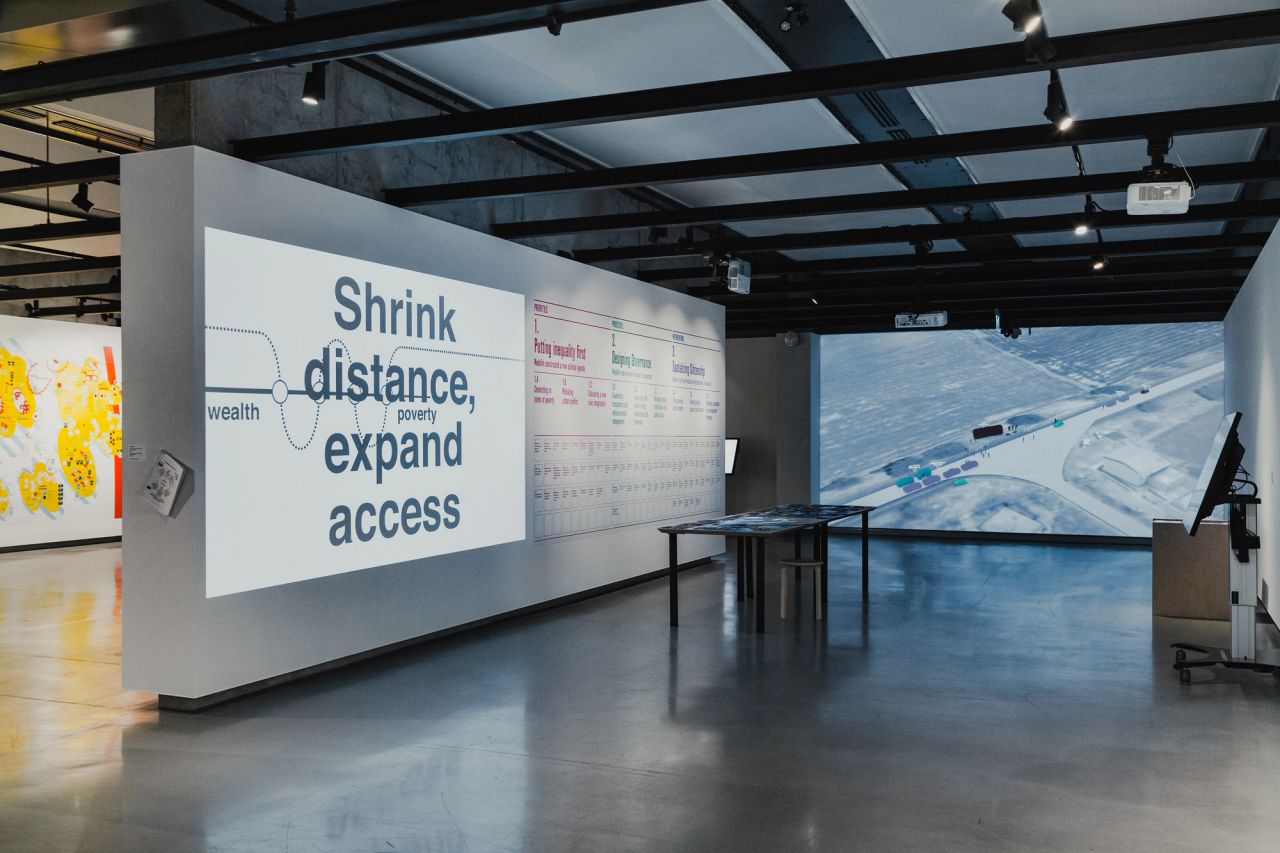
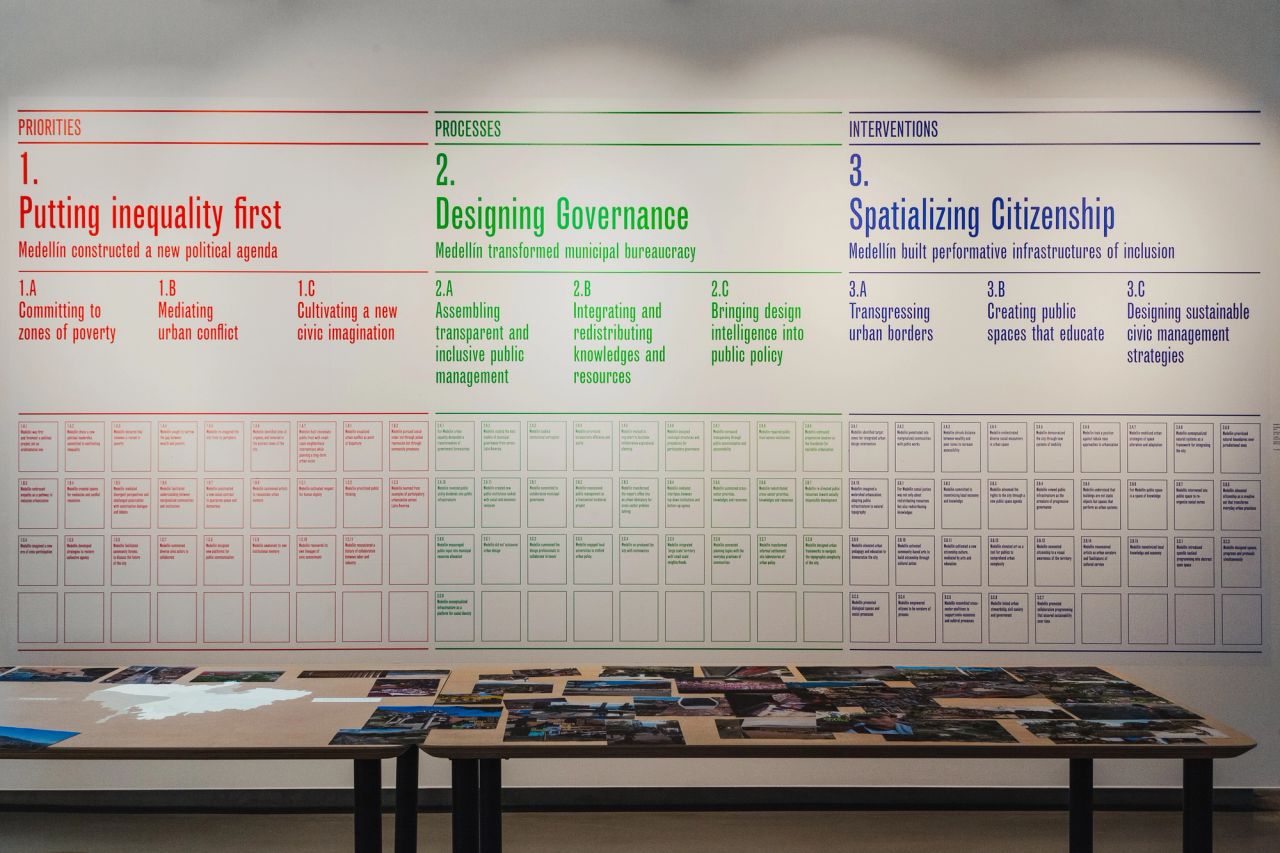
Visualizing Citizenship: The Medellín Diagram was a visualization of the complex civic processes that enabled Medellín’s renowned transformations under Mayor Sergio Fajardo (2003-2007). The diagram presented the changes to Medellín’s architecture and infrastructure as a political project, through which institutions reimagined protocol, collaborated, and confronted socio-economic inequality. The diagram visualized the steps required to improve civic life, build a new political reality, reimagine governance, engage the complexity of process, and sustain all of the above through cooperation with communities over time.
Citizen Culture: Art and Architecture Shape Policy
Santa Monica Museum of Art
Santa Monica, United States
Citizen Culture: Art and Architecture Shape Policy
Santa Monica Museum of Art
Santa Monica, United States
Citizen Culture: Art and Architecture Shape Policy
Santa Monica Museum of Art
Santa Monica, United States
Credits: Jeff McLane
Citizen Culture: Art and Architecture Shape Policy
Santa Monica Museum of Art
Santa Monica, United States
Credits: Jeff McLane
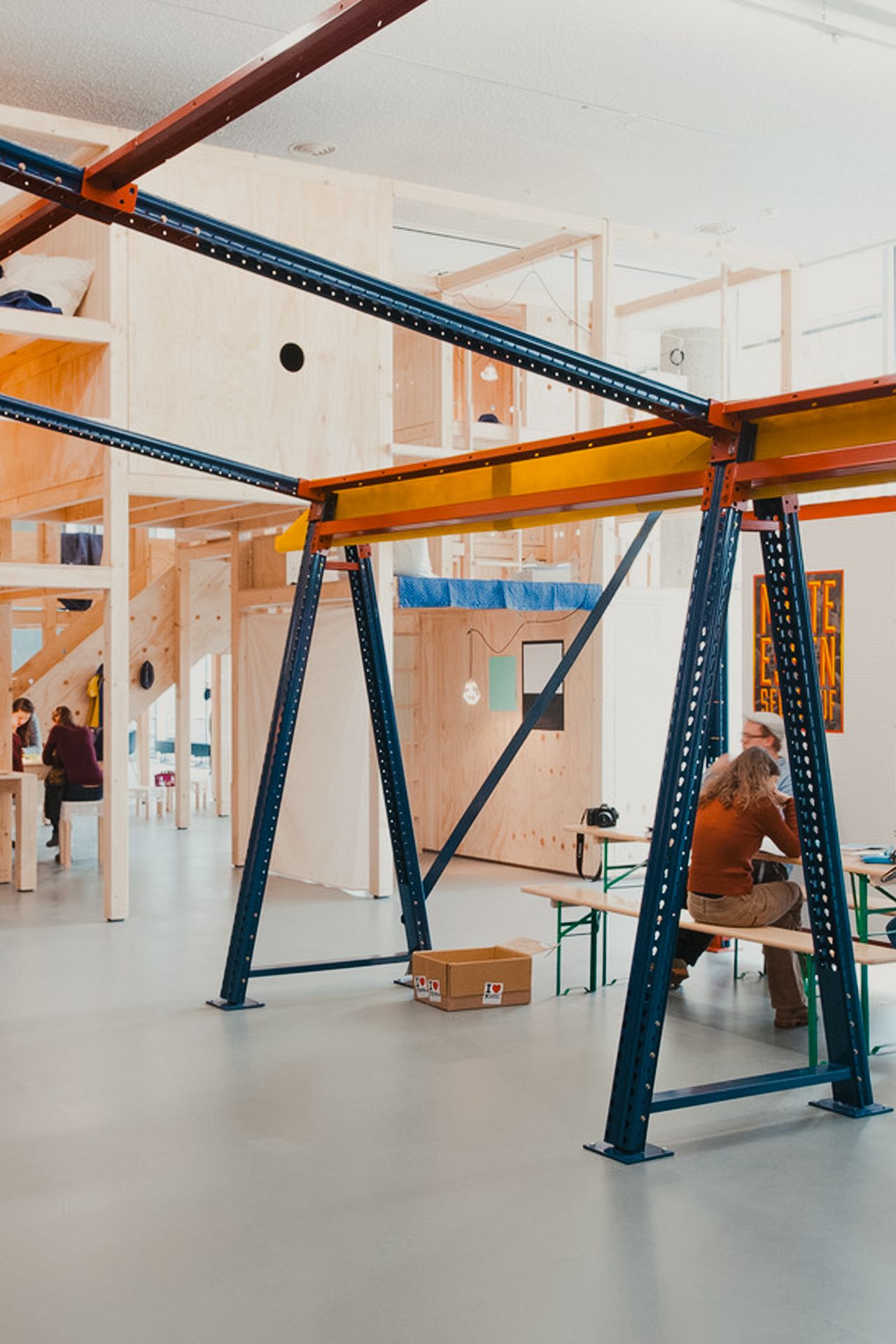
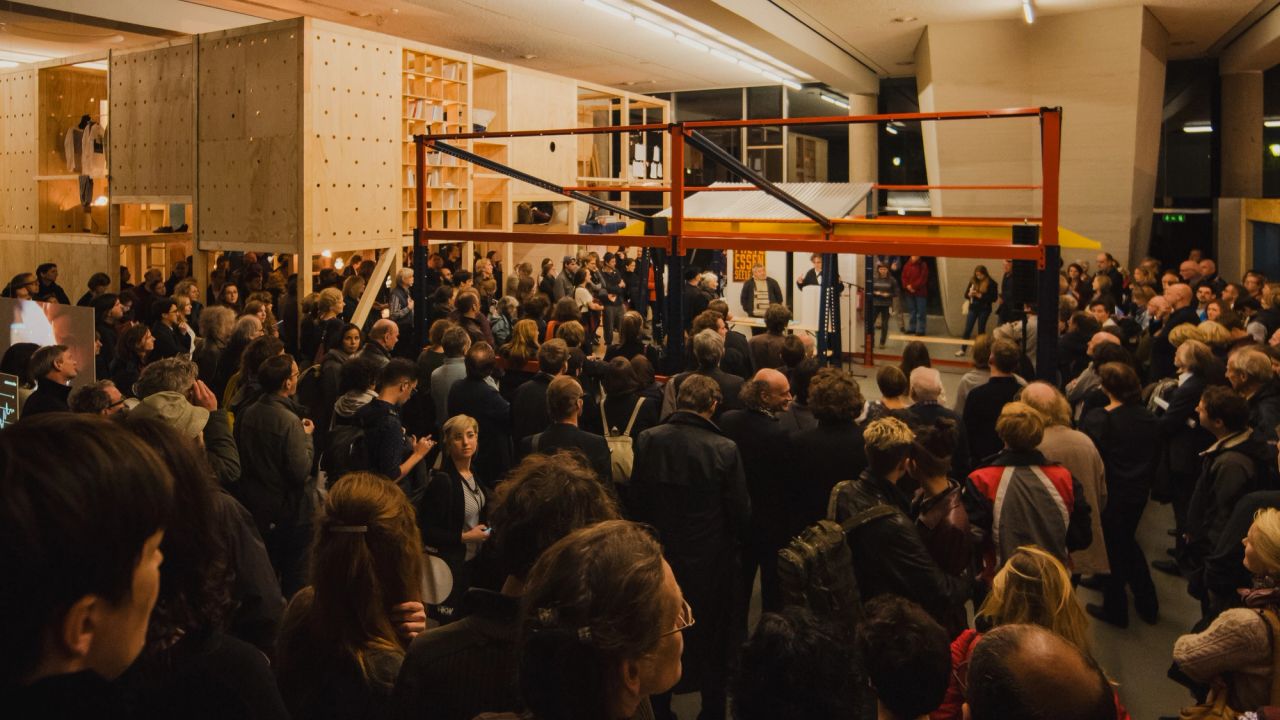
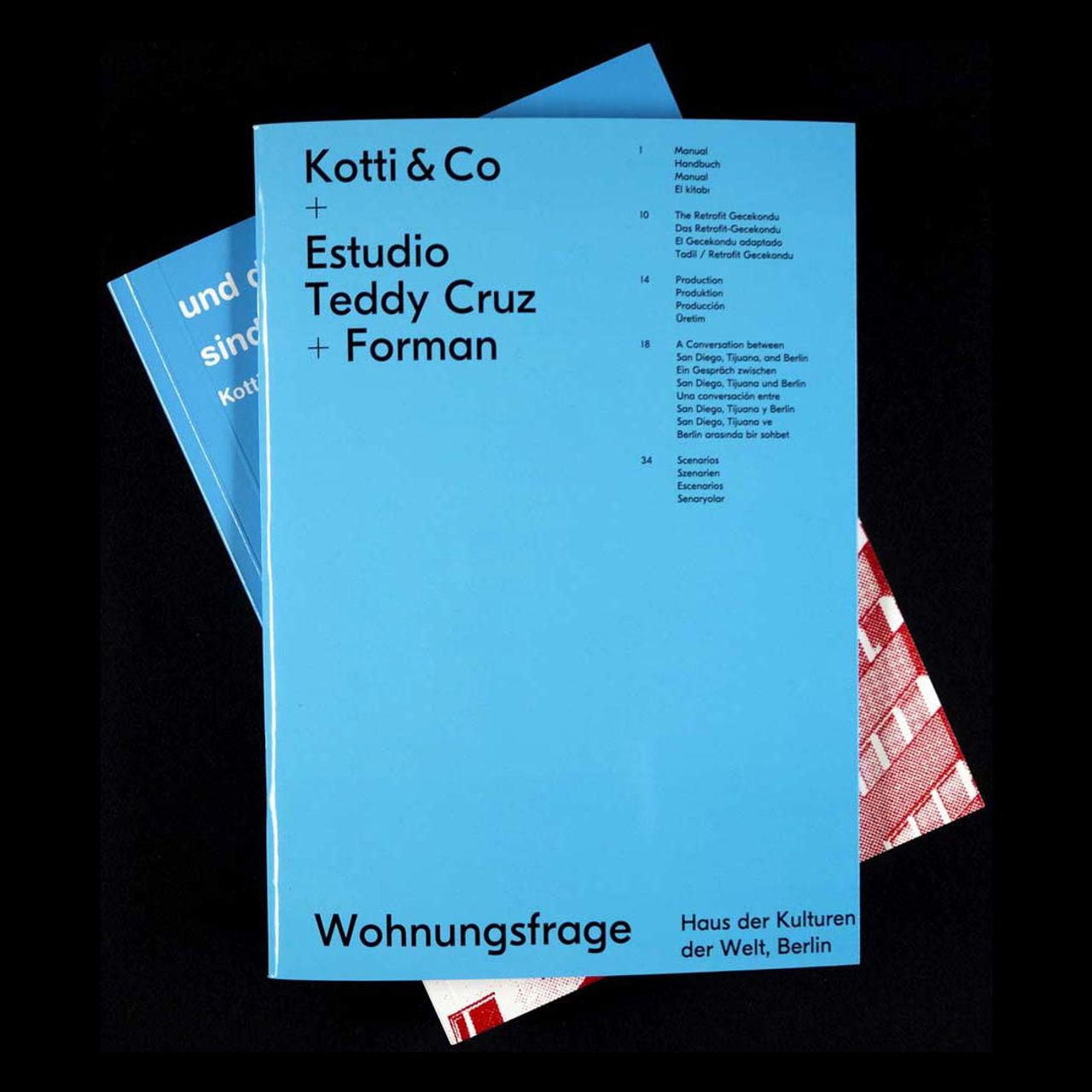
Kotti & Co, an initiative established in 2011 in protest against the rising rental cost of social housing, placed a small pavilion with the Turkish name of Gecekondu in the public Kottbusser Tor square in Berlin. We revisited the small pavilion, rethinking its use and construction system. The new, exhibited Retrofit Gecekondu adopted a prefabricated system with parts that are easy to assemble and allow the construction of a mobile and alterable structure. By staging a large number of protest actions and events, bringing together professional expertise, publishing texts, and engaging in discussions, Gecekondu—a wooden structure meant to be temporary—and the tenant community at Kottbusser Tor have since become one of the central negotiating platforms for new rental and urban development policies, as well as for topics regarding migration, racism, and poverty.
Wohnungsfrage
Haus der Kulturen der Welt
Berlin, Germany
Credits: Jens Liebchen
Wohnungsfrage
Haus der Kulturen der Welt
Berlin, Germany
Wohnungsfrage
Haus der Kulturen der Welt
Berlin, Germany
Wohnungsfrage
Haus der Kulturen der Welt
Berlin, Germany
Credits: Spector Books/HKW
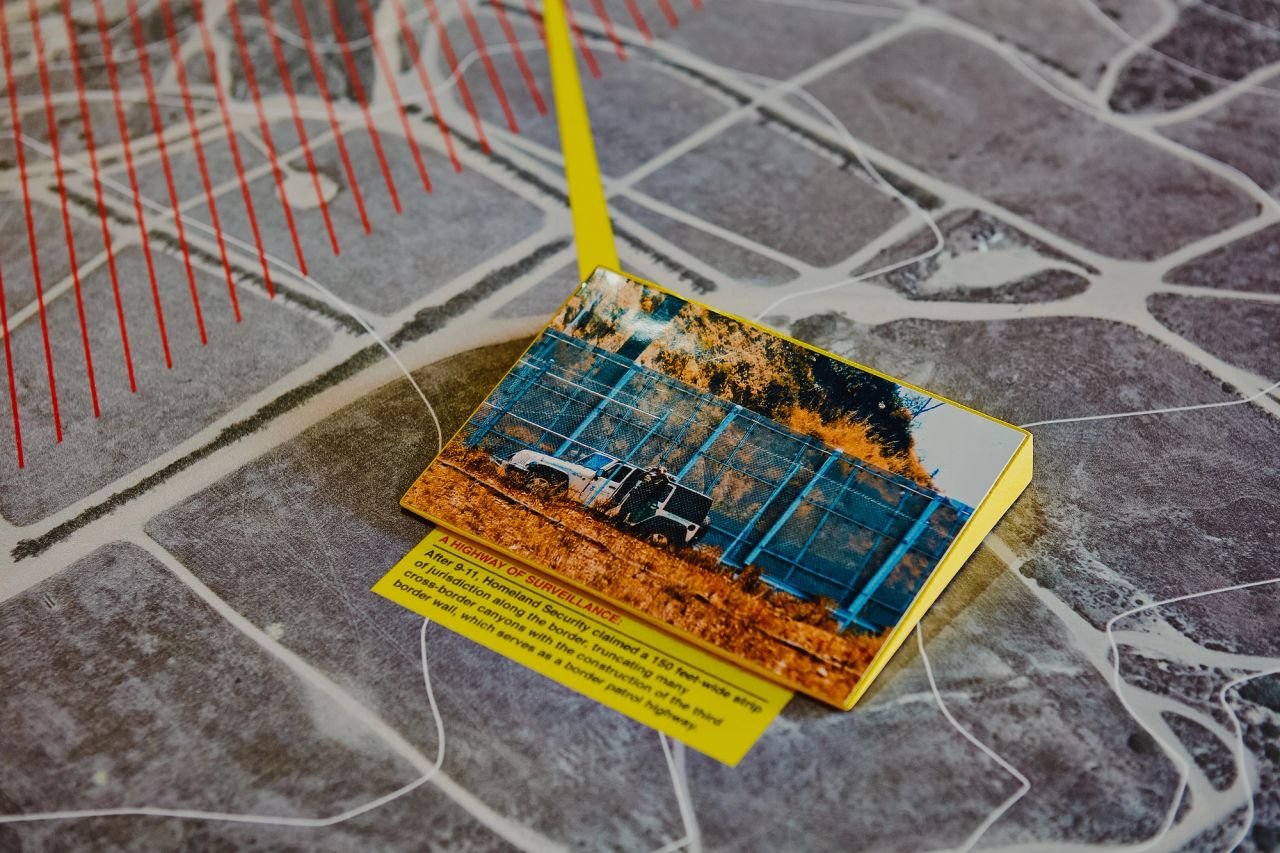
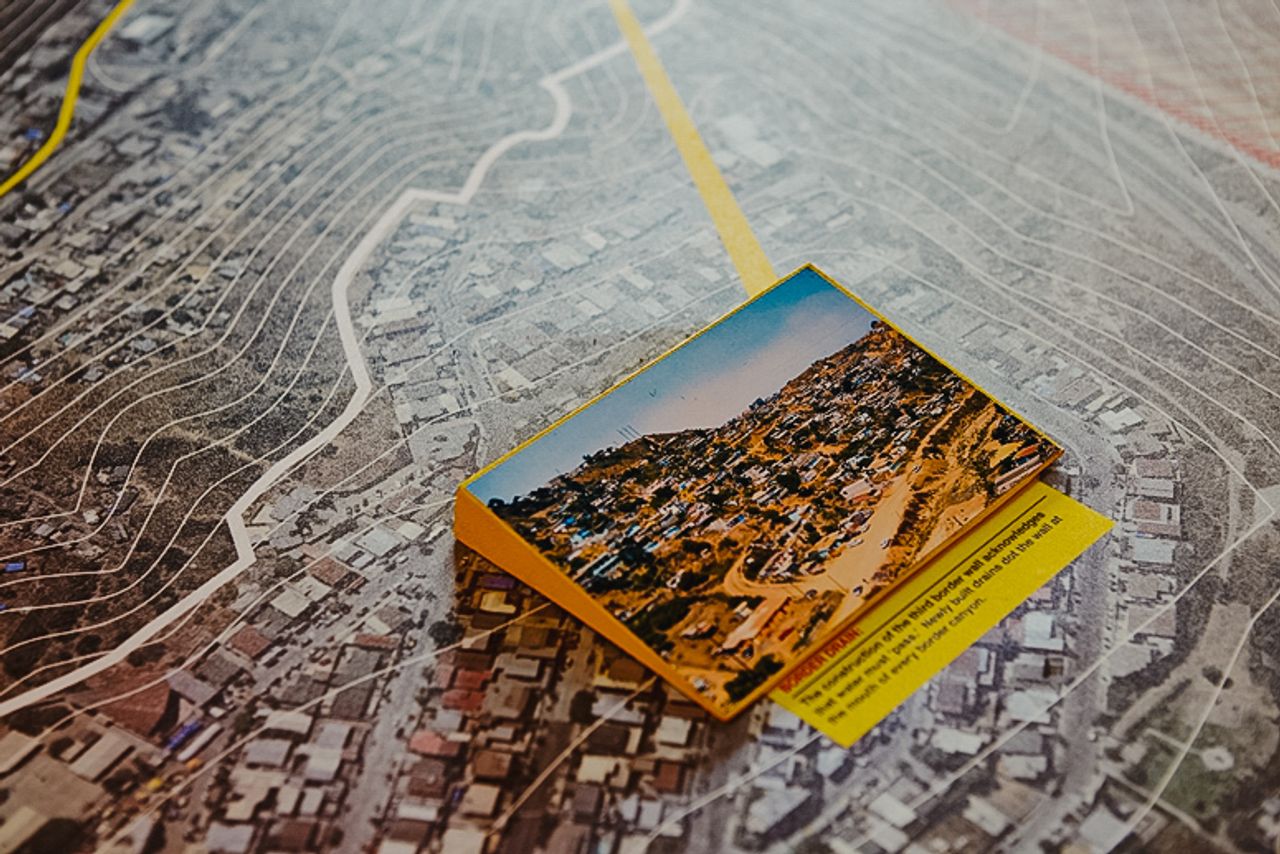
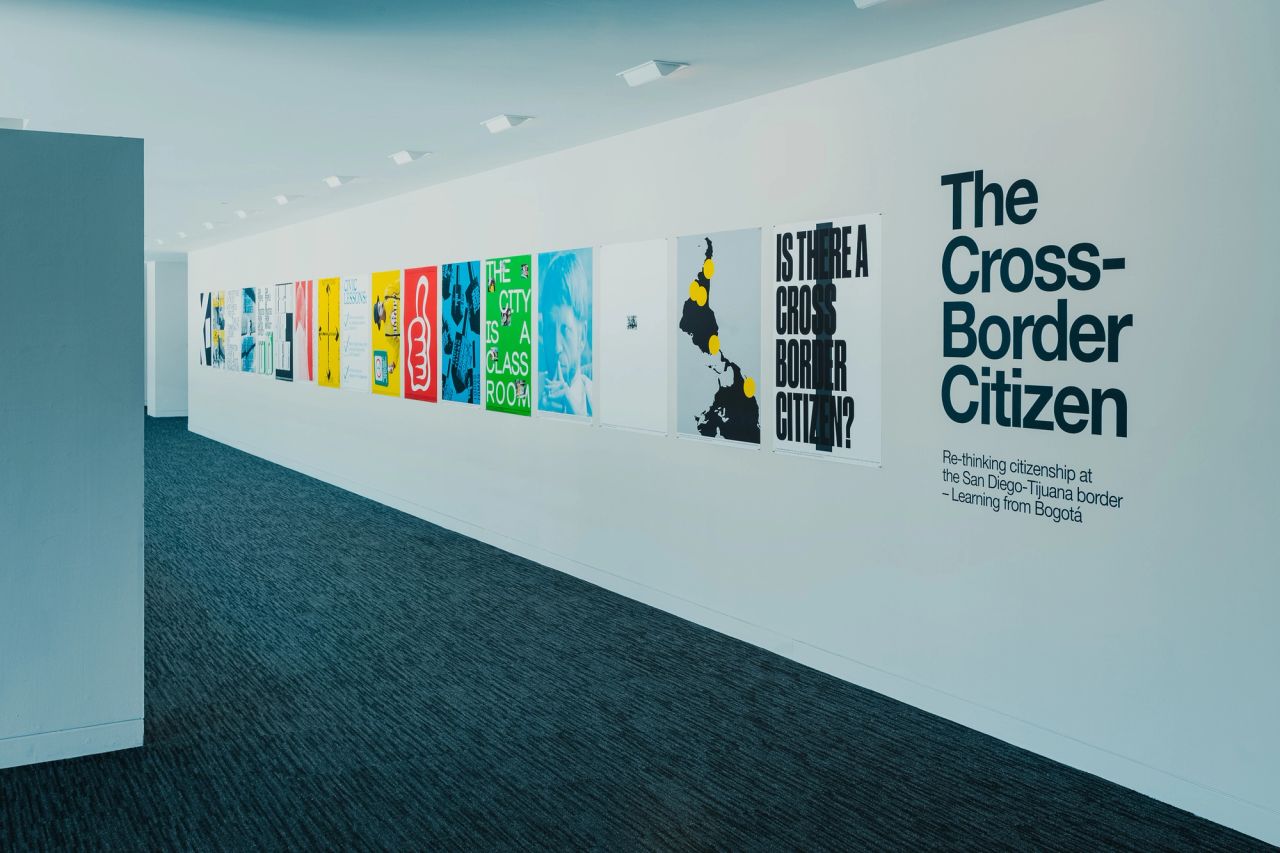
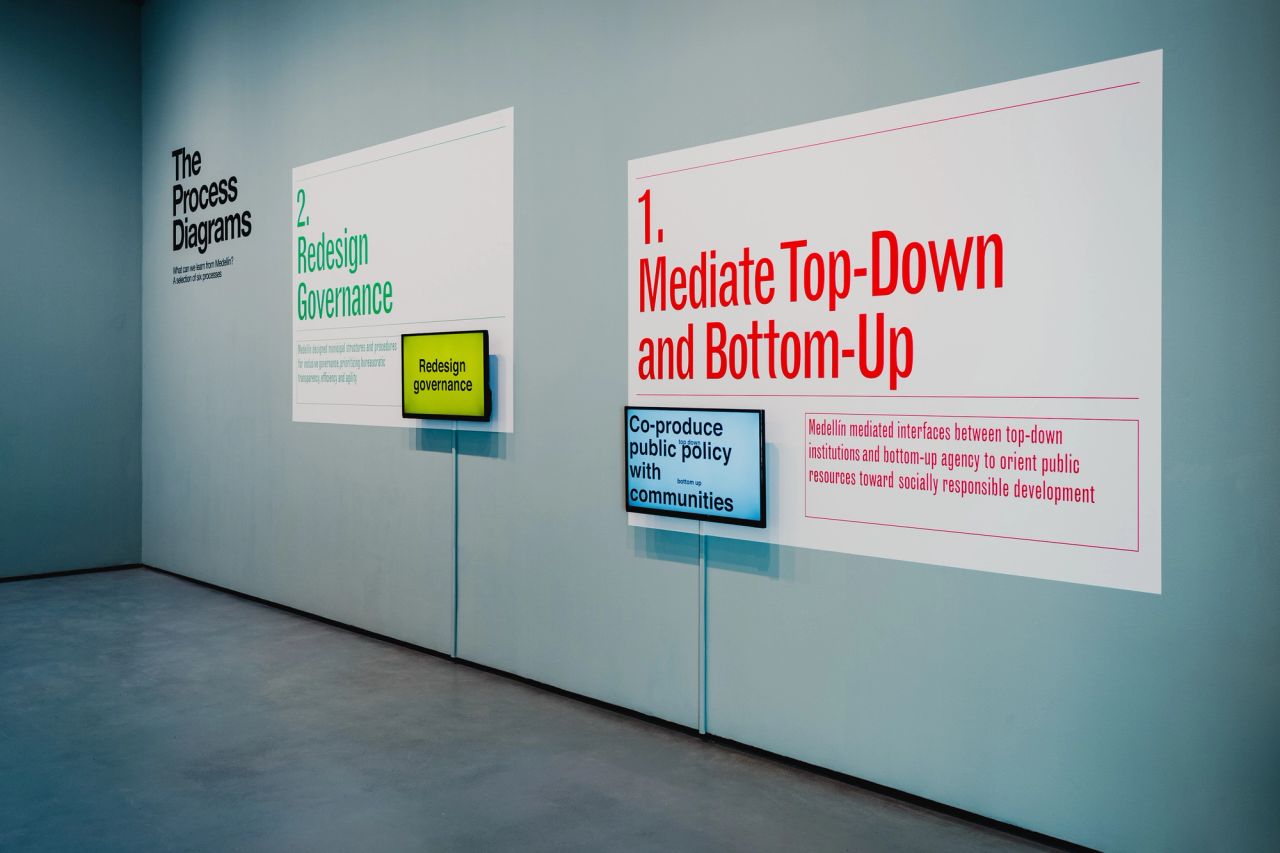
Visualizing Citizenship: Seeking a New Public Imagination exhibited three projects: (1) The Political Equator (2011), a video and wall diagram that captures a collective border-crossing performance through a drainage pipe joining two marginalized neighborhoods along the border wall that divides an informal settlement in Mexico from a natural estuary in California; (2) a series of posters synthesizing the Cross-Border Citizenship Culture Survey (2011–ongoing), the result of a collaboration with Antanas Mockus, the former mayor of Bogotá, Colombia; his think tank, Corpovisionarios; and city officials in San Diego and Tijuana; and (3) The Medellín Diagram (2012–ongoing), which displays a new political and civic model for creating public spaces that facilitate cultural, political, and knowledge exchange based on the example of the city of Medellín and its extraordinary social and urban transformation.
The City Initiative
Yerba Buena Center for the Arts
San Francisco, United States
Credits: Charlie Villyard
The City Initiative
Yerba Buena Center for the Arts
San Francisco, United States
Credits: Charlie Villyard
The City Initiative
Yerba Buena Center for the Arts
San Francisco, United States
Credits: Charlie Villyard
The City Initiative
Yerba Buena Center for the Arts
San Francisco, United States
Credits: Charlie Villyard
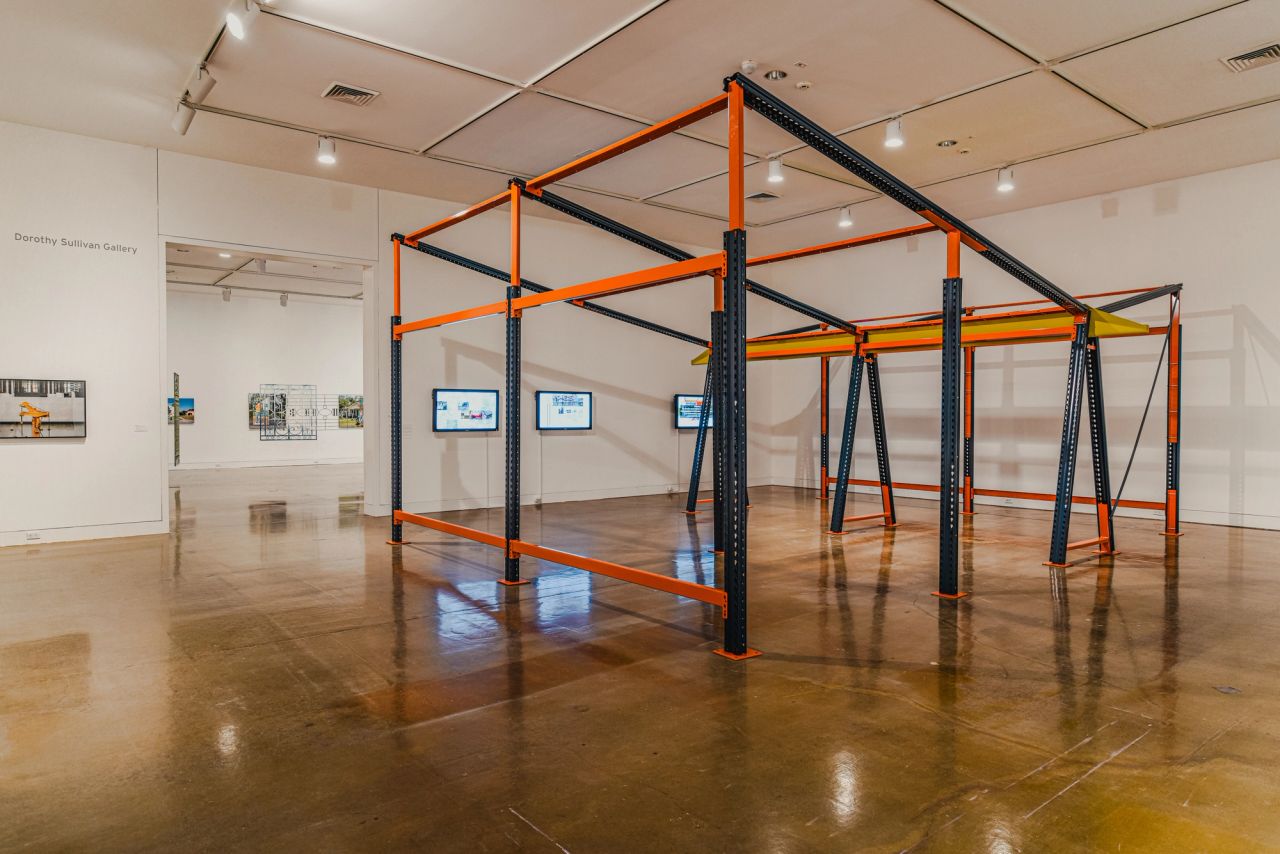
The Mecalux Frame presented the first Mecalux prototype that advances new approaches to spatial and infrastructural design in the informal settlements of Tijuana. The Mecalux prototype is an adaptation from lightweight metal shelving systems to support incremental housing. This new political economy of waste mediates the conflicts between multinational factories—known as maquiladoras—and the marginalized communities that surround them. Maquiladoras position themselves strategically adjacent to informal settlements to benefit from easy, unregulated access to cheap labor. We have created an ethical loop in which factories invest in emergency housing, mobilizing prefabrication through human agency to support the adaptive processes of self-built informal urbanization.
Building as Ever
OCMA 2017 California-Pacific Triennial
Newport Beach, United States
Credits: Bliss Photography
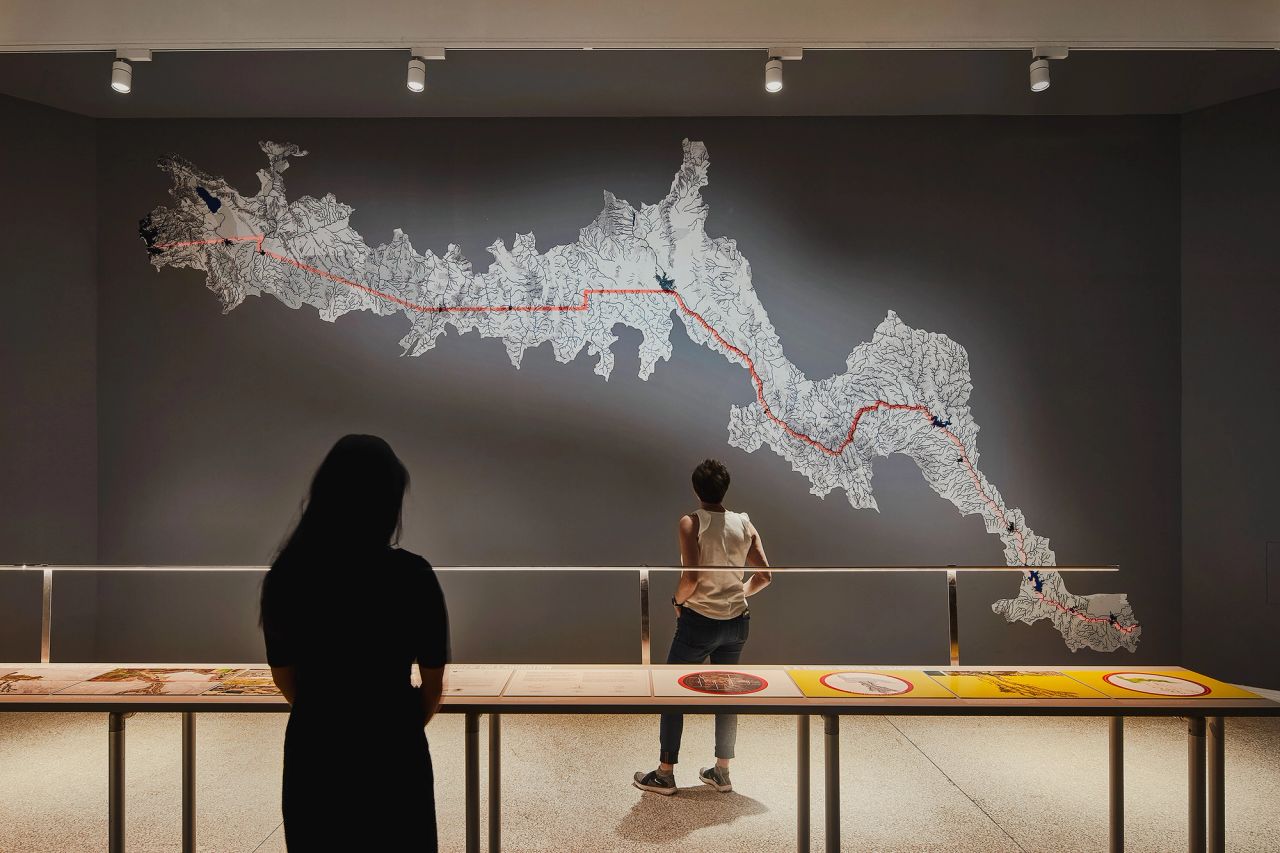
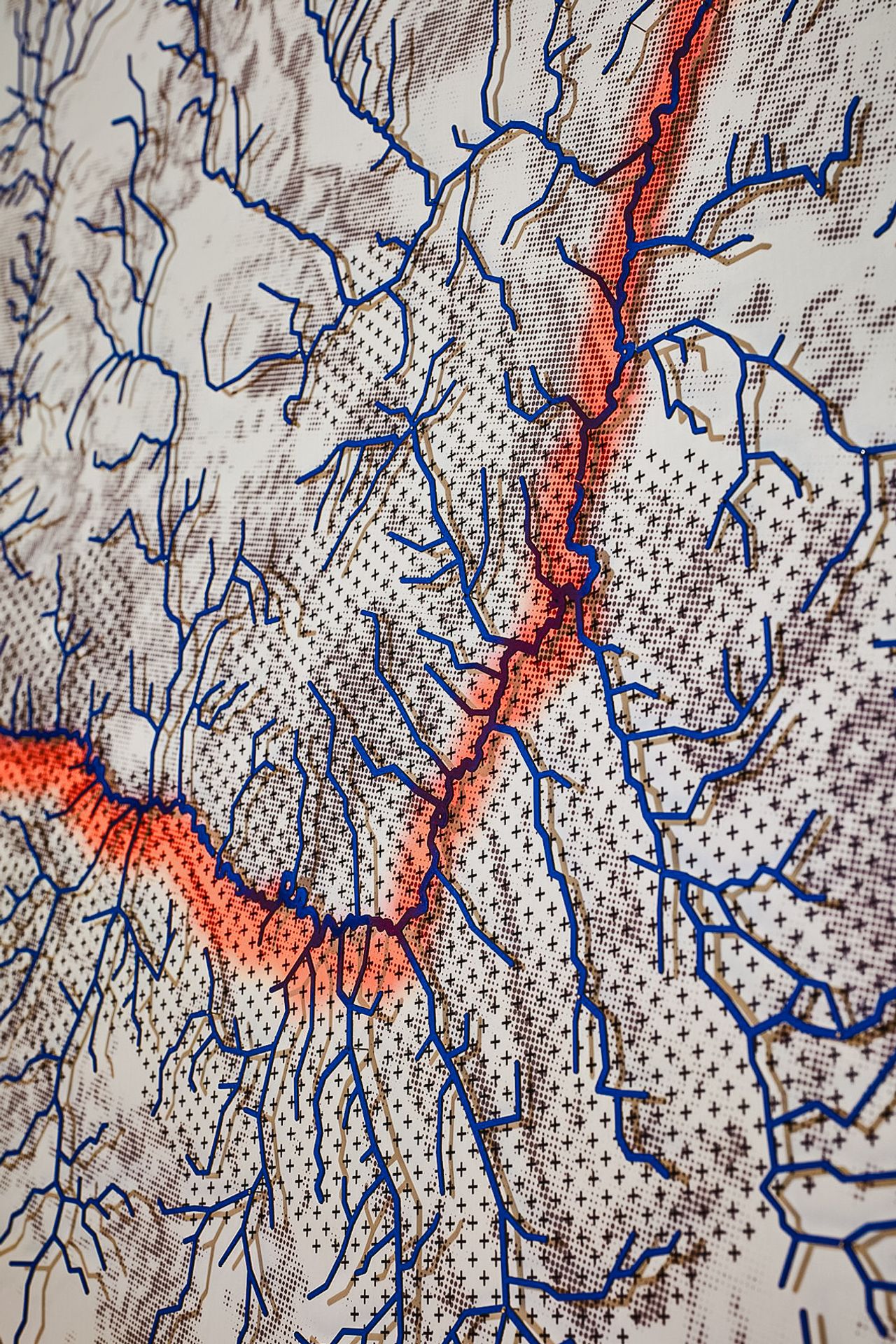
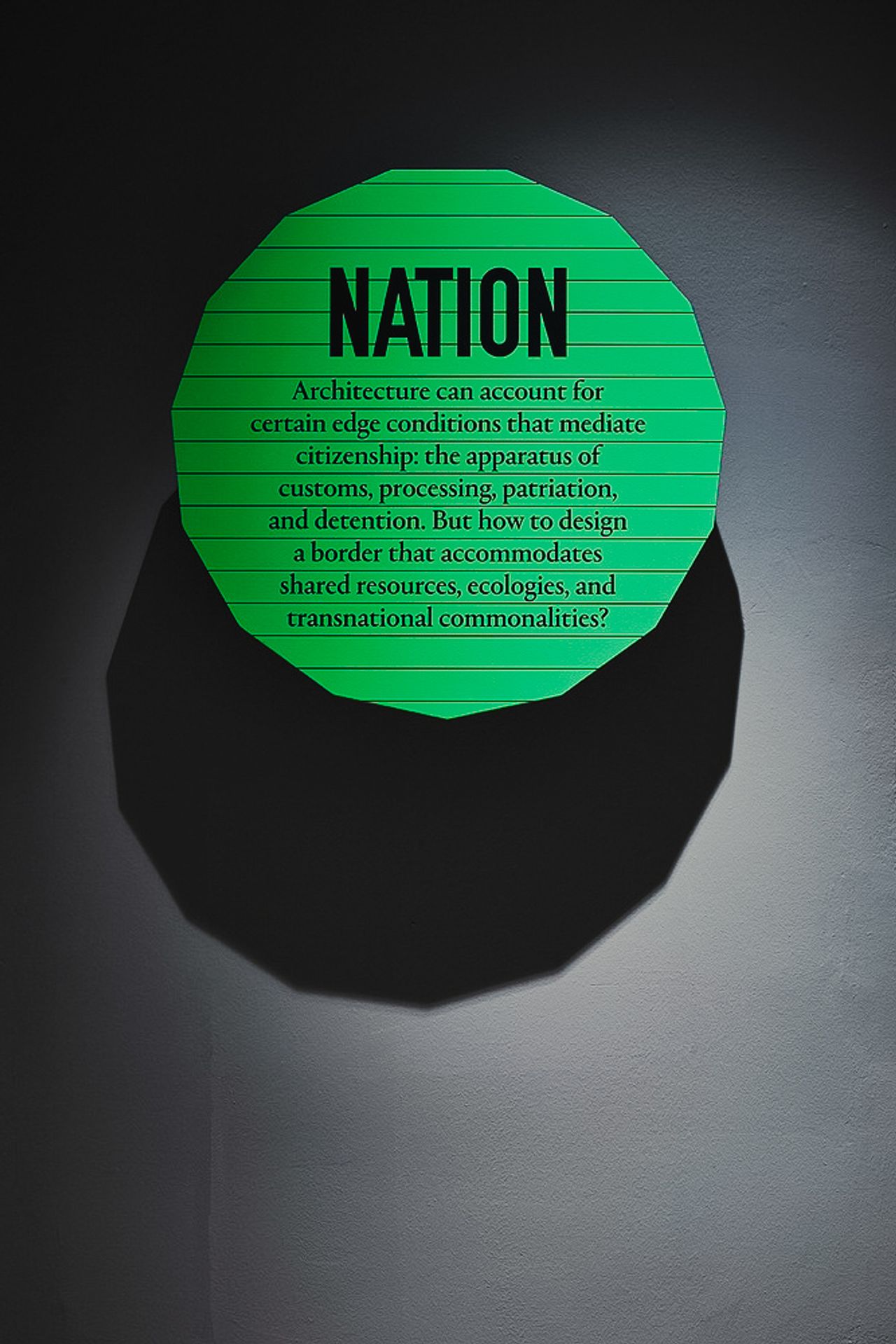
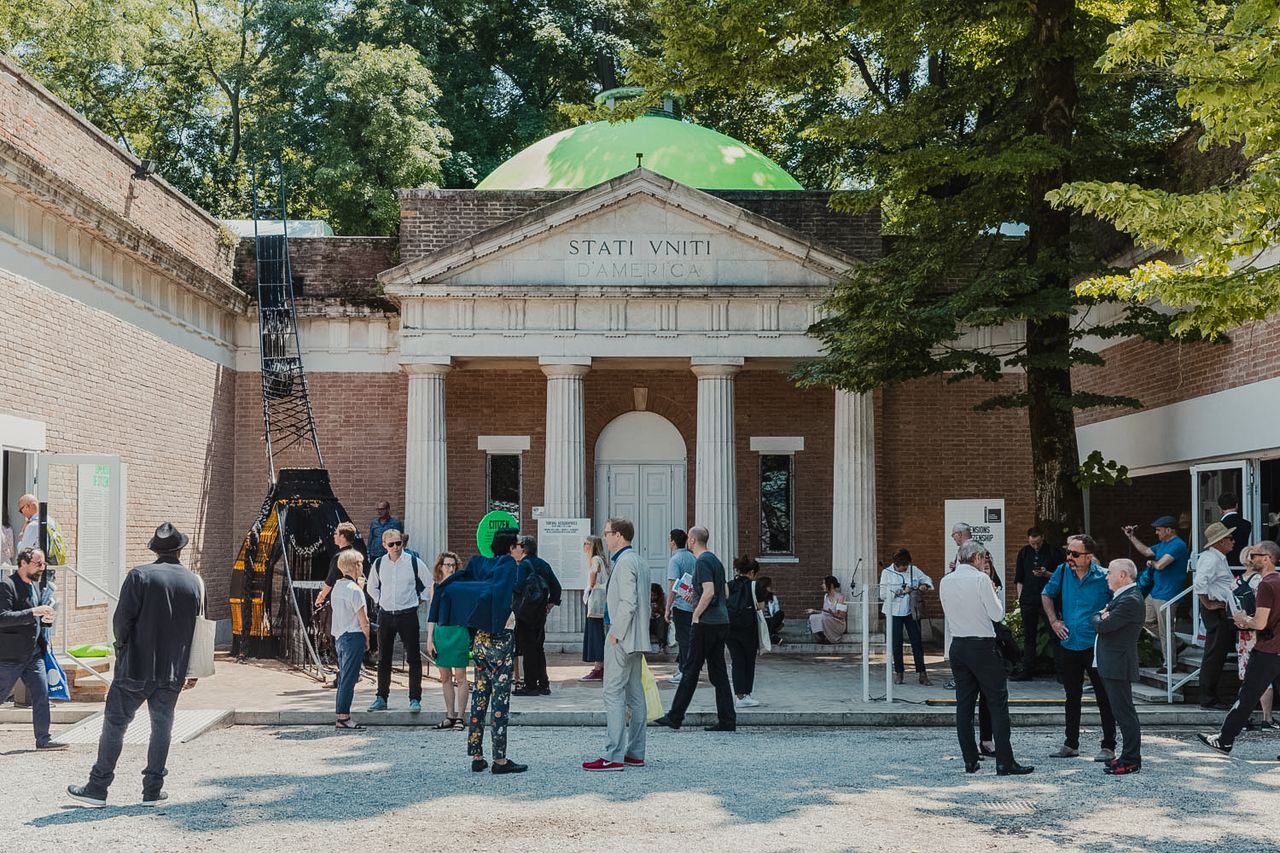
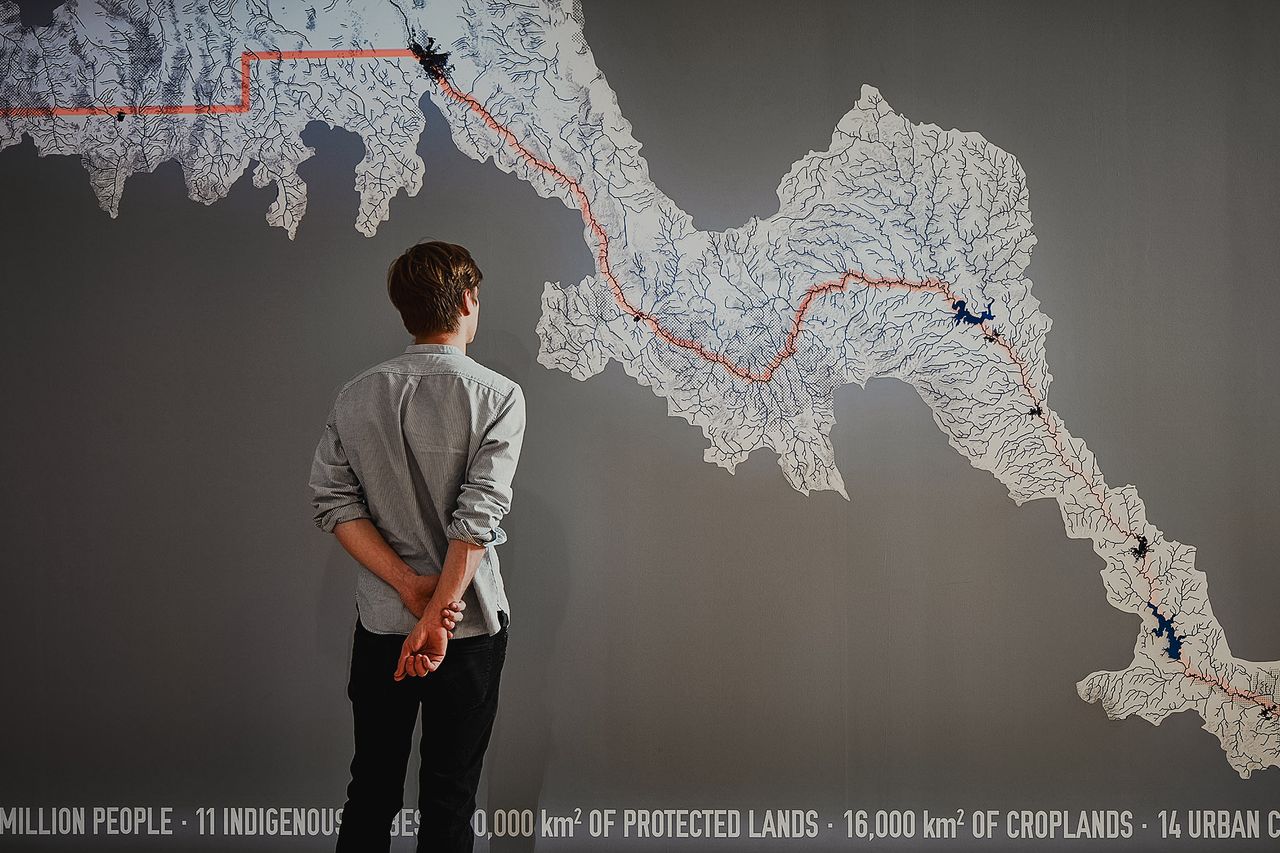
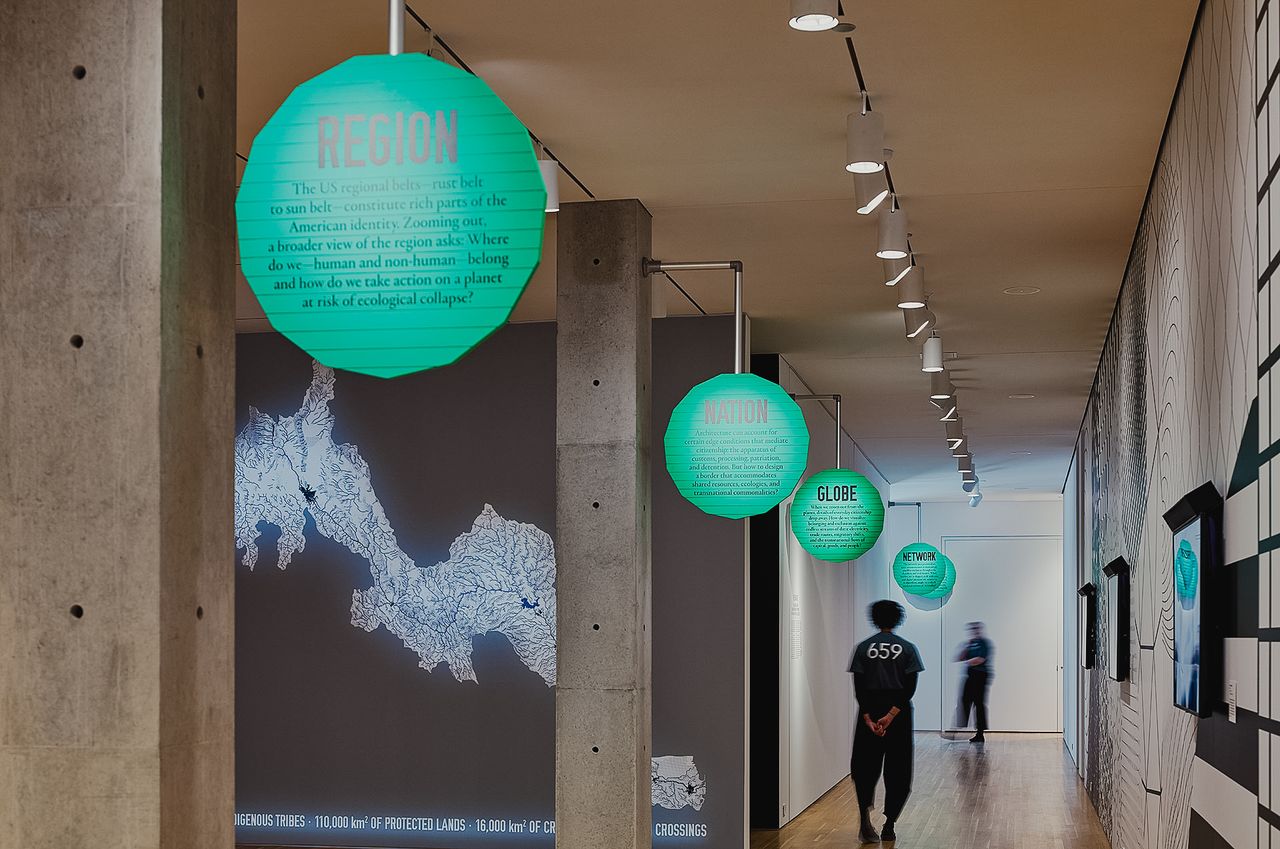
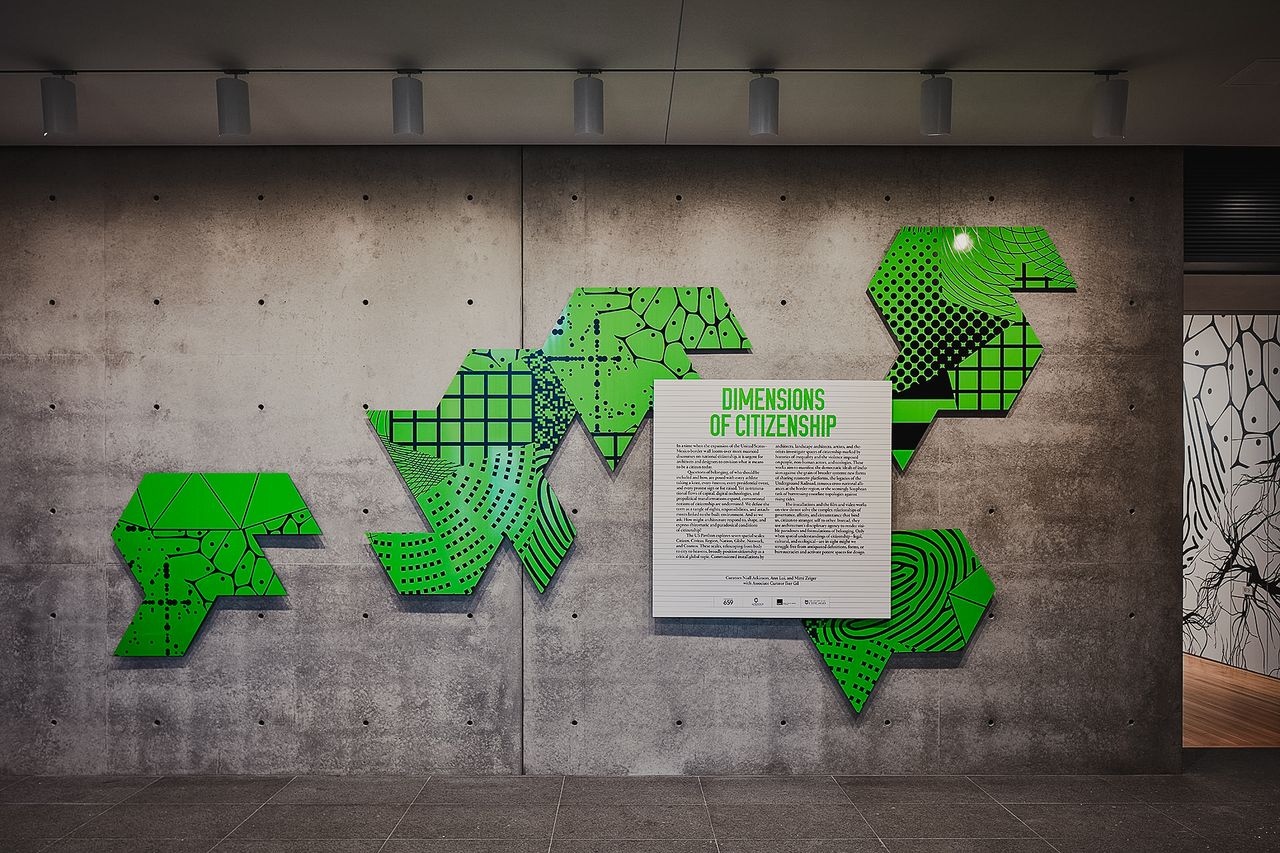
The US–Mexico border is often maligned as a site of violence and crime, division and fear. By contrast, MEXUS: A Geography of Interdependence represents this national threshold as a site of urban and political experimentation, from which more inclusive public imaginaries can emerge based on interdependence and cooperation. MEXUS rethinks the concept of citizenship beyond the jurisdictional limits of the nation and the politics of territorial identity, and toward a more expansive idea grounded in shared assets and opportunities. MEXUS visualizes the many cross-border flows—the watersheds, indigenous and protected lands, and ecological and metropolitan zones—that transgress the line.
Dimensions of Citizenship: Architecture and Belonging from the Body to the Cosmos
La Biennale di Venezia, 16th International Architecture Exhibition, U.S. Pavilion
Venice, Italy
Credits: Tom Harris. Courtesy of the School of the Art Institute and the University of Chicago.
Dimensions of Citizenship: Architecture and Belonging from the Body to the Cosmos
La Biennale di Venezia, 16th International Architecture Exhibition, U.S. Pavilion
Venice, Italy
Credits: Tom Harris. Courtesy of the School of the Art Institute and the University of Chicago.
Dimensions of Citizenship: Architecture and Belonging from the Body to the Cosmos
La Biennale di Venezia, 16th International Architecture Exhibition, U.S. Pavilion
Venice, Italy
Credits: Tom Harris. Courtesy of the School of the Art Institute and the University of Chicago.
Dimensions of Citizenship: Architecture and Belonging from the Body to the Cosmos
La Biennale di Venezia, 16th International Architecture Exhibition, U.S. Pavilion
Venice, Italy
Credits: Tom Harris. Courtesy of the School of the Art Institute and the University of Chicago.
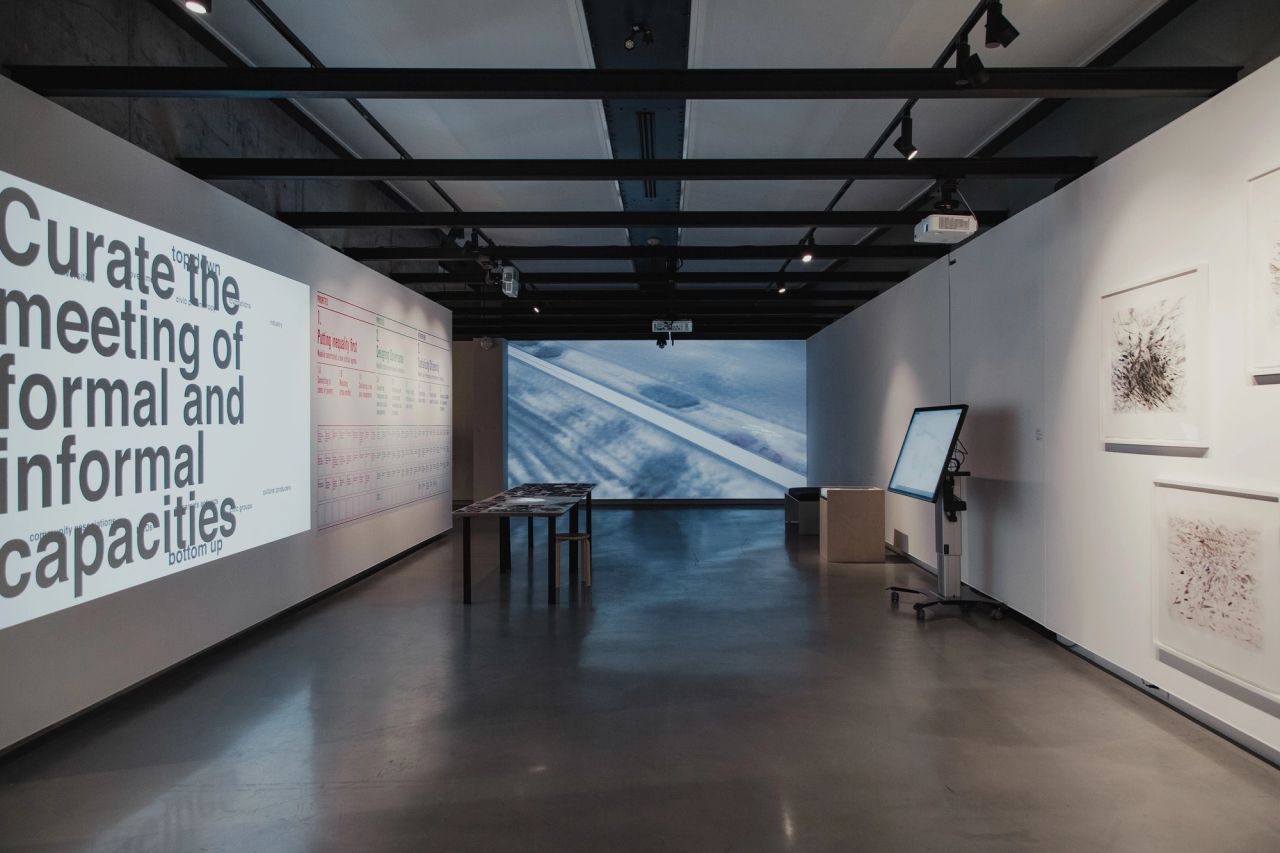
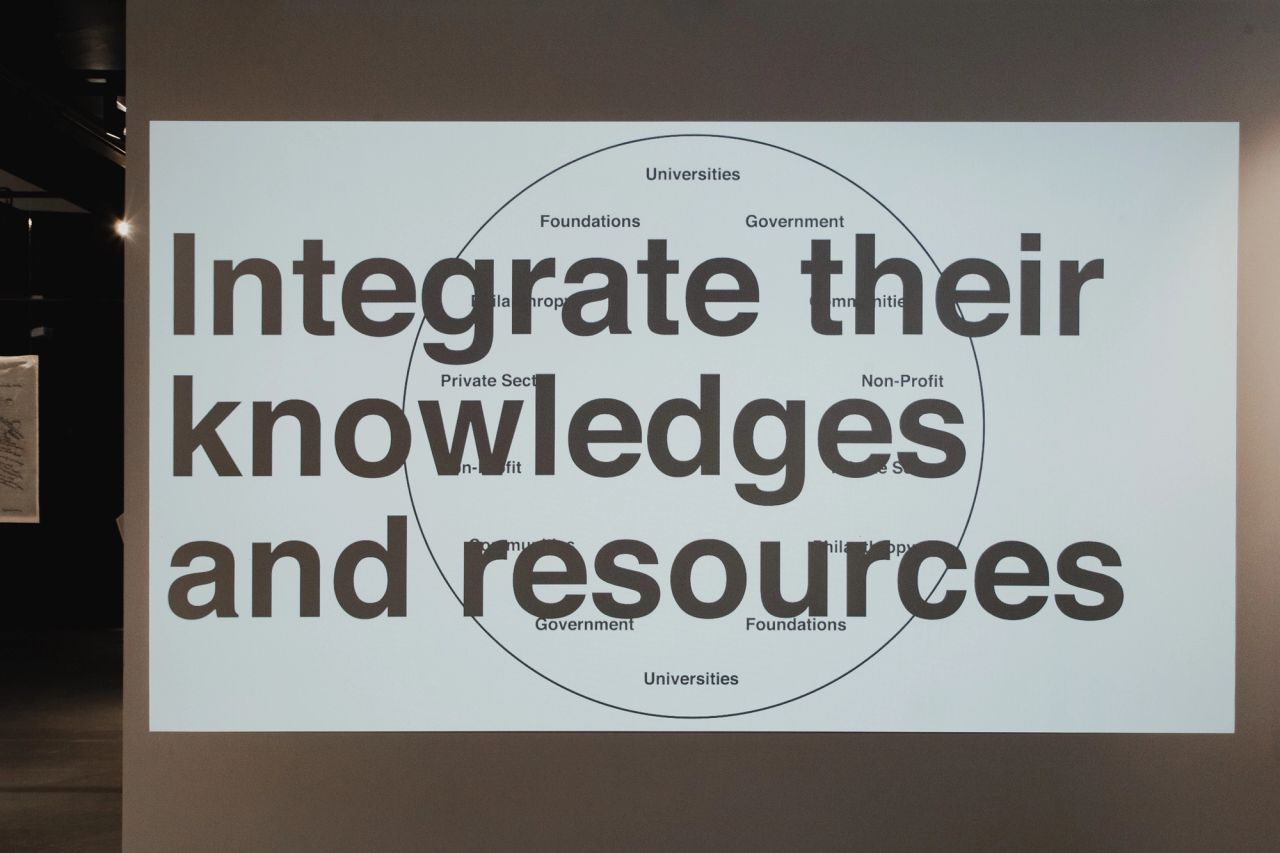
The Medellín Diagram is an urban-pedagogical research project that visualizes the political and civic processes that enabled Medellín’s now-legendary urban transformation. The diagram itself was designed as a tool for municipalities and publics eager to learn from Medellín’s achievements in inclusive urbanization—achievements made possible through cross-sector collaborations that facilitated new interfaces between top-down and bottom-up knowledges and resources.
Diagrams of Power
Onsite Gallery
Toronto, Canada
Credits: Yuula Benivolski
Diagrams of Power
Onsite Gallery
Toronto, Canada
Credits: Yuula Benivolski
Diagrams of Power
Onsite Gallery
Toronto, Canada
Credits: Yuula Benivolski
Diagrams of Power
Onsite Gallery
Toronto, Canada
Credits: Yuula Benivolski
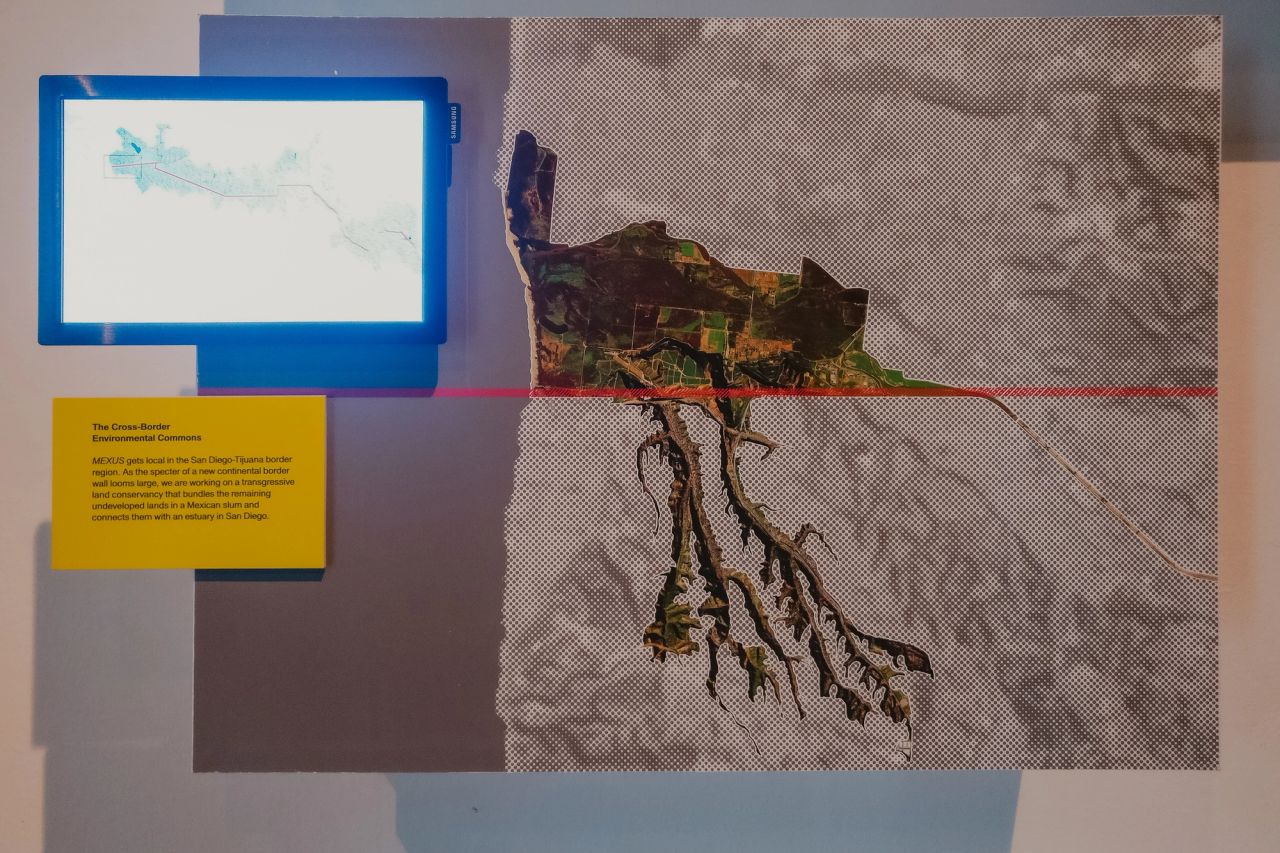
MEXUS: A Geography of Interdependence anticipates the development of the Cross-Border Commons, a land conservancy that identifies slivers of land in an informal settlement in Tijuana, and bundles them and connects them with an estuary in San Diego, forming a new jurisdiction that is socially and ecologically continuous. This is an unprecedented cross-border coalition of state and municipal government, communities, and universities. This specific juncture of MEXUS exposes the dramatic collision between informal urbanization, militarization, and environmental zones, and articulates the need for strategies of coexistence between these two border communities.
Dimensions of Citizenship: Architecture and Belonging from the Body to the Cosmos
Wrightwood 659
Chicago, United States
Credits: Tom Harris
Dimensions of Citizenship: Architecture and Belonging from the Body to the Cosmos
Wrightwood 659
Chicago, United States
Credits: Tom Harris
Dimensions of Citizenship: Architecture and Belonging from the Body to the Cosmos
Wrightwood 659
Chicago, United States
Credits: Tom Harris
Dimensions of Citizenship: Architecture and Belonging from the Body to the Cosmos
Wrightwood 659
Chicago, United States
Credits: Inventory Press
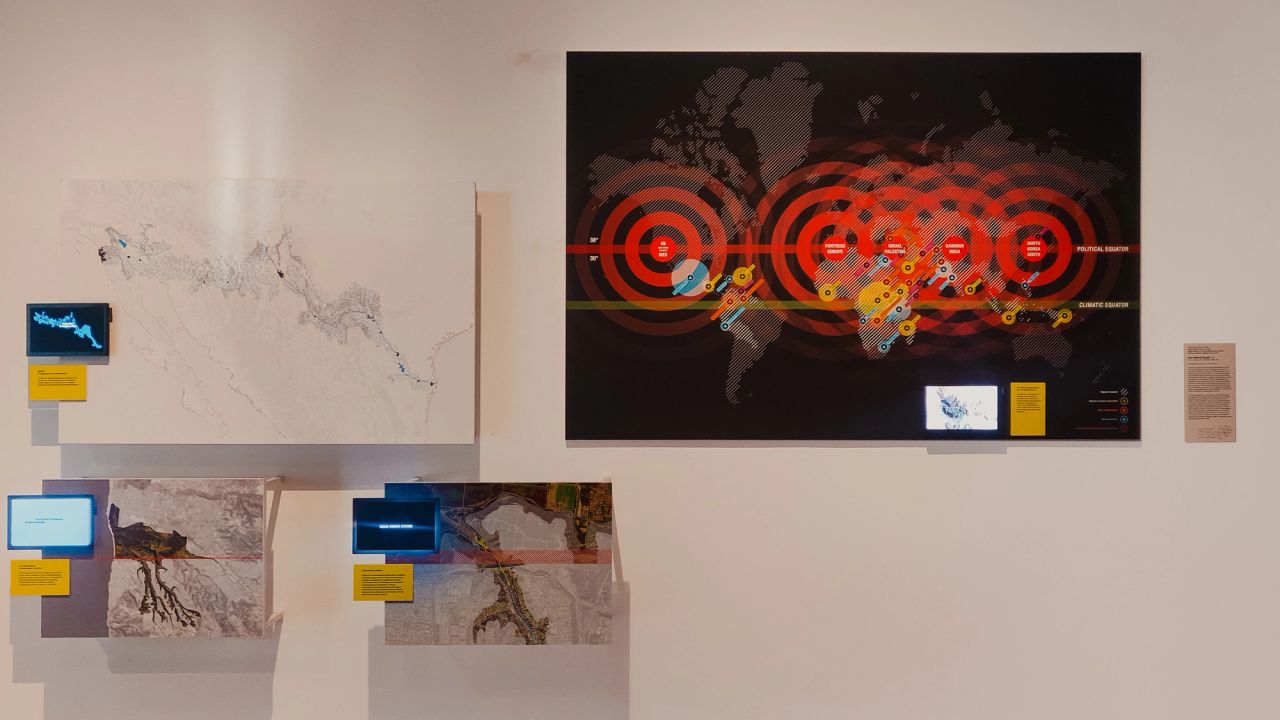
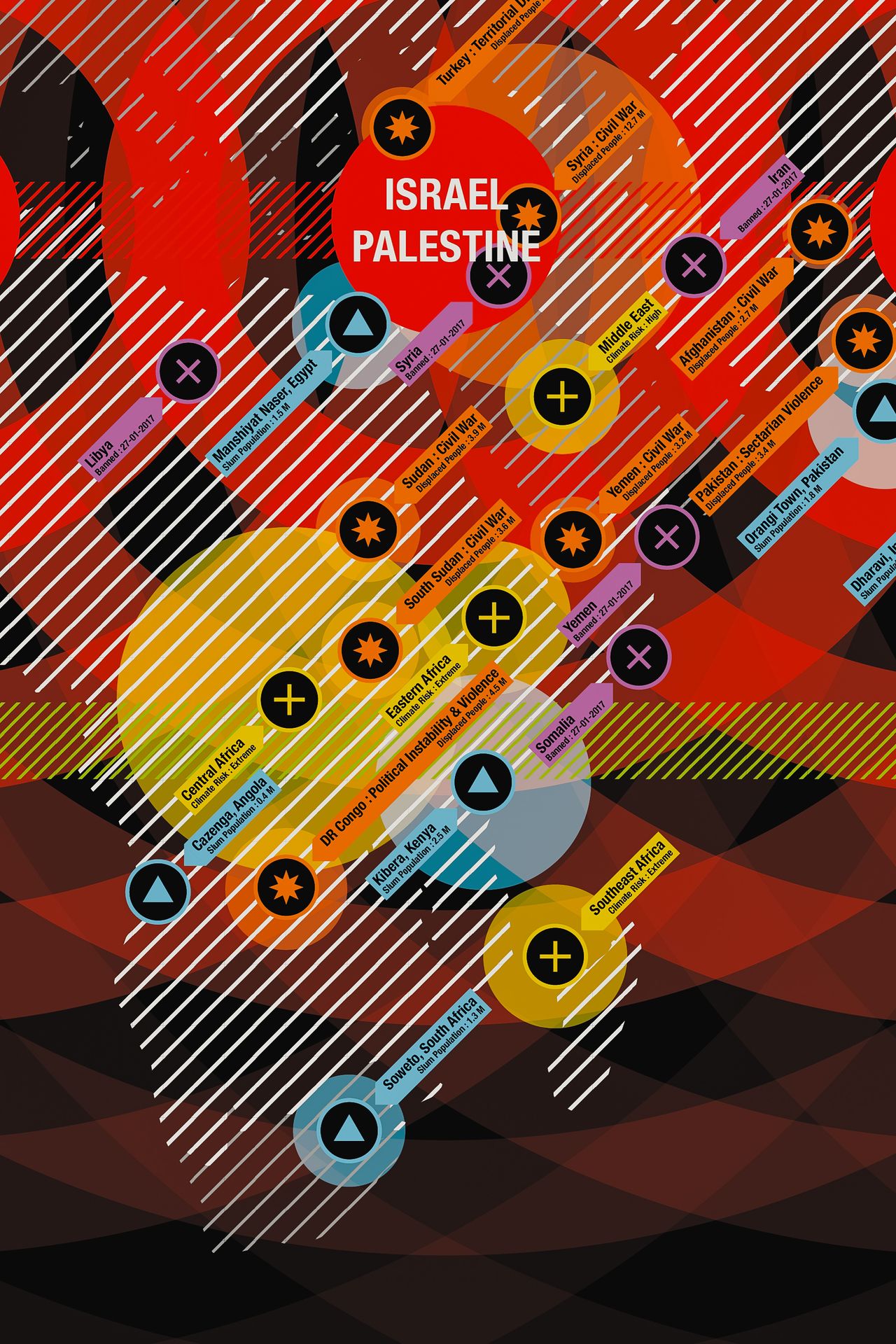
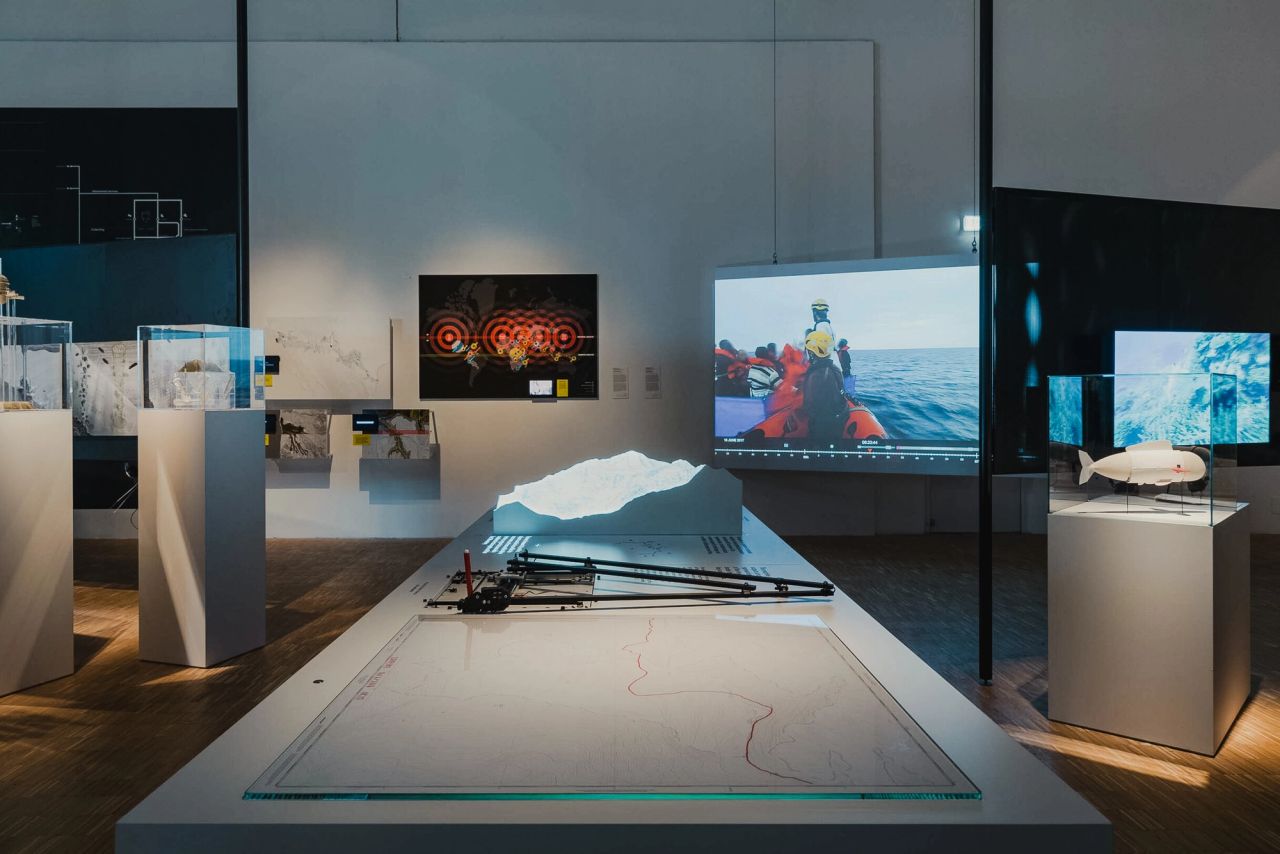
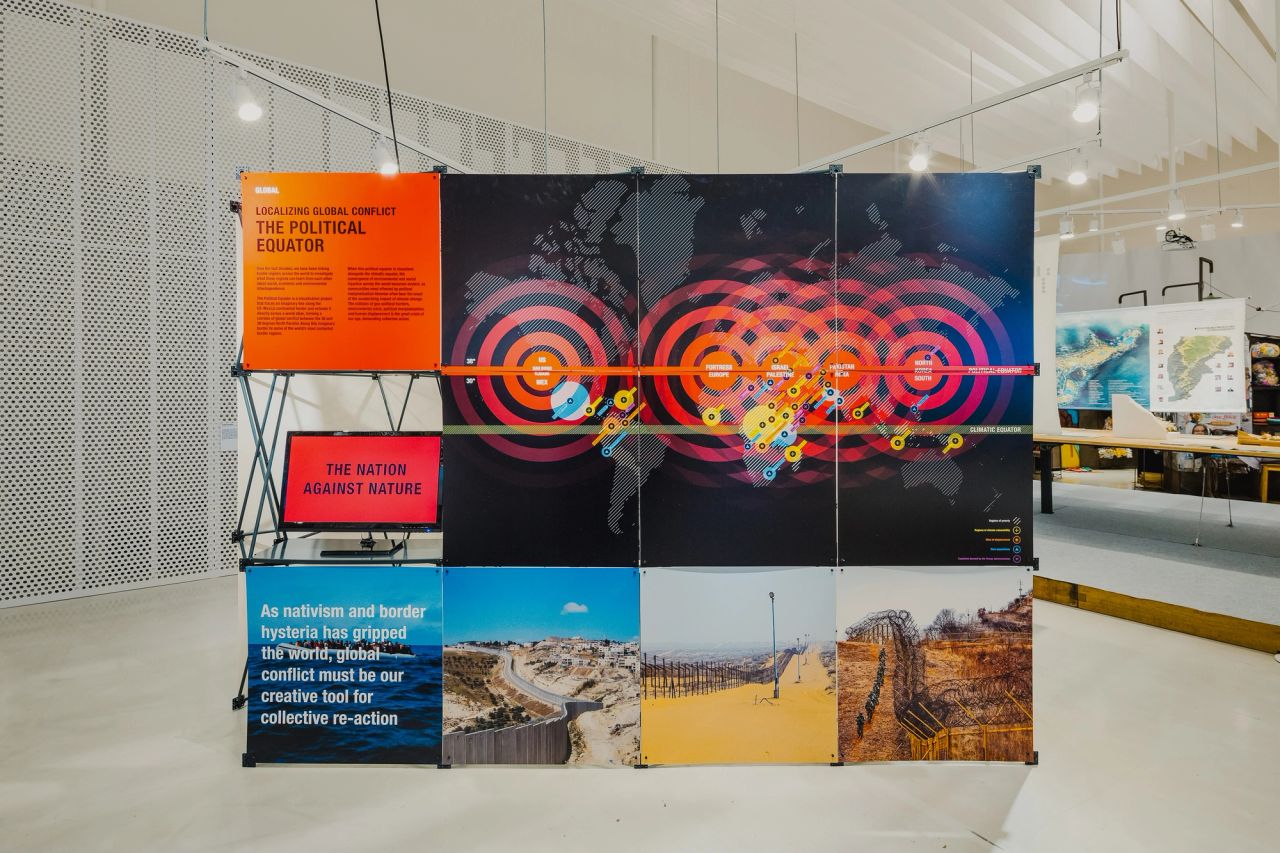
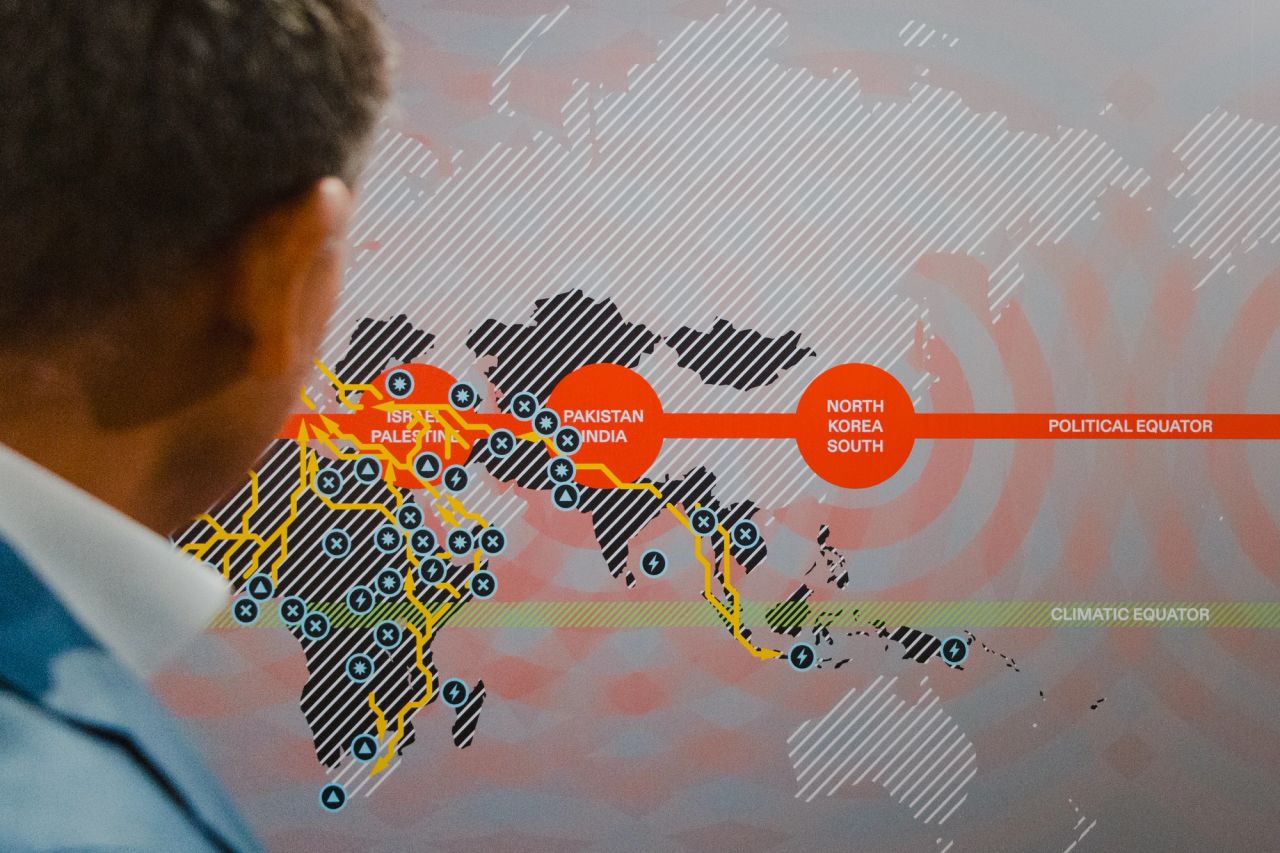
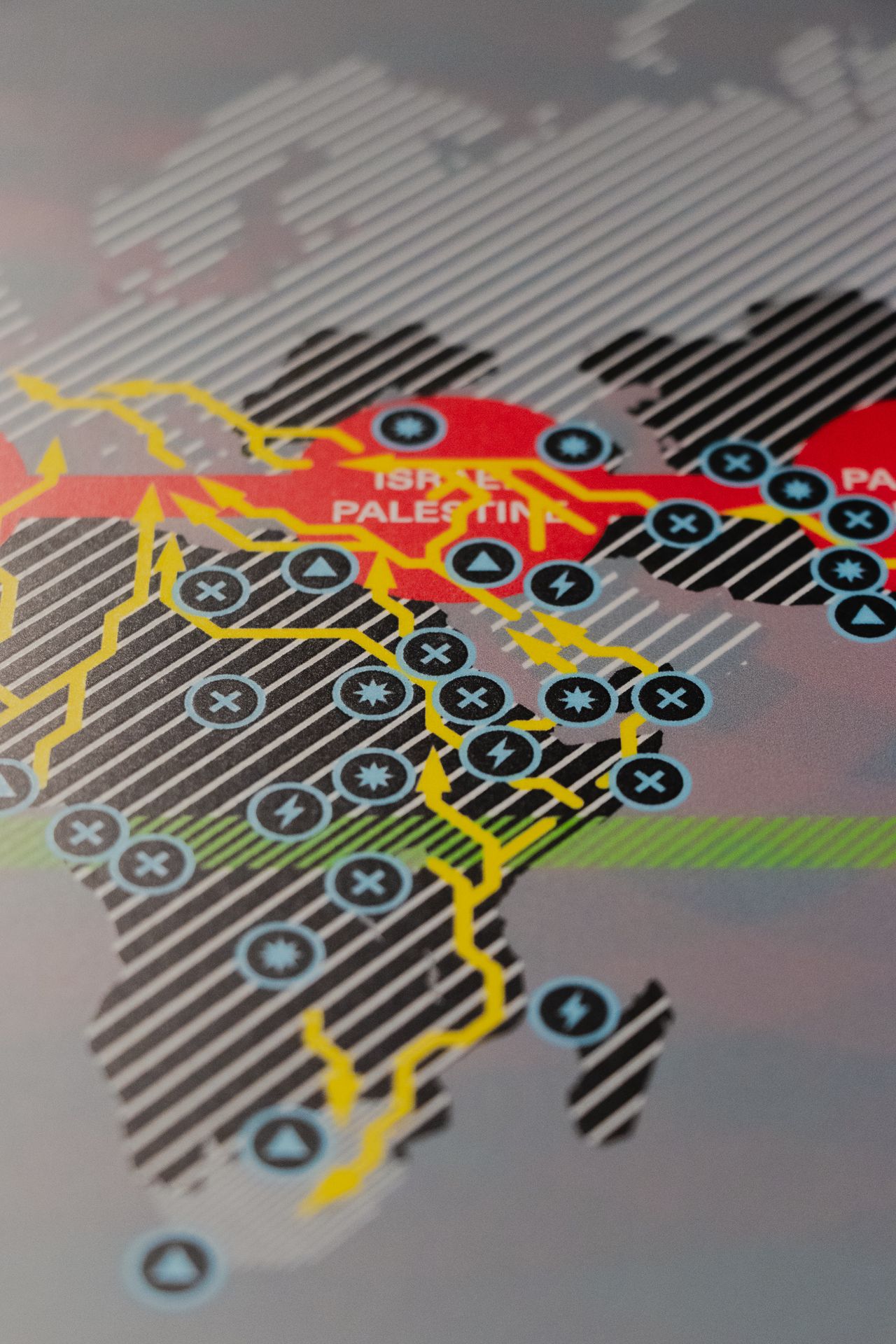
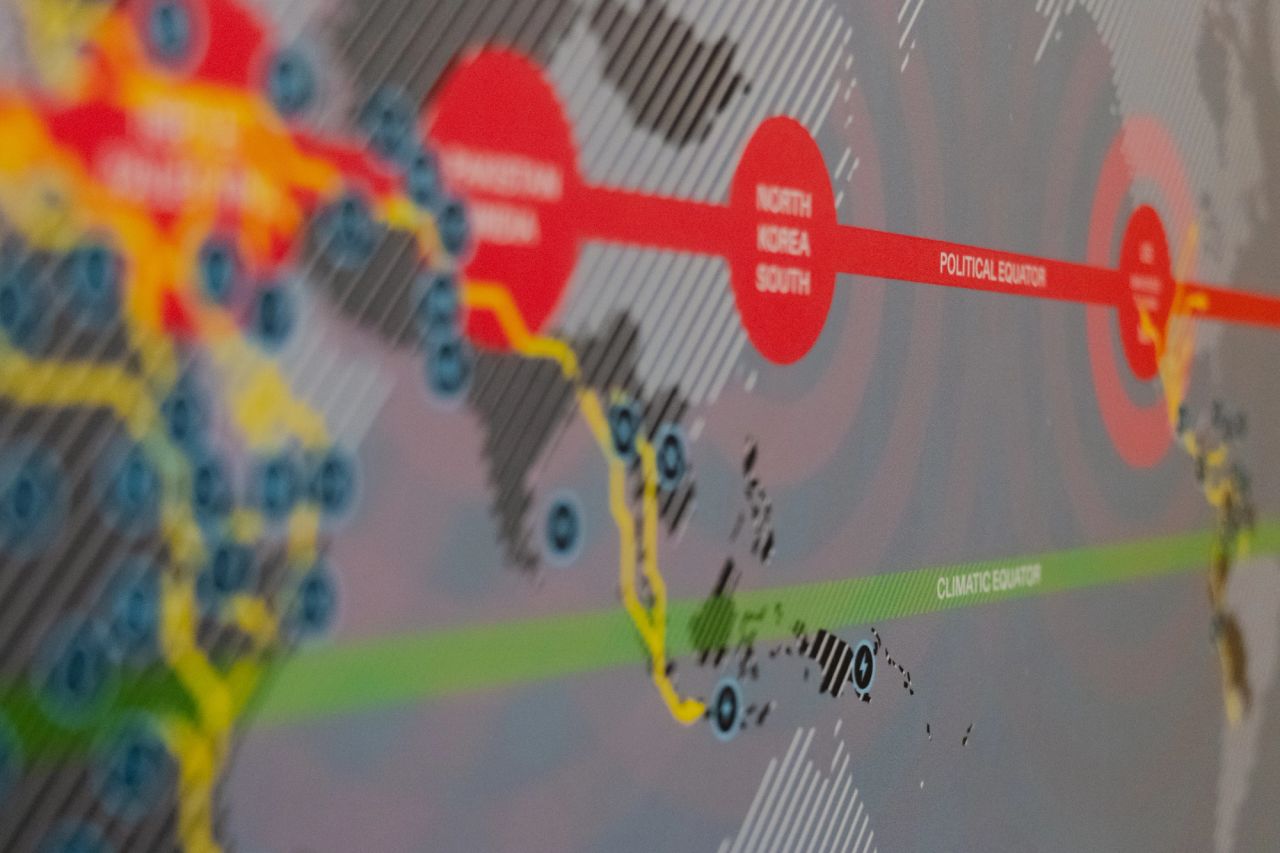
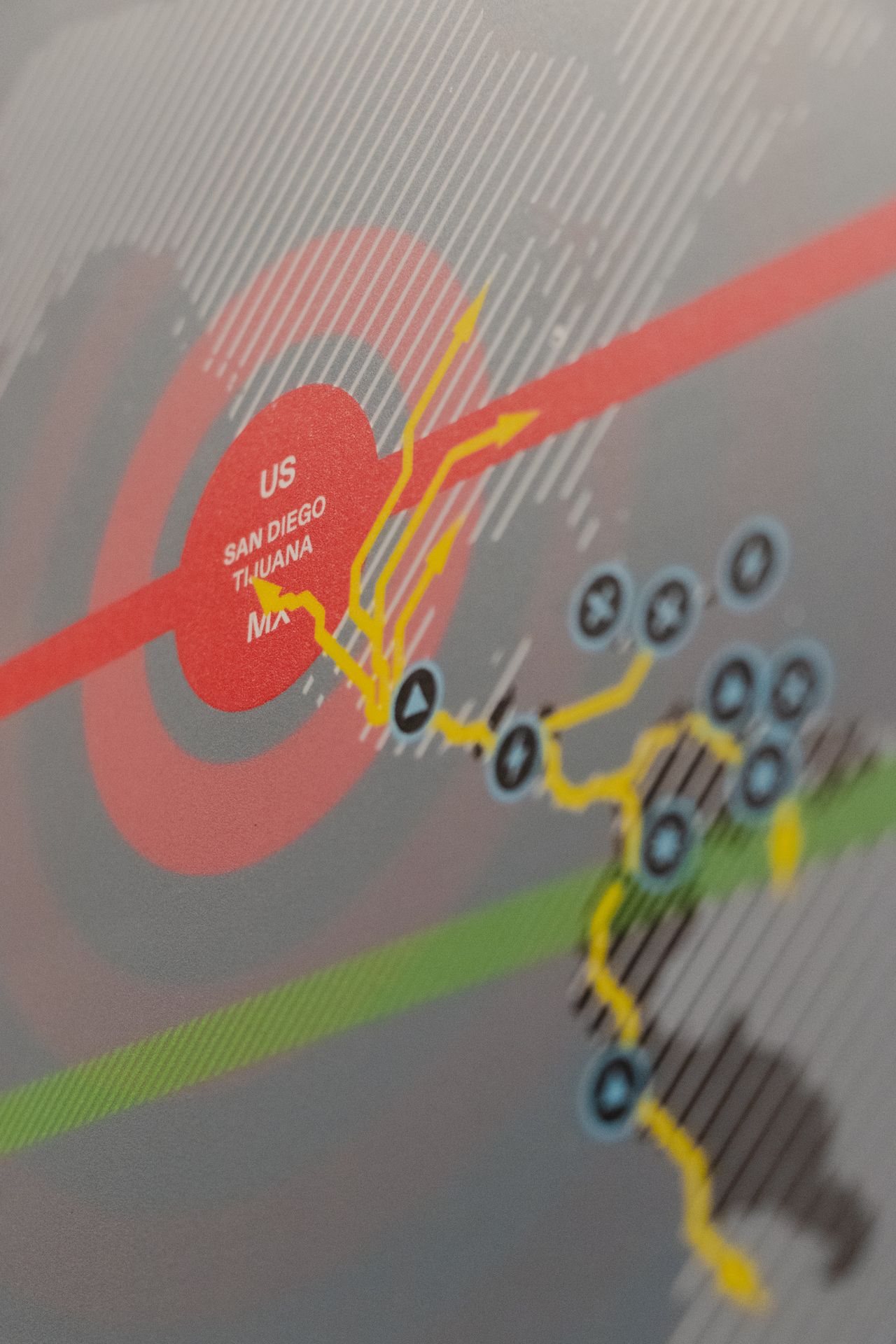
The Political Equator is an experimental visualization project that traces an imaginary line from the Tijuana–San Diego border across a world atlas, between latitudes 30 and 38 degrees North. What emerges is a corridor of global conflict that links some of the world’s most contested thresholds. When the political equator is visualized alongside the climatic equator, the convergence of environmental and social injustice across the world becomes evident. Regions most affected by poverty, political violence, accelerating climate vulnerability and human displacement are situated between these two equators. The exhibition included the territorial scaffold of our practice, a nested ecology that descends in geographic scales from the global border to the neighborhoods that flank the US-Mexico border at San Diego–Tijuana: (1) MEXUS: A Geography of Interdependence, (2) Cross-Border Commons: An Archipelago of Conservation, and (3) Cross-Border Citizens: Border-Drain Crossing.
Broken Nature: Design Takes on Human Survival
XXII Triennale di Milano
Milan, Italy
Credits: L'Auné Gergely
Broken Nature: Design Takes on Human Survival
XXII Triennale di Milano
Milan, Italy
Credits: Estudio Teddy Cruz + Fonna Forman
Broken Nature: Design Takes on Human Survival
XXII Triennale di Milano
Milan, Italy
Credits: L'Auné Gergely
Broken Nature: Design Takes on Human Survival
XXII Triennale di Milano
Milan, Italy
Credits: Gianluca Di Loia
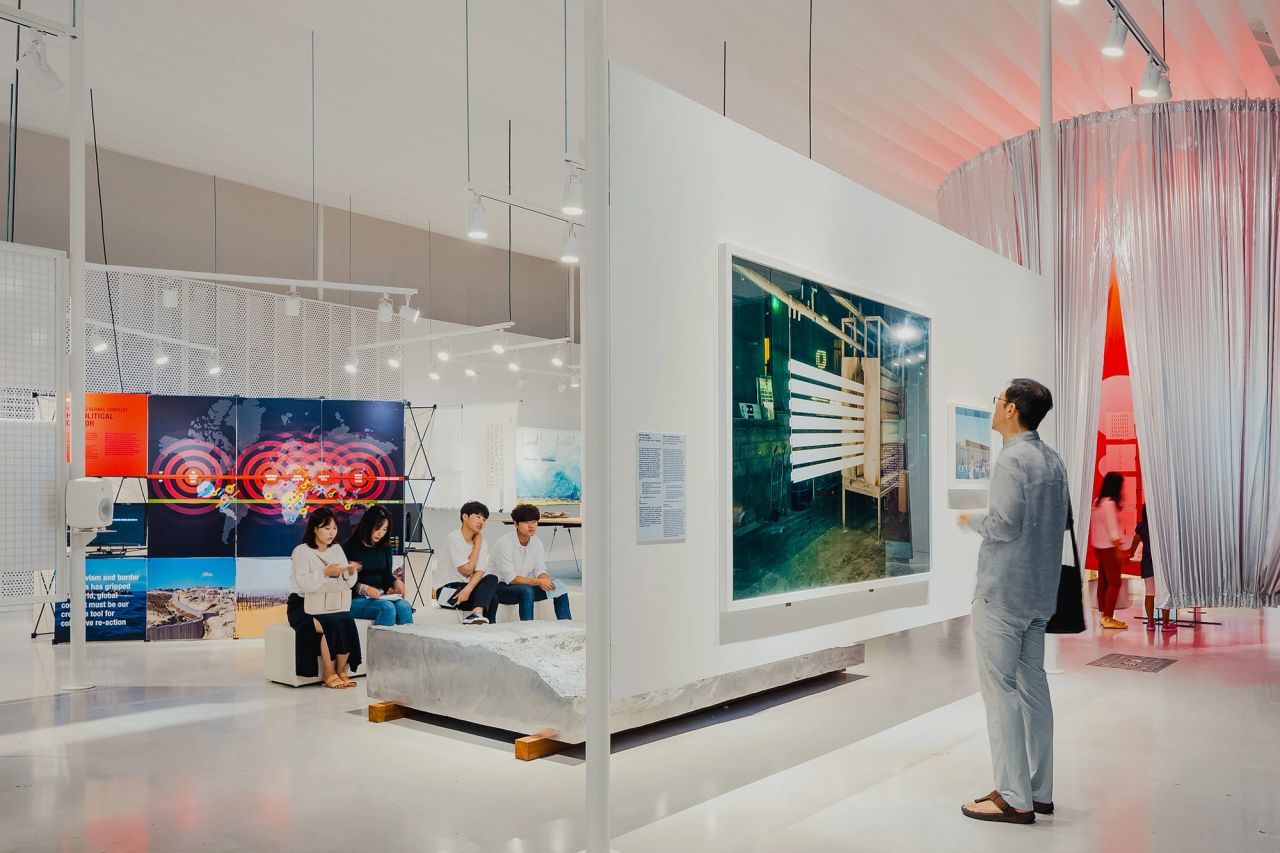
Unwalling Citizenship: The Cross-Border Community Stations presented our research on border cities as laboratories for new strategies of interdependence and collective action, which has led to the development of the UC San Diego Community Stations, an infrastructure for co-existence between divided communities: field hubs located in immigrant neighborhoods on both sides of the San Diego–Tijuana border where research, teaching and urban advocacy are done collaboratively among university researchers, students and community leaders.
Collective City
2nd Seoul Biennale of Architecture and Urbanism
Seoul, South Korea
Collective City
2nd Seoul Biennale of Architecture and Urbanism
Seoul, South Korea
Credits: Tae Yoon Kim
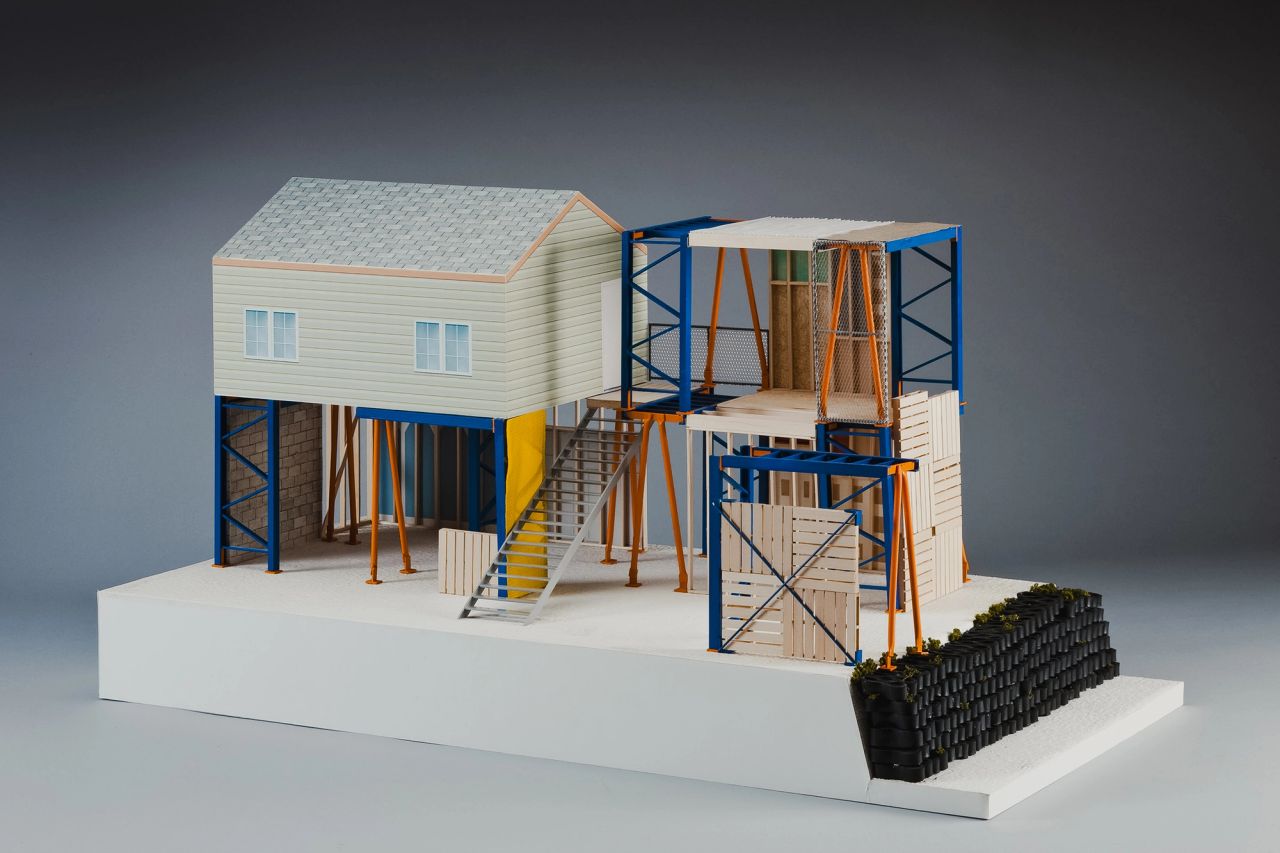
Manufactured Sites presented a 3D model of maquiladora-made framing systems that support the recycling of San Diego’s urban waste into Tijuana’s incremental architectures. Recycled houses, garage doors, pallet racks, discarded framing and other urban debris from San Diego are reassembled in marginalized communities in Tijuana.
States of Becoming
Carnegie Museum of Art, Heinz Architectural Center
Pittsburgh, United States
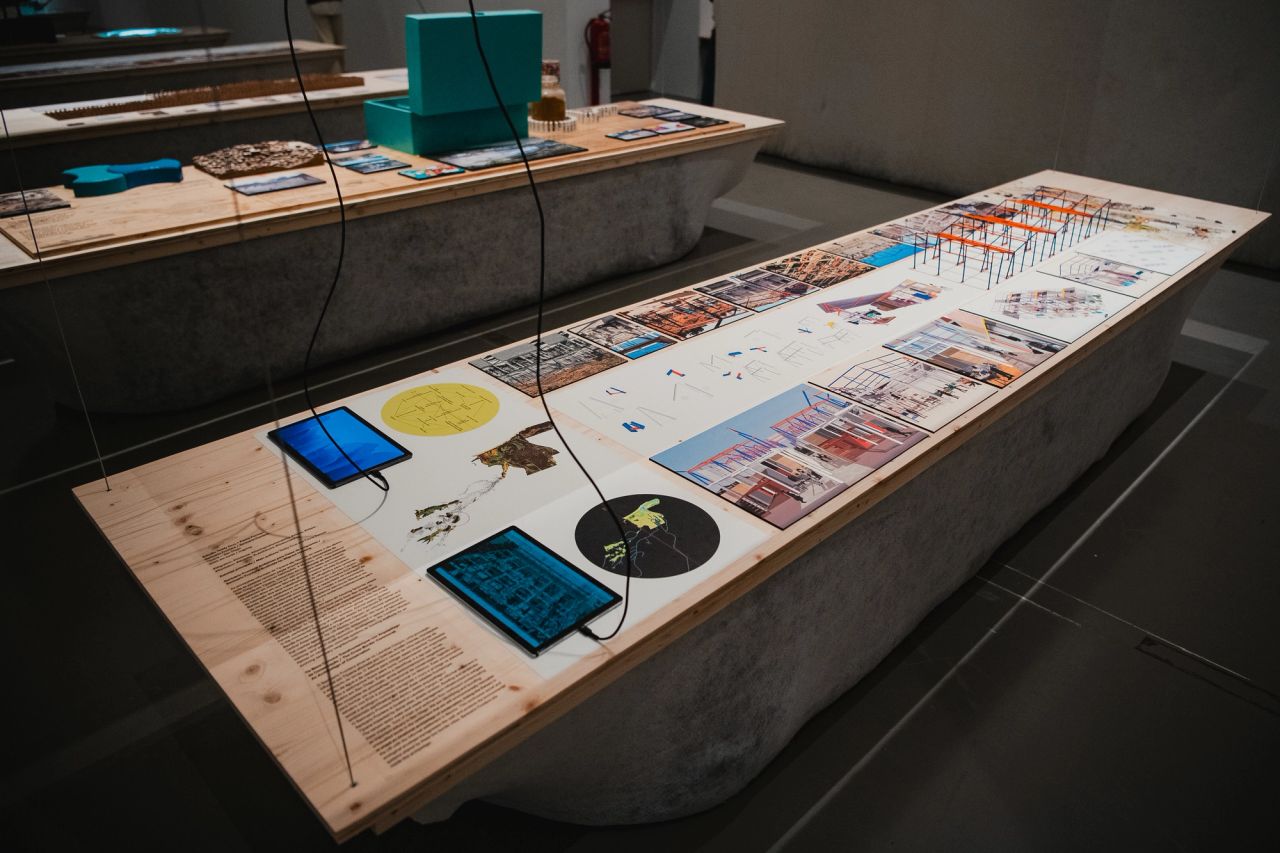
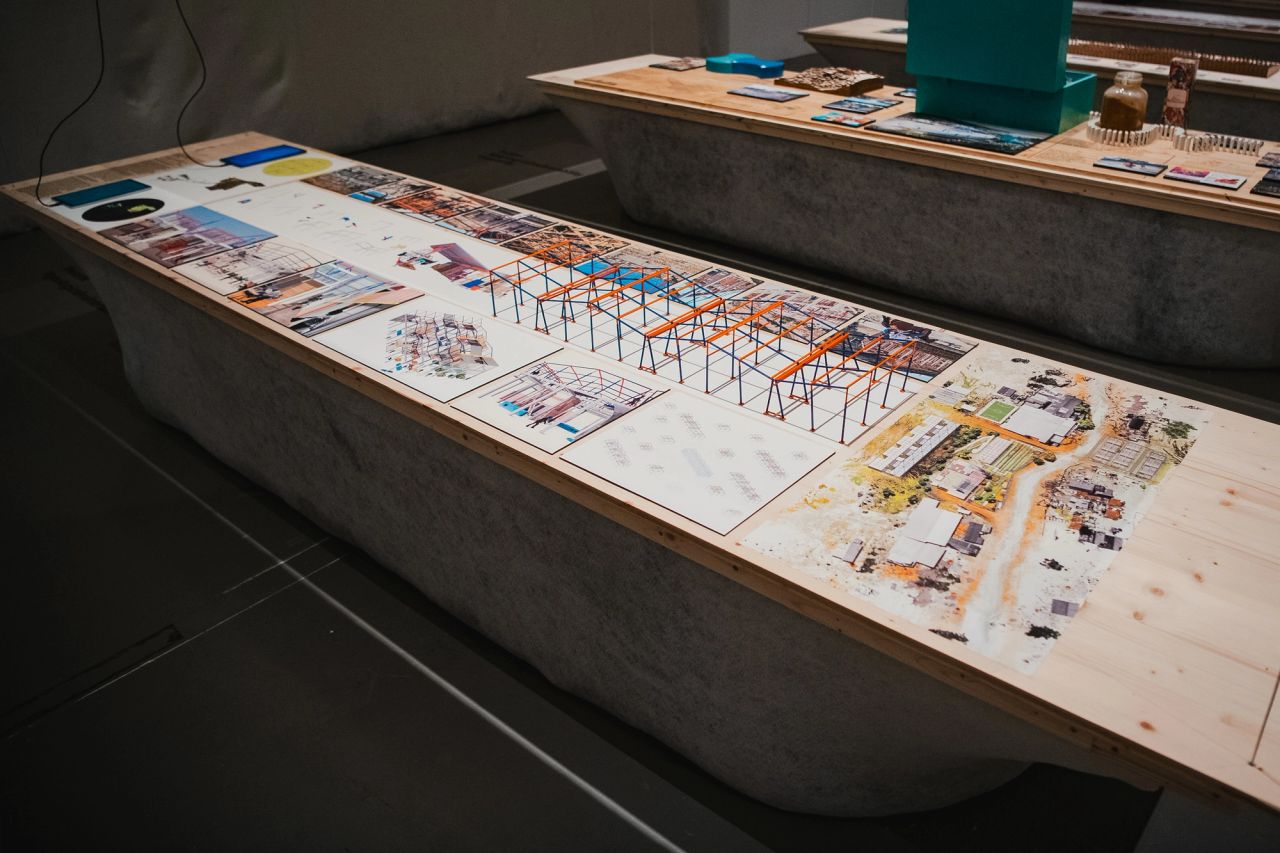
Santuario Frontera displayed the evolving sanctuary neighborhood in Laureles Canyon, an informal settlement in Tijuana impacted by dump sites, drastic erosion, flooding and landslides. Activist pastor Gustavo Banda-Aceves established a refugee shelter for hundreds of migrants. We have partnered to increase emergency housing capacity, embedded in spaces of fabrication, training, and small-scale economic development. Alongside, we are identifying and bundling unsquatted lands in the settlement that are still environmentally rescuable to shape a binational archipelago of conservation—the Cross-Border Commons—linking an estuary in San Diego with the informal settlement in Tijuana. This continuous social and ecological envelope transgresses the wall, and protects the environmental systems shared by these two border cities.
Terra: Retroactive
6th Lisbon Architecture Triennale
Lisbon, Portugal
Credits: Hugo David
Terra: Retroactive
6th Lisbon Architecture Triennale 2022
Lisbon, Portugal
Credits: Hugo David
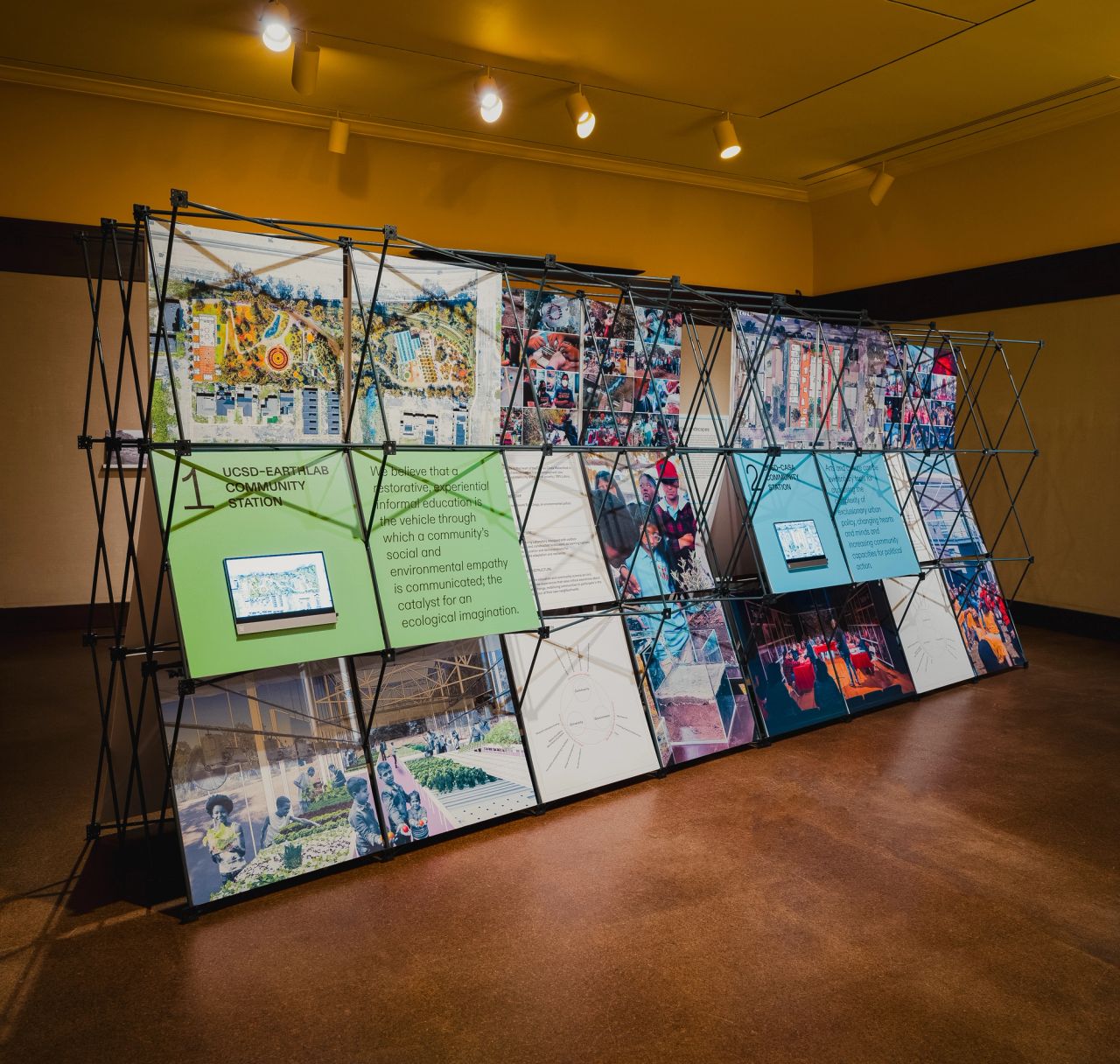
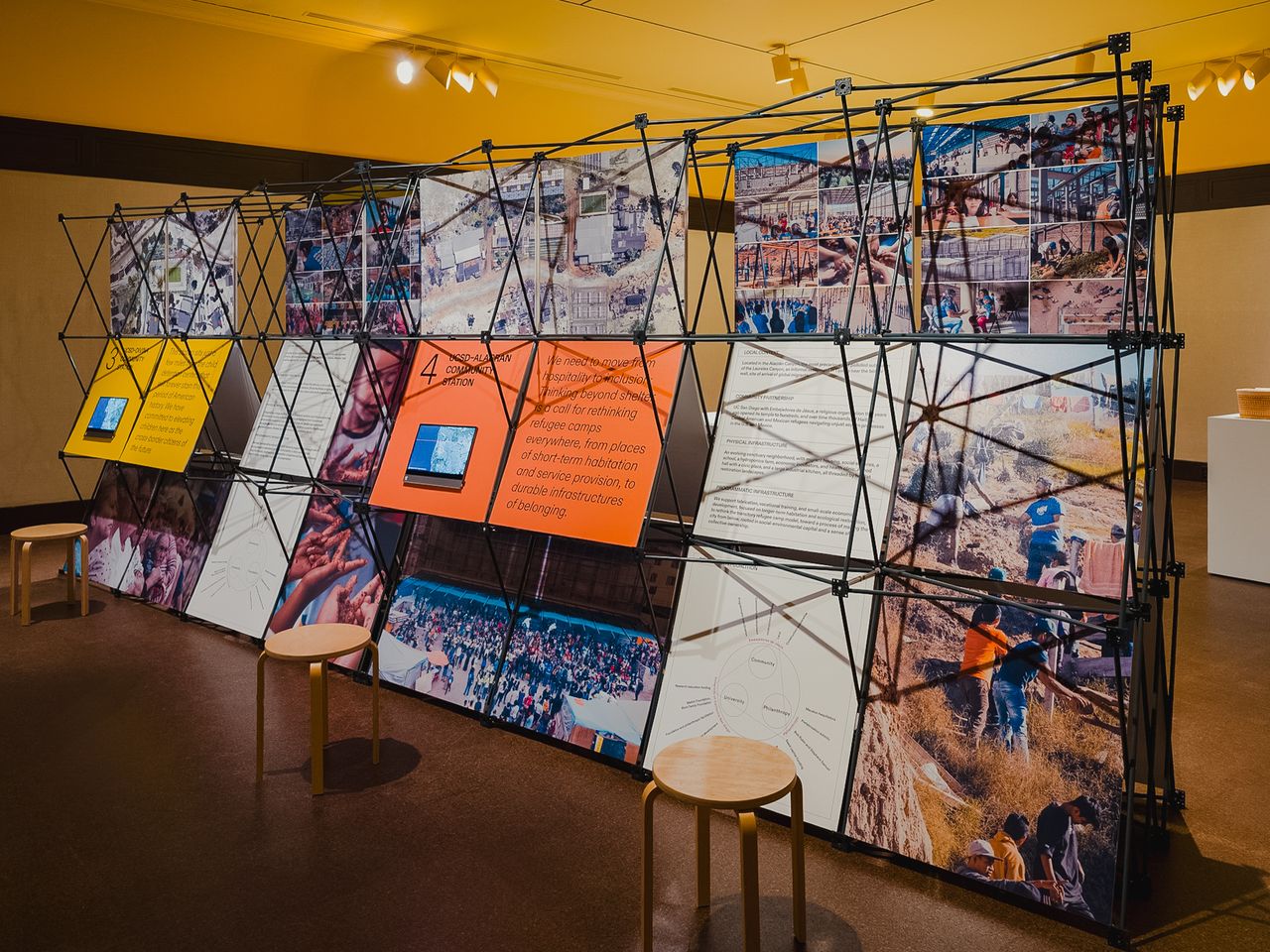
Cross-Border Public Spaces that Educate exhibited the Community Stations at UC San Diego in a horizontal framework, echoing the distributed geography of these sites—public spaces co-created between the university and communities in San Diego and Tijuana. Each station integrates research and programming into everyday life, demonstrating how architecture can bridge borders and build reciprocal learning communities by reclaiming indigenous knowledges, enhancing environmental resilience, and supporting social cohesion.
after school
Carnegie Museum of Art, Heinz Architectural Center
Pittsburgh, United States
Credits: Zachary Riggleman
after school
Carnegie Museum of Art, Heinz Architectural Center
Pittsburgh, United States
Credits: Zachary Riggleman
Localizing Global Migration at the US–Mexico Border reimagines the Political Equator map, showing how poverty and violence, made worse by climate change, are increasingly driving people to migrate. Alongside, two video panels zoom in on the San Diego–Tijuana region, where global pressures take a local form and impact daily life at the border.
Race: Power, Resistance & Change
Museum of Us
San Diego, United States
Credits: Jonathan Maier
Race: Power, Resistance & Change
Museum of Us
San Diego, United States
Credits: Jonathan Maier
Race: Power, Resistance & Change
Museum of Us
San Diego, United States
Credits: Jonathan Maier
Race: Power, Resistance & Change
Museum of Us
San Diego, United States
Credits: Jonathan Maier